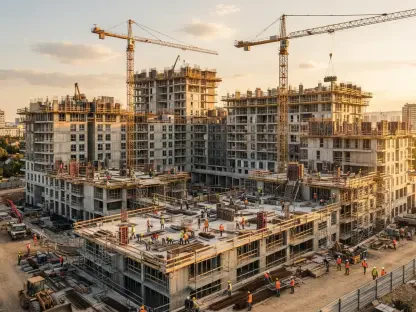

Forcing a site to release units faster than the local market can absorb them risks destabilizing property values and jeopardizing the financial viability of the entire development. This fundamental principle of economics is frequently ignored by critics who promote the persistent myth of

Many practitioners find themselves in a prolonged period of transition as the state attempts to reconcile housing production needs with higher building standards. This friction is most evident in New South Wales, where the construction industry currently faces a high-stakes balancing act between

The shift toward dynamic surfaces has led to the development of 3D stamping and water ripple finishes that create light-reflecting effects in luxury hotel lobbies and malls. Modern skylines spanning from the Middle East to Europe are increasingly defined by these sleek, reflective surfaces, as
The accumulation of carrying costs during lengthy bureaucratic delays is eventually passed on to the consumer, further exacerbating the national housing crisis. As the demand for affordable living spaces continues to outpace available inventory in 2026, the traditional permitting process remains a

The settlement mandates that an independent monitor may be appointed at the companies’ expense if there is any evidence of non-compliance with the new transparency rules. This measure represents a significant milestone for the District of Columbia’s Office of the Attorney General in its ongoing

The emergence of prompt injection techniques allows attackers to manipulate AI agents into performing unauthorized actions that traditional hardware-based security protocols cannot detect. As digital assistants evolve from simple reactive tools into proactive agents capable of executing financial