
The reliability of the Double Play Red Spirea makes it a foundational workhorse capable of tolerating urban pollution and various light exposures. For many years, the quintessential American front yard was defined by thirsty lawns and temperamental hydrangeas that required constant attention to survive the sweltering humidity of modern summers. However, a significant paradigm shift has occurred as property owners prioritize climate-ready landscapes that balance aesthetic grandeur with environmental resilience. This evolution is driven by a desire for sustainable beauty that does not demand hours of labor or excessive irrigation. By moving away from delicate varieties that wilt under pressure, savvy decorators are utilizing hardy, designer-recommended shrubs to build curb appeal that remains polished regardless of weather fluctuations. This approach treats the garden as an enduring architectural asset rather than a temporary chore, ensuring that the visual impact remains high throughout the year.
Establishing Resilient Foundations: Strategic Planning for Long-Term Success
The transition toward a low-maintenance yard begins with a fundamental understanding of the distinction between species that are merely drought-tolerant and those that are truly sustainable within a specific local ecosystem. While many plants are marketed as hardy, their success often depends on a dedicated establishment period that allows root systems to anchor deeply before they face the stressors of peak summer heat. Experts currently suggest that planting new shrubs during the late summer or the early autumn months provides the most favorable conditions for long-term survival. This window allows the plants to settle into the soil during cooler temperatures, leveraging natural moisture cycles to develop independence before the arrival of intense heat in the following year. By prioritizing this early-stage development, homeowners create a resilient foundation that reduces the need for supplemental watering and chemical interventions during the plant’s mature life cycle.
Proper placement remains the second cornerstone of a successful low-stress landscape, as even the toughest varieties can struggle if forced into incompatible environments. Maximizing the aesthetic and biological impact of these resilient plants requires a careful analysis of the property’s unique microclimates, such as the specific duration of sun exposure and the drainage capacity of the existing soil. When a variety like the Blue Star Juniper is matched with its ideal sun-drenched location, it transitions seamlessly from a fragile sapling into a self-sufficient garden staple that requires minimal human intervention. This strategic matching process prevents the common frustration of plant failure and ensures that every addition to the yard contributes to a cohesive, professional-quality exterior. Ultimately, the goal is to create a landscape that thrives autonomously, allowing the homeowner to enjoy a polished aesthetic without the burden of constant maintenance or frequent replacements.
Evergreens and Groundcovers: Defining Year-Round Structural Interest
For individuals seeking year-round color and sculptural interest, the Blue Star Juniper stands as a premier choice for modern curb appeal. This compact evergreen is characterized by its striking silver-blue needles and a naturally slow growth habit, which makes it particularly effective for planting beneath low windows or along foundations where it will not obstruct views or require frequent pruning. The dense, needle-like texture provides a sharp contrast to broader-leafed perennials, adding a layer of sophistication to the garden’s visual hierarchy. In a similar vein, the Pancake Arborvitae offers a low-profile solution for softening the harsh edges of hard landscaping features such as stone walkways or concrete driveways. Its sage-green foliage possesses a unique ability to turn slightly blue during the winter months, providing a steady and reliable visual anchor that maintains its intended size and shape without the need for the heavy shearing often required by older cultivars.
Functional beauty is further exemplified by the Good Vibrations Privet, which modernizes the concept of a classic hedge with a compact and variegated form. Unlike its high-maintenance ancestors that often grew out of control, this variety stays small and maintains a tidy appearance with almost no manual intervention, making it an ideal candidate for narrow garden beds or tight urban spaces. This shift toward manageable proportions allows for a cleaner look that emphasizes texture over sheer mass. For those who believe that roses are too difficult for a low-maintenance garden, the Flower Carpet Mini Cherry Rose provides a compelling counter-argument. This variety functions as a robust groundcover, producing a continuous and vibrant display of blooms from the first signs of spring until the onset of frost. It remains remarkably resistant to common diseases and can withstand dry spells that would typically devastate more delicate floral varieties, proving that elegance and hardiness can coexist.
Seasonal Transitions: Managing Dynamic Foliage for Visual Depth
The Kodiak Fresh Diervilla has emerged as a standout selection for property owners who prioritize native species and seasonal variety without the hassle of demanding care routines. This shrub is particularly prized for its dynamic color transitions, which begin with bright orange-red tones in the spring and shift toward a vibrant chartreuse during the height of the summer. The cycle concludes with a bold, multi-toned autumn display that provides a final burst of visual interest before the winter dormancy begins. Because this species is naturally resistant to deer and can thrive in a wide range of light conditions, from full sun to partial shade, it serves as an excellent workhorse for the more difficult or frequently neglected spots in a front yard. Its adaptability ensures that even under-utilized areas of the property can contribute to the overall aesthetic value, effectively filling gaps in the landscape with lush, changing foliage that supports local biodiversity.
Another exceptionally reliable performer is the Double Play Red Spirea, which offers three distinct seasons of visual interest while demanding virtually no maintenance from the homeowner. It is specifically bred to handle urban pollution and varying soil qualities, making it a staple for suburban and city dwellings alike. The plant features dark burgundy foliage in the spring, followed by a profusion of reddish-pink flowers throughout the summer, ensuring that the landscape never appears stagnant or dull. To complement these tones, the Summer Wine Ninebark provides a dramatic focal point through its deep purple foliage and elegant, arching branches. This variety adds a sophisticated silhouette to the garden and serves as a high-contrast backdrop for lighter-colored plants, creating a sense of depth and professional design. These shrubs do more than just sit in the dirt; they actively improve the visual texture of the property while providing a stable habitat for local wildlife.
Vertical Accents: Incorporating Height and High-Contrast Features
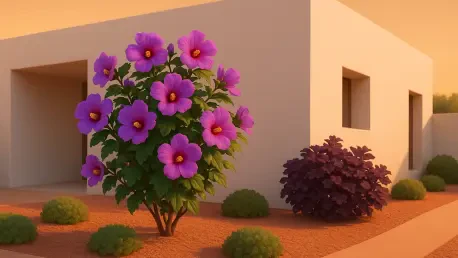
When a landscape requires verticality and a distinct wow-factor to break up horizontal lines, the Paraplu Violet Rose of Sharon is often the top recommendation from professional designers. This hardy shrub produces large, tropical-looking violet blooms throughout the late summer and early autumn, serving as an excellent anchor for the corners of a home or as a natural focal point in a larger garden bed. Despite its exotic appearance, it is a remarkably tough plant that can reach heights of up to ten feet, making it an ideal choice for creating natural privacy screens or bold architectural statements without the need for permanent fencing. Its ability to thrive in heat and humidity ensures that it remains a vibrant contributor to curb appeal when many other flowering shrubs begin to fade. This vertical element draws the eye upward, making the entire property feel more expansive and thoughtfully structured while providing a lush canopy of color that lasts for weeks.
The Midnight Wine Shine Weigela provided a final touch of high-contrast color for smaller spaces, featuring glossy, dark purple leaves that shimmered in the sunlight. This variety naturally attracted pollinators such as hummingbirds and butterflies while remaining resistant to common garden pests like rabbits and deer. By mixing these high-impact shrubs with low-growing evergreens, homeowners achieved a multi-dimensional landscape that appeared professionally designed but remained exceptionally easy to manage. The strategy involved selecting varieties that balanced resilience with aesthetic diversity, ensuring that the property thrived through various environmental conditions. Success was found when individuals prioritized long-term plant health over immediate, fleeting results. The transition to these hardier species allowed for a sustainable exterior that maintained its value and beauty with minimal water and labor. This shift toward intelligent landscaping established a new standard for modern curb appeal that favored efficiency.