
The rapidly evolving skyline of the Belarusian capital has recently become a theater for a high-stakes standoff between the ambitious goals of state-led construction modernization and the unwavering expectations of citizens who invest their lifelong savings into new residential developments. This tension reached a boiling point on Vyhotskaha Street, where a new residential quarter is currently being erected to meet the growing demand for high-quality urban living. For most homeowners, the purchase of an apartment is not merely a financial transaction but a long-term commitment to a specific standard of living, one that is codified in detailed technical documents before a single brick is laid. When those standards appeared to be shifting mid-construction, the resulting outcry demonstrated that the modern homebuyer is more informed and vigilant than ever before. This case highlights a critical juncture in the construction industry where the push for economic efficiency and rapid deployment must navigate the rigid legal and social expectations of a public that values durability above all else.
The Rise of the Citizen Inspector in Modern Housing
The dynamics of the housing market in Minsk are uniquely defined by the “shared construction” model, a system where future tenants provide the capital for the building’s progress. This financial involvement transforms passive buyers into active stakeholders who feel a profound sense of ownership and responsibility for the project long before they receive their keys. In recent years, this engagement has been amplified by digital platforms and private messaging groups, where neighbors coordinate to monitor the construction site with a level of scrutiny that was previously impossible. These groups serve as an informal but highly effective oversight committee, sharing high-resolution photos of internal partitions, wiring, and structural elements as they are installed. On Vyhotskaha Street, this grassroots surveillance proved to be the catalyst for a broader debate when residents noticed that the internal walls being installed did not match the heavy-duty masonry they had been promised in the initial project documentation.
This heightened vigilance is a direct response to the complexity of modern urban planning, where developers are often tempted to optimize costs by introducing new materials that may not have a long track record in the local climate. For the residents, the sight of lightweight steel frames and plasterboard replacing the expected expanded clay concrete blocks was an immediate red flag. They perceived this change not as a technological advancement, but as a compromise on the fundamental quality of their future homes. The speed with which information traveled through the community allowed for a unified response, turning individual concerns into a collective movement that the developer could not ignore. This shift in power dynamics underscores a new reality for state-owned enterprises like Minskstroy, where transparency is no longer a courtesy but a prerequisite for maintaining public trust.
Technical Discrepancies and the Value of Solidity
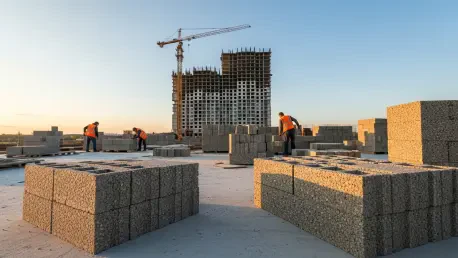
The core of the dispute on Vyhotskaha Street centered on the substitution of traditional expanded clay concrete blocks with Light Steel Thin-walled Structures (LSTC) clad in plasterboard. For decades, masonry-based construction has been the gold standard in the region, prized for its exceptional thermal mass and its ability to provide superior sound insulation in high-density living environments. Expanded clay concrete is particularly favored because it offers a balance of strength and insulation that residents trust to withstand the rigors of multi-generational use. When the project declaration specifically listed these materials, it created a legal and psychological expectation of a “solid” home. To many investors, the sudden appearance of “drywall” systems felt like a betrayal of the structural integrity they had paid for, leading to fears that their apartments would eventually suffer from poor acoustic privacy and a lack of durability.
Beyond the immediate technical specifications, the preference for masonry is deeply rooted in the practicalities of interior design and home maintenance. Homeowners argued that solid walls provide the necessary support for heavy furniture, kitchen cabinetry, and wall-mounted appliances, which are often difficult to secure reliably in lightweight plasterboard systems. There is also a prevailing belief that masonry structures offer better fire resistance and humidity control, factors that are essential for long-term comfort in the local climate. The perceived “thinness” of the LSTC alternative became a symbol of a perceived decline in construction standards, sparking a debate about whether modern “efficient” methods can truly replicate the performance of traditional materials. This conflict illustrates the challenge of introducing “dry” assembly techniques in a market where the physical weight of a building is often equated with its overall quality and longevity.
Corporate Transparency and the Experimental Framework
In the wake of the public backlash, the state production association Minskstroy felt compelled to provide a detailed explanation for the deviations from the original building plan. The organization clarified that the use of LSTC and plasterboard was never intended as a full-scale replacement for the entire building, but rather as a localized technological experiment. According to official statements, this trial was restricted to only two specific apartments within a massive 150-unit structure. The developer’s primary objective was to evaluate the practical feasibility of modern construction methods that could potentially shorten the time it takes to bring new housing to the market. By testing these “dry” installation techniques in a controlled environment, Minskstroy hoped to gather data on whether such systems could be integrated into future projects to reduce labor intensity and lower the cost per square meter.
The developer’s motivation was largely driven by the broader national goal of making housing more accessible to citizens on state waiting lists. Traditional masonry, while highly regarded, is a labor-intensive process that requires significant time for drying and finishing, which can often lead to delays in the delivery of social housing. The experiment with lightweight structures was an attempt to modernize the production cycle of the Plant of Efficient Industrial Structures, aiming for an industrial housing model that is both faster to assemble and more cost-effective. However, the lack of prior communication regarding this experiment led to a breakdown in trust between the developer and the investors. Minskstroy eventually acknowledged that even well-intentioned innovation must be balanced against the contractual rights of the homeowners, leading to the decision to dismantle the experimental partitions and return to the originally specified expanded clay concrete blocks.
All-Electric Infrastructure and Energy Modernization
While the debate over wall materials captured the most attention, the Vyhotskaha Street project is also notable for its pioneering approach to energy consumption and urban infrastructure. The entire quarter is designed to be “all-electric,” a strategic move that aligns with the current national effort to maximize the utilization of surplus electricity generated by the nuclear sector. Unlike traditional residential buildings in the city that rely on aging centralized district heating systems or natural gas, these new homes are equipped with individual electric convectors and high-efficiency boilers for heating and hot water. This decentralization allows residents to have greater control over their internal climate and potentially lowers the long-term maintenance costs associated with sprawling urban steam pipes. It represents a significant technological leap toward a more resilient and self-contained energy model for high-density housing.
The implementation of all-electric living in a 19-story high-rise requires a robust electrical grid and specialized engineering to ensure that the power supply can handle the simultaneous load of an entire residential quarter. This infrastructure was prioritized early in the construction phase, with the developer ensuring that all utility connections were fully operational before the buildings reached their final height. This proactive approach to utility management is a departure from older urban planning models where residents often moved into “completed” buildings that lacked permanent electricity or heating. By integrating these modern energy solutions, the Vyhotskaha quarter serves as a testing ground for the future of urban heating, demonstrating how large-scale social housing can transition away from fossil fuels while maintaining a high level of comfort for its inhabitants.
Integrated Planning and the Social Fabric of the Quarter
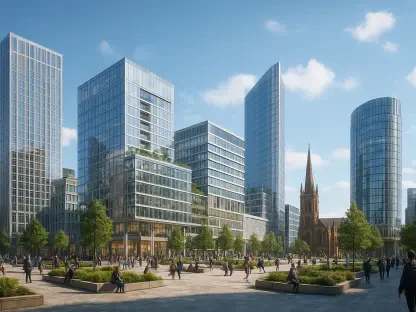
The vision for the Vyhotskaha development extends far beyond the construction of residential towers, emphasizing a comprehensive approach to social infrastructure and community well-being. The master plan for the area includes ten multi-story buildings, providing over 100,000 square meters of living space, but it also allocates significant resources for essential services. A modern school designed for over 1,000 students and a spacious kindergarten for 350 children are being built within walking distance of the residential blocks, ensuring that the influx of new families does not overwhelm existing facilities in neighboring districts. This “neighborhood first” philosophy aims to create a self-sustaining urban environment where the daily needs of residents are met without the necessity of long commutes, fostering a more cohesive and less stressed community.
Strategic placement also plays a vital role in the long-term viability of the Vyhotskaha quarter, as it is situated in close proximity to the “Northern Shore” project, a massive international “smart city” development. This geographical synergy places the quarter at the northern gateway of the city, an area that is rapidly becoming a hub for technological and architectural innovation. The proximity to high-profile international investments has raised the stakes for local developers, forcing them to maintain high aesthetic and functional standards to ensure the area remains attractive to both residents and secondary investors. The focus on completing roads, parking areas, and green spaces ahead of the residential handover reflects a commitment to quality of life that goes beyond the four walls of an apartment. This integrated planning ensures that the new quarter is not just a collection of buildings, but a fully functional part of the modern city.
Legal Precedents and the Future of Urban Growth
The resolution of the conflict on Vyhotskaha Street provides a clear illustration of the legal weight carried by the “Project Declaration” in the current construction landscape. This document serves as a primary contract between the developer and the shared construction participants, outlining every technical detail from the type of foundation to the specific materials used for interior partitions. Under current regulations, any deviation from these stated specifications requires a formal notification and, in many cases, the explicit consent of the investors. The success of the residents in forcing Minskstroy to revert to the original materials reinforces the principle that consumer rights in the housing sector are enforceable and that developers must adhere strictly to their promised standards. This legal framework provides a necessary check on corporate experimentation, ensuring that the financial interests of citizens are protected.
Moving forward, the lessons learned from the Vyhotskaha experiment will likely shape how innovation is introduced into the construction sector in the coming years. While the need for more efficient and affordable housing remains a priority, this incident proved that transparency and communication are just as important as the materials themselves. Developers have realized that if they wish to test new technologies, they must do so with the full awareness and cooperation of the stakeholders involved. The incident fostered a more mature dialogue between state entities and the public, where the benefits of modernization are weighed against the traditional values of durability and trust. As the city continues to expand with “all-electric” systems and integrated social infrastructure, the precedent set by this community will serve as a reminder that the residents are not just consumers, but the ultimate guardians of the quality of the urban environment.
Strategic Realignment and the Restoration of Public Trust
The ultimate resolution of the material dispute on Vyhotskaha Street demonstrated a significant pivot in how large-scale developers managed public relations and project accountability. Once the collective voice of the future homeowners reached the executive levels of the construction association, the decision was made to prioritize the original contractual obligations over the potential gains of the experimental assembly. The crews quickly began the process of removing the light steel frames and replacing them with the heavy expanded clay concrete blocks that were initially promised. This move was not only a technical correction but also a strategic effort to restore the reputation of the state-owned enterprise as a reliable partner for those participating in shared construction. The developer ensured that the remaining phases of the project adhered strictly to the legal documentation, effectively ending the period of unauthorized testing.
In the aftermath of this event, the construction industry as a whole began to re-evaluate the methods used to introduce innovative building systems to the market. The case proved that while economic efficiency was a valid goal for 2026, it could not be achieved by bypassing the transparency required in residential contracts. Future projects in the northern sector of the city adopted more rigorous communication strategies, often involving residents in the decision-making process through formal surveys and informational sessions before implementing any changes to material specifications. This shift towards a more collaborative approach helped bridge the gap between industrial progress and consumer expectations. By the time the first residents moved into the all-electric apartments on Vyhotskaha Street, the controversy had evolved into a foundational lesson on the power of community engagement and the necessity of maintaining high standards in the pursuit of modern urban development.