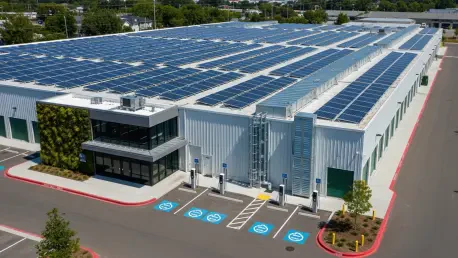

The traditional landscape of the self-storage sector, once characterized by rows of utilitarian corrugated metal and asphalt, is currently undergoing a radical metamorphosis as operators prioritize ecological resilience over mere physical expansion. This transition is not merely a cosmetic change or a superficial response to public relations pressure; it represents a fundamental rethink of how commercial assets generate value in a world increasingly defined by resource scarcity and climate variability. Operators across the United States are looking far beyond the simple metrics of occupancy rates and square footage to explore how sophisticated environmental integration can enhance the long-term viability of their portfolios. By embedding sustainability into the core of their business models, these companies are successfully navigating the complex intersection of moral obligation and fiscal necessity, proving that the pursuit of a smaller carbon footprint is inextricably linked to robust financial health and operational longevity.
This evolution encompasses every stage of the facility lifecycle, from the initial architectural sketches to the nuanced daily management of active sites. The industry is effectively moving toward an eco-conscious model that treats every rooftop as a potential energy generator and every parking lot as a critical component of local stormwater management. As building materials become more expensive and energy costs fluctuate, the push for high-performance envelopes and efficient systems has transitioned from a niche preference to a central strategic pillar. Modern facilities are being designed to act as silent partners in the global effort to reduce emissions, utilizing advanced technologies to minimize waste without compromising the security or convenience that customers expect. This holistic approach ensures that green initiatives contribute directly to the bottom line by reducing overhead and attracting a new generation of environmentally aware tenants who view sustainability as a non-negotiable requirement.
Navigating External Pressures and Market Expectations
The shift toward sustainable self-storage is being accelerated by a significant change in consumer behavior and the rigorous expectations of the modern investment community. Today’s customers, particularly those from younger demographics, are increasingly selective about where they spend their money, often favoring brands that demonstrate a genuine commitment to environmental stewardship over those that ignore their ecological impact. This shift is not just a trend but a fundamental change in market sentiment that has forced operators to treat sustainability as a key competitive advantage. For institutional investors, environmental, social, and governance (ESG) criteria have become essential metrics for assessing risk and long-term potential, making “green” facilities far more attractive for capital allocation. Facilities that lack these features often face higher insurance premiums or lower valuations, as they are increasingly perceived as legacy assets that may become obsolete in a more regulated and climate-conscious economy.
The legal landscape is also evolving rapidly, moving sustainability from a voluntary choice to a strict regulatory mandate in many jurisdictions. Municipalities are implementing rigorous energy performance standards and building codes that require new developments to include high-efficiency insulation, advanced lighting systems, and solar-ready infrastructure. In many urban centers, meeting these local laws is the only path to securing necessary permits, which naturally pushes developers toward certifications like LEED or BREEAM that were once viewed as optional honors. These regulatory pressures are compounded by the rising cost of traditional utilities, which makes energy efficiency an operational necessity rather than a luxury. By staying ahead of these mandates, proactive developers are not only avoiding potential fines but are also positioning themselves as partners to city planners who are looking for ways to meet ambitious municipal climate targets through private-sector cooperation.
While the initial costs associated with meeting these elevated standards can be substantial, they are frequently mitigated by a variety of municipal, state, and federal financial incentives. Developers are increasingly leveraging tax credits, specialized grants, and local rebates to offset the premium prices of sustainable materials and advanced technological systems. In some regions, selecting green building options provides immediate dividends beyond direct cash incentives, such as allowing for greater lot coverage or expedited approval processes that significantly reduce the time to market. This financial scaffolding makes it possible for operators to choose more expensive, durable materials that offer superior performance over decades. Consequently, the industry is seeing a rise in “green financing” options, where lenders offer more favorable interest rates to projects that meet specific environmental benchmarks, further aligning the interests of developers with those of the planet and its future inhabitants.
Innovations in Sustainable Building and Site Design
Modern development strategies in the self-storage sector are focused heavily on creating building envelopes that dramatically reduce energy demand through passive and active technologies. One of the most prominent trends is the installation of solar-ready roofs and extensive photovoltaic arrays that allow facilities to generate their own power, often producing a surplus that can be fed back into the local grid. Inside the buildings, motion-sensored LED lighting systems ensure that electricity is only consumed when tenants are present, eliminating the waste associated with illuminating empty corridors. High-efficiency HVAC systems and reflective “cool roofs” work in tandem to maintain stable internal temperatures with minimal mechanical intervention, which is particularly vital for climate-controlled units. These innovations not only lower the carbon intensity of the operation but also provide a more consistent and reliable environment for customers who are storing sensitive items.
The environmental impact of a storage site extends far beyond the physical walls of the units to include the surrounding landscape and infrastructure. Developers are increasingly integrating low-water landscaping, often utilizing native plant species and wildflower meadows that require no irrigation and support local biodiversity. Features like green roofs and living walls are being used to manage stormwater effectively, capturing rainfall that would otherwise contribute to urban runoff and local flooding. These biophilic elements serve a dual purpose; they provide a natural thermal buffer that helps regulate the building’s temperature while also improving the aesthetic appeal of the facility for the surrounding community. By turning a traditionally sterile industrial site into a living ecosystem, operators can enhance the local environment and create a more inviting presence that helps secure zoning approvals in sensitive residential or high-traffic commercial areas.
Adaptive reuse represents perhaps the most impactful way the industry is currently pursuing sustainability, as converting existing structures into storage avoids the massive carbon footprint associated with new construction. By repurposing defunct office buildings, abandoned retail centers, or old warehouses, companies can breathe new life into underutilized urban assets while preserving the embodied energy of the original materials. This “infill development” strategy prevents millions of tons of concrete and steel from being manufactured, which is a major driver of global industrial emissions. Furthermore, these conversion projects keep significant amounts of construction debris out of local landfills and often place storage facilities closer to the populations they serve, reducing the driving distance for customers. This approach demonstrates a commitment to the circular economy by viewing the built environment as a resource to be maintained rather than a commodity to be discarded and replaced.
Operational Stewardship and Circular Economy Initiatives
Sustainability in the self-storage world is a continuous commitment that extends long after the construction phase is complete, manifesting in the daily management and operational philosophy of modern sites. Leading operators are setting global benchmarks by transitioning their entire energy profiles toward renewable sources, such as using on-site geothermal heat pumps or purchasing power from local wind farms. Some organizations have even begun transitioning their corporate and maintenance fleets to electric or hybrid vehicles, supported by the installation of on-site charging stations for both employees and the public. These charging ports serve as an additional amenity for tenants, encouraging the adoption of clean transportation while increasing the time customers spend at the facility. This integration of clean energy into the daily workflow ensures that every aspect of the business, from administration to maintenance, aligns with a broader mission of environmental responsibility.
The industry is also finding innovative ways to embrace the circular economy by implementing programs that facilitate the reuse of materials within the customer base. Many facilities now host “Community Box Exchange” programs, where departing tenants can leave behind gently used moving boxes and packing materials for new customers to use free of charge. This simple initiative prevents massive amounts of cardboard and plastic from entering the waste stream and provides a tangible benefit to customers during a high-stress moving process. Furthermore, retail offices at these locations are increasingly stocking biodegradable packing supplies and recycled-content materials, ensuring that even the retail side of the business supports the facility’s ecological goals. These programs foster a sense of community among tenants and reinforce the brand’s identity as a thoughtful and responsible member of the local neighborhood, rather than just a place to store belongings.
Internal management practices have also shifted toward a digital-first approach to reduce the physical waste generated by administrative tasks. By moving to paperless leasing systems, digital gate access, and centralized cloud-based servers, companies are eliminating the need for massive amounts of paper and physical storage space for records. Water-conservation upgrades in plumbing fixtures and the use of smart irrigation systems that adjust based on local weather forecasts also play a vital role in reducing the facility’s overall utility consumption. These small but consistent operational shifts help maintain a green footprint over the entire lifecycle of the property, proving that sustainability is achieved through a thousand small decisions rather than just a few large ones. This meticulous attention to resource management ensures that the facility remains lean and efficient, protecting margins while honoring environmental commitments made to stakeholders and the public.
Overcoming Hurdles and Defining a Profitable Green Strategy
One of the most persistent obstacles to the widespread adoption of sustainable practices remains the high upfront capital expenditure required for advanced green systems and specialized building materials. Technologies such as electric vehicle chargers, phase-change insulation, and large-scale solar arrays often carry a premium price tag that can be challenging for short-term owners or those with limited access to low-cost capital to justify. In a market where rental rates are highly sensitive to local competition, the initial investment can seem like a significant financial risk if it does not lead to an immediate and measurable increase in revenue. This tension between long-term environmental benefits and short-term liquidity requires a sophisticated understanding of asset valuation and a willingness to look beyond the quarterly earnings report to find the true value of a high-performance building.
Calculating the precise return on investment for green features is also far more complex than evaluating traditional upgrades because the savings are often realized over a decade or more through reduced utility costs and lower maintenance needs. Determining the exact payback period for a green roof or a high-efficiency geothermal system requires a high level of technical expertise and detailed lifecycle analysis that some smaller operators may not currently possess. Additionally, the administrative burden of navigating complex utility grids, local zoning laws, and the intricate requirements for various green certifications can be a deterrent for developers who are already managing tight construction schedules. Without a standardized way to measure and verify the financial impact of these initiatives across the entire industry, some owners remain hesitant to commit the necessary resources to transition their entire portfolios to more sustainable models.
Despite these significant challenges, a strong industry consensus has emerged that sustainability must be viewed as a vital tool for future-proofing assets against an unpredictable economic and environmental future. By prioritizing efficiency today and leveraging every available tax credit and incentive, owners are creating resilient buildings that are far better equipped to handle rising energy costs and stricter future regulations. The most successful operators have recognized that green initiatives are not a distraction from their core business but are instead a strategic decision that builds significant brand value and ensures long-term financial robustness. As the technology continues to mature and the costs of sustainable materials continue to fall, the gap between traditional and green development is narrowing. This progress is solidifying the role of environmental stewardship as a standard operating procedure for the next generation of self-storage excellence.
The self-storage industry successfully demonstrated that environmental responsibility and profitability were not mutually exclusive concepts but were instead mutually reinforcing goals. By adopting a proactive stance on energy efficiency and site design, operators protected their assets from the volatility of utility markets and the increasing demands of regional regulators. The widespread implementation of adaptive reuse and circular economy programs effectively minimized the sector’s waste production while strengthening its relationship with local communities. Investors and consumers alike rewarded these efforts with increased capital flows and higher brand loyalty, proving that a commitment to the planet was a sound business strategy. Moving forward, the most effective next step for any storage operator involved a deep dive into historical energy data to identify the most impactful retrofits for existing properties. This data-driven approach allowed companies to prioritize investments that offered the highest ecological and financial returns simultaneously. Furthermore, establishing partnerships with local renewable energy providers and waste management experts helped facilities stay at the cutting edge of sustainable technology without requiring internal teams to become experts in every field. The transition was ultimately defined by a shift from viewing green goals as a cost center to recognizing them as a fundamental driver of asset value and community health. Professionals in the field who embraced these changes earlier found themselves better positioned to thrive in an era where the definition of a successful business was measured by both its balance sheet and its environmental legacy.