
Effective rents in the regional office market continue to strengthen as demand remains anchored in a limited supply of premium modernized space. This trend is currently manifesting in a massive structural transformation of the Cairns Central Business District, where a concentrated wave of commercial investment is reshaping the city’s identity. The focus of this activity centers on a prominent block bounded by Grafton, Shields, and Lake Streets, serving as the epicenter for Far North Queensland’s economic rebirth. At the heart of this movement is the comprehensive refurbishment of the Cairns Commonwealth Centre, a project that signals robust confidence in regional property markets. This renewal is not merely about aesthetic updates; it represents a strategic pivot toward institutional-grade assets that can support a growing professional workforce. By revitalizing aging infrastructure, developers are bridging the gap between historical heritage and modern functionality for users.
Infrastructure Modernization: Setting Class A Standards
The flagship component of this urban revival involves a total overhaul of 104 Grafton Street, a core element of the Cairns Commonwealth Centre currently being elevated to “Class A” status. This transformation entails deep structural and technological upgrades that go far beyond surface-level improvements. Engineering teams are currently installing state-of-the-art end-of-trip facilities, modernized elevator systems with high-efficiency motors, and contemporary foyers that redefine the tenant arrival experience. These technical improvements ensure that the building can compete with newer developments in larger capital cities, providing a seamless environment for high-end corporate and government entities. The project addresses the critical need for modernized mechanical systems that can handle the specific tropical climate challenges of Far North Queensland. Consequently, the asset is attracting long-term commitments from major occupants seeking the highest standards.
In alignment with global corporate real estate trends, the refurbishment places a heavy emphasis on environmental sustainability and energy efficiency. By integrating superior electrical and mechanical enhancements, the project is actively targeting a 4.5-star NABERS Energy Rating, a benchmark that has become a prerequisite for most government and high-profile private sector leases. This shift toward environmentally conscious infrastructure involves the replacement of outdated HVAC systems with high-efficiency cooling technologies and the installation of smart building sensors to optimize energy consumption. Such upgrades provide a dual benefit of reducing operational overheads for tenants while simultaneously meeting stringent ESG requirements. As carbon footprint reduction becomes a non-negotiable factor in office selection, these sustainable features ensure the building’s long-term viability and capital value. This approach demonstrates that regional centers can lead the way.
Public Realm Integration and Connectivity
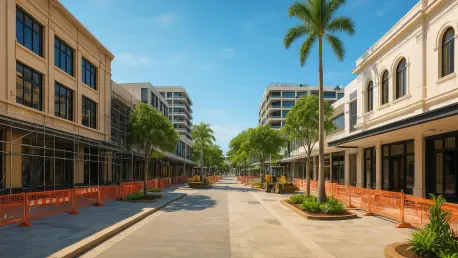
Beyond the internal mechanics of the individual buildings, the revitalization efforts are strategically designed to improve the “look and feel” of the entire surrounding precinct. This involves a comprehensive replacement of facades, glazing, and walkways to create a cohesive architectural aesthetic that integrates seamlessly with the existing city streetscape. By focusing on the interface between private commercial space and public thoroughfares, the project significantly enhances pedestrian connectivity and security between Grafton and Lake Streets. This improved permeability facilitates better movement for thousands of CBD workers, which in turn stimulates the local service economy, particularly within the vibrant Shields Street Mall area. The transition toward a more walkable and accessible commercial heart makes the district more attractive for retail and hospitality operators. This synergy between office space and the public realm creates a dynamic environment that fosters engagement.
Complementing the active work at the Commonwealth Centre is the significant repositioning opportunity presented by the former Energy Queensland building located at 109 Lake Street. Boasting dual street frontage and proximity to the Shields Street Mall, this vacant asset serves as a prime candidate for a total redevelopment that mirrors the high standards set by its neighbor. Investors are increasingly looking to leverage the momentum generated by the ongoing block-wide upgrades to create a synergistic cluster of modernized office space. The availability of such a sizable site allows for flexible configurations, ranging from creative tech hubs to consolidated government departments. By integrating these disparate assets into a unified commercial strategy, the value of the entire city block is elevated, providing the necessary stability for further private investment. This ripple effect ensures that the revitalization is not an isolated event but a catalyst for broader urban renewal.
Macroeconomic Trends: Regional Market Strength
This surge in local activity reflects a broader macroeconomic trend where Australian regional centers are increasingly recognized as genuine growth hubs for institutional capital. In the current year, Cairns has recorded over $228 million in commercial property transactions, with the office sector alone accounting for nearly half of that total. This performance highlights a significant shift in investor sentiment, as regional markets are no longer viewed merely as high-yield alternatives but as stable environments for long-term growth. The resilience of the Cairns market is underpinned by a unique set of fundamentals, including a diversifying economy and a growing population base. Unlike some capital cities that are struggling with oversupply, Cairns maintains a balanced market where demand consistently outpaces the arrival of new premium space. This stability has encouraged a diverse range of buyers to move away from traditional metro markets in favor of high-performing assets.
Current market conditions are further characterized by record-low vacancy rates and a notable lack of speculative development, which serves as a protective barrier against future oversupply. Because high construction costs and logistical constraints currently limit the feasibility of new ground-up projects, the demand for high-quality office accommodation must be met by the refurbishment of existing stock. This dynamic has led to genuine rental growth and increased competition among tenants for the best available space. Industry experts observe that “flight to quality” remains the primary driver of leasing activity, as modern occupiers refuse to settle for subpar environments that fail to support employee well-being and productivity. The coordinated renewal of aging assets is fundamentally repositioning Cairns as a premier destination for corporate investment. By converting older structures into modern hubs, the city is successfully meeting the needs of a sophisticated market while ensuring its commercial relevance.
Future Strategic Development: Key Takeaways
The success of the Cairns CBD revitalization is further validated by recent high-profile leasing agreements, including a 10-year commitment from the Queensland Government for a substantial portion of the newly refurbished space. Such long-term institutional agreements provide the bedrock of stability required to attract further secondary investment in surrounding retail and service industries. As government agencies and corporate headquarters consolidate their presence in these modernized hubs, the surrounding precinct benefits from a consistent influx of professional traffic. This footfall is essential for the survival of the local micro-economy, supporting cafes, gyms, and specialty retail shops that thrive on the presence of a steady workforce. The strategic decision to upgrade these assets rather than demolish them has preserved the historical footprint of the city while injecting it with modern energy. This balanced approach to development ensures that the city maintains its unique character.
The transformation of the Cairns Commonwealth Centre and the strategic repositioning of neighboring assets established a definitive roadmap for regional urban renewal. Stakeholders recognized that the path to long-term prosperity involved a commitment to high-spec infrastructure and sustainable design rather than short-term cosmetic fixes. Moving forward, property owners must continue to prioritize technological integration and environmental performance to remain competitive as tenant expectations evolve. Local planners and developers should focus on maintaining the momentum by further enhancing pedestrian infrastructure and digital connectivity throughout the CBD. The successful revitalization projects in Cairns demonstrated that targeted investment in the existing built environment can yield significant economic returns and social benefits. By bridging the gap between aging infrastructure and modern demands, the city successfully positioned itself as a leading example of how regional centers can thrive.