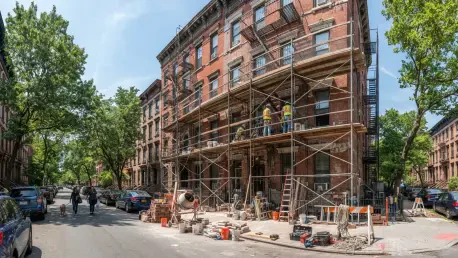

In Dutchtown alone, three hundred and forty-six vacant buildings stand as obstacles to economic growth, representing the broader challenge of managing thousands of empty structures across the city. This architectural decay is not merely an aesthetic concern but a fundamental barrier to the socio-economic revitalization of St. Louis. Many of these structures are medium-sized multi-family units that once anchored thriving blocks. Today, they represent a “financing gap” where the cost of renovation far exceeds the eventual market value. The recent loss of the historic Roosevelt Apartments illustrates this crisis perfectly; despite multiple developers expressing interest, the “development math” simply failed to pencil out, leading to a scheduled demolition. Without a structural change in how urban renewal is funded, these smaller historic gems will continue to vanish from the skyline, leaving behind empty lots that drain city resources and dampen the community’s spirit. The city stands at a crossroads where preservation meets fiscal reality, and currently, reality is winning.
Neighborhood Dynamics and the Scope of Vacancy
Community Resilience: Progress Amidst Instability
Within the heart of Dutchtown, the spirit of local entrepreneurship offers a stark contrast to the surrounding blight. Business owners like Dwayne Nelson, who opened Your Place Diner, have worked tirelessly to create community spaces that encourage neighborhood engagement. Nelson’s restaurant serves as more than just a place to eat; it is a symbol of resilience that emerged from the challenges of the recent global pandemic. However, the success of such ventures remains precarious as long as the surrounding environment is characterized by high vacancy and instability. A recent shooting near the diner, although unrelated to the business itself, serves as a grim reminder of the safety concerns that often accompany high concentrations of empty buildings. The presence of these abandoned structures creates a vacuum where criminal activity can flourish, making it difficult for even the most dedicated residents to feel secure. The struggle to maintain a safe and welcoming atmosphere is a daily battle for those attempting to anchor the neighborhood’s recovery.
Targeted Revitalization: The Block-by-Block Strategy
Despite the undeniable hurdles, a strategic “block-by-block” approach has demonstrated that targeted investment can yield significant results. In specific corridors of Dutchtown, vacancy rates have plummeted from a staggering seventy percent to just thirty percent through the current redevelopment phase. This progress is largely the result of aggressive legal action against neglectful property owners combined with the efforts of groups like the St. Joseph’s Housing Initiative. By rehabilitating homes specifically for first-time buyers, these organizations are not just fixing buildings; they are rebuilding the neighborhood’s social fabric. This focused strategy proves that when resources are concentrated on manageable areas, the cycle of decay can be broken. However, these successes are often isolated pockets within a much larger sea of instability. Scaling these results to the thousands of other vacant properties requires a level of coordination and financial backing that currently exceeds the capacity of grassroots organizations.
The Fiscal Impact: Economic Reality of Blight
The financial implications of this vacancy crisis are staggering, placing a heavy burden on the municipal budget and taxpayers alike. Data from the Vacancy Collaborative highlights that St. Louis is currently managing over twenty-two thousand vacant parcels, a figure that includes nearly nine thousand buildings and over thirteen thousand empty lots. During the current three-year assessment period, these properties cost the city approximately nineteen point six million dollars in lost tax revenue, maintenance fees, and emergency service responses. This massive fiscal drain limits the city’s ability to fund other essential services, creating a self-perpetuating cycle of disinvestment. Perhaps the most complicating factor is that ninety-nine percent of these parcels are privately owned, which significantly hampers the city’s ability to intervene quickly. Reclaiming these properties often involves protracted legal battles that can take years to resolve, during which time the buildings continue to deteriorate to the point of no return.
The Disparity in Development Incentives
Funding Inequity: The Missing Middle
A major point of contention in the city’s revitalization strategy is the disproportionate focus on massive, high-profile developments over smaller neighborhood projects. While large-scale renovations, such as the sixty-million-dollar overhaul of Cleveland High School, frequently receive significant public subsidies and tax breaks, the “missing middle” of urban housing is often neglected. Most of the city’s historic fabric consists of eight-to-twelve-unit multi-family buildings, yet these are the very structures that are most difficult to finance. Traditional tools like Tax Increment Financing or construction sales-tax exemptions are often structurally unavailable for projects that do not exceed a five-million-dollar threshold. This creates a situation where developers interested in smaller, more sustainable projects find themselves without the necessary financial “bridge” to make the numbers work. Without incentives tailored to the scale of these typical neighborhood buildings, the cost of stabilization and renovation will continue to exceed the eventual market value.
Administrative Hurdles: Coordination and Oversight
The administrative landscape in St. Louis further complicates the path to recovery, often characterized by reactive policies rather than proactive enforcement. Currently, the city’s Building Division operates on a complaint-based system, meaning that inspections are usually triggered only after a building has become a visible nuisance or hazard. This approach places an undue burden on residents to police their own neighborhoods, allowing property owners to let structures decay until they reach a state of emergency. Furthermore, there appears to be a significant disconnect between the municipal government and the St. Louis Development Corporation, leading to a fragmented strategy that lacks a unified front. When compared to peer cities like Kansas City, which invests heavily in vacancy litigation and proactive property management, St. Louis appears to be under-funding the very legal infrastructure needed to hold neglectful owners accountable. This lack of coordination creates an environment where irresponsible landlords can wait for land values to rise.
Future Strategies: Breaking the Vacancy Trap
To overcome these systemic barriers, the city identified a need for a more integrated and flexible approach to urban redevelopment. The success of localized projects, such as the Virginia Theatre renovation and the Tower Grove CDC’s “Vacancy-to-Vibrancy” initiative, provided a blueprint for how public-private partnerships could stabilize high-need corridors. These efforts showed that when specific tax abatements and stabilization grants were successfully navigated, even high-risk properties were returned to productive use. Moving forward, the focus shifted toward creating dedicated funding streams for mid-sized projects and streamlining the legal process for property reclamation. By prioritizing proactive code enforcement and fostering better cooperation between city departments, officials worked to prevent buildings from reaching the point of emergency demolition. Ultimately, the transformation of Dutchtown and similar areas required a departure from traditional incentive models to support the diverse architectural landscape of St. Louis. These steps were taken to ensure that historic structures were preserved as valuable assets rather than remaining as symbols of urban decay.