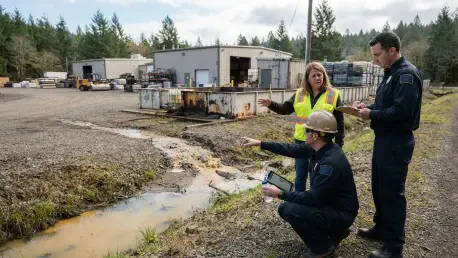

The Oregon Department of Environmental Quality recently issued nine civil penalties totaling $152,496, targeting violations from hazardous asbestos handling to illegal solid waste operations. This comprehensive enforcement summary, released in late 2026, details the state’s rigorous efforts to maintain high environmental standards across a variety of sectors, including private construction, retail fuel distribution, and municipal governance. The diversity of the penalties reflects a holistic strategy aimed at protecting Oregon’s air, land, and water from degradation. While the enforcement actions were spread across the state, a significant concentration of activity occurred in Southern Oregon, highlighting the agency’s focus on regional compliance within the construction industry. These fines serve not only as a punitive measure for past negligence but also as a preventative deterrent, encouraging organizations to prioritize ecological health alongside their operational objectives. By documenting these infractions publicly, the agency ensures transparency and reinforces the legal obligation of all entities to operate within the state’s established environmental frameworks.
Regional Oversight and Safety Standards
The recent wave of enforcement actions brought significant attention to the construction landscape in Southern Oregon, where specific regulatory failures led to substantial financial penalties. Two Central Point businesses, Christian Massey Construction and Lallo Pipeline Inc., were collectively fined $26,076 for violations regarding the management of hazardous materials. These cases underscore the critical importance of procedural compliance in the construction and demolition sectors, particularly when dealing with substances that pose immediate risks to workers and the surrounding community. The penalties emphasize that any deviation from established safety protocols can result in swift administrative action, reinforcing the idea that the cost of non-compliance far outweighs the investment required for proper material handling.
Managing Hazardous Materials: Safety in Construction
In the specific instance involving Lallo Pipeline Inc., the firm faced a significant $20,676 penalty, while Christian Massey Construction was assessed $5,400 for their respective infractions. These fines were primarily rooted in the failure to adhere to the strict regulations governing asbestos, a material that remains a high-priority concern for the state due to its severe health implications. Asbestos is frequently found in older building materials such as insulation, roofing, and flooring, and if it is not identified and contained during renovation or demolition, it can become friable. Once these microscopic fibers are released into the air, they can be inhaled, leading to long-term and often fatal respiratory conditions. The enforcement actions in Central Point demonstrate that the state maintains a zero-tolerance policy for procedural lapses that could lead to such hazardous exposure.
Asbestos Mitigation: Preventing Community Exposure
Proper asbestos mitigation requires a multi-step process that begins with professional inspections and ends with disposal at authorized facilities. Under current Oregon law, contractors are mandated to provide advance notification to the state before beginning any project that involves the disturbance of asbestos-containing materials. This notification allows regulators to verify that the contractor has a comprehensive plan for containment and that the workers are using appropriate protective equipment. Furthermore, the transportation and disposal of these materials must follow a strict chain of custody to ensure they do not end up in conventional landfills where they could pose a risk to the general public. These fines serve as a stark reminder that the responsibility for public safety lies squarely with the contractors, who must remain vigilant in their adherence to these life-saving protocols.
Protecting Natural Resources: Land and Water
Beyond the concerns of air quality and hazardous materials, the state’s enforcement report highlighted critical risks to Oregon’s land and groundwater. The single largest penalty in the September summary was directed at Elgin Chevron LLC in Eastern Oregon, totaling $35,083 for violations related to underground storage tanks. This action reflects the grave priority that the state places on preventing petroleum contamination, which can have devastating effects on local ecosystems and community drinking water supplies. Because underground leaks are often invisible and difficult to detect without advanced monitoring systems, the state mandates rigorous maintenance and inspection schedules for all fuel retail operations. The significant fine issued to this entity underscores the potential severity of failure in these critical infrastructure systems.
Underground Storage: Risks to Local Aquifers
Underground storage tanks represent a unique environmental challenge because a single slow leak can penetrate deep into the earth, eventually reaching the aquifers that many Oregonians rely on for clean water. To mitigate this threat, state regulations require operators to maintain sophisticated leak detection systems and perform regular equipment upgrades. When an operator fails to meet these standards, they risk not only heavy fines but also the massive costs associated with soil remediation and groundwater cleanup. The enforcement action against Elgin Chevron serves as a clear warning that the possibility of a release necessitates a proactive and disciplined approach to monitoring. By enforcing these rules strictly, the state aims to ensure that the vital natural resource of clean groundwater remains protected for future generations.
Waste Management: Industrial Permitting Standards
In addition to the protection of groundwater, the state has been active in regulating industrial waste operations, as seen in the $25,887 penalty issued to Pacific Recycling Inc. in Eugene. This facility was cited for operating without the necessary permits, a violation that bypasses the state’s ability to oversee critical safety and drainage controls. Permitting is not a mere administrative hurdle; it is the primary mechanism through which the state ensures that industrial sites are equipped to manage waste without causing environmental nuisances or health hazards. By penalizing unpermitted operations, the agency maintains a level playing field for businesses that invest in the necessary compliance measures, while simultaneously protecting the surrounding Eugene community from the unregulated accumulation of industrial debris and potential runoff.
Accountability and Legal Frameworks
The oversight provided by state regulators extends to public entities as well, demonstrating that municipal governments are held to the same environmental standards as private corporations. The City of Eugene, for example, was assessed a $23,400 penalty for violating water quality certification requirements under Section 401 of the federal Clean Water Act. This violation occurred during a stream restoration project, highlighting the irony that even projects intended to improve the environment must be executed with strict adherence to legal procedures. These regulations ensure that construction-related sediment and pollutants do not inadvertently harm the very waterways the projects are designed to protect. The action against Eugene underscores the necessity for thorough planning and regulatory alignment in all public works.
Municipal Violations: Water Quality Compliance
Wastewater management remains another area of significant concern for local governments, as evidenced by recent penalties issued to the City of Clatskanie and the City of Sumpter. Clatskanie faced a $10,400 fine, while Sumpter was assessed $3,600, both for infractions related to their wastewater systems. Furthermore, Septic Medic Inc. in The Dalles received a $14,850 fine for similar wastewater-related violations. These penalties highlight the ongoing challenges associated with maintaining aging infrastructure and the critical need to prevent untreated waste from entering Oregon’s rivers and streams. As urban populations continue to shift, the pressure on these municipal systems increases, making the state’s role in monitoring effluent standards and infrastructure integrity more vital than ever for the preservation of aquatic health.
Stormwater Control: Managing Site Runoff
The impact of industrial and construction activity on water quality is also closely tied to stormwater management, a fact illustrated by the $13,200 fine issued to Tapani Inc. in Clatskanie. When rain falls on disturbed soil or surfaces contaminated with oils and chemicals, it can carry these pollutants into municipal drainage systems and natural water bodies. To prevent this “non-point source” pollution, companies are required to implement best management practices, such as the installation of silt fences and containment basins. The enforcement action against Tapani Inc. emphasizes that these practices are mandatory rather than optional. By holding entities accountable for their runoff, the state addresses one of the most pervasive sources of water quality degradation in Oregon’s diverse river systems.
Legal Frameworks: The Process of Resolution
It is important to note that the penalties outlined in these reports are civil administrative actions, which differ from criminal proceedings. Each entity receiving a notice of violation has a 20-day window to either pay the fine or file an appeal to contest the findings. This administrative structure ensures due process while providing a mechanism for the state to reach settlements that may include Supplemental Environmental Projects. These projects allow a portion of a penalty to be redirected toward local environmental improvements, such as habitat restoration or community education programs. This approach encourages a transition from punitive outcomes to proactive stewardship, allowing businesses and municipalities to contribute positively to the ecosystems they impacted while settling their legal obligations with the state.
The enforcement summary for September provided a clear roadmap for future environmental compliance throughout the state. It demonstrated that regulatory bodies prioritized the prevention of irreversible damage over mere reactive measures. For businesses, the primary takeaway involved the necessity of early engagement with regulatory agencies to ensure that all necessary permits and safety protocols were established well before a project commenced. Investing in robust internal auditing and comprehensive staff training on hazardous material handling proved much more cost-effective than facing the financial and reputational fallout of a penalty. Furthermore, the focus on municipal accountability suggested that local governments needed to integrate environmental risk assessments more deeply into their infrastructure maintenance schedules. Moving forward, the integration of advanced monitoring technologies and real-time data tracking was identified as a key strategy for both private and public entities to detect potential leaks or runoff before they escalated into legal violations. By shifting toward a proactive model of stewardship, organizations across Oregon successfully reduced their ecological footprint while contributing to the overall resilience of the region’s diverse ecosystems. The state’s consistent application of these rules ensured a level playing field where environmental responsibility was viewed as a core component of operational excellence.