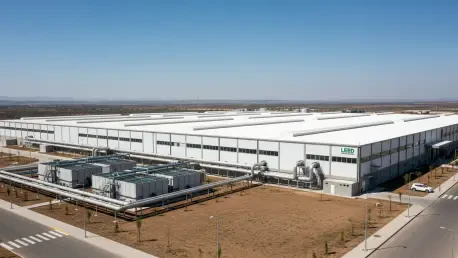

The rapid acceleration of nearshoring has transformed the Mexican landscape into a global manufacturing powerhouse, but this unprecedented growth faces a critical bottleneck in the form of resource scarcity. As multinational corporations migrate production lines from distant markets to the border regions of Chihuahua and the industrial hubs of Nuevo León, the demand for stable electricity and clean water has reached a fever pitch. This expansion is not merely a logistical shift; it represents a fundamental challenge to the country’s aging infrastructure and environmental limits. To sustain this momentum through the remainder of the decade, the conversation has moved past simple capacity building toward a sophisticated integration of green technologies. Modern industrial developers are realizing that the old model of high-resource extraction is no longer viable in a world where supply chains are scrutinized for their carbon footprint as much as their cost efficiency. This paradigm shift ensures that environmental stewardship is treated as a core business necessity.
Shifting Paradigms: The Evolution of Industrial Development
Holistic Performance: Building Design and Modularity
High-performance materials like low-carbon concrete and smart glass are becoming the new standard in Mexican industrial parks, signaling a departure from traditional building methods. This transition is not just about aesthetics; it involves deep structural shifts where facilities are designed to be disassembled or repurposed rather than demolished. By utilizing modular construction, developers can ensure that a warehouse built for automotive assembly today can easily transition to a high-tech electronics cleanroom tomorrow without massive waste. This adaptability effectively doubles the functional lifespan of the asset, providing a much higher return on investment for developers who are looking at long-term horizons beyond 2026 and into 2030. Furthermore, the focus on indoor air quality and natural lighting has shifted from a luxury to a requirement, as companies recognize that a healthy workforce is significantly more productive and experiences lower turnover in a highly competitive labor market where talent retention is now critical for success.
Strategic Planning: Digital Twins and Certifications
Strategic planning tools like Building Information Modeling (BIM) allow engineers to simulate every aspect of a building’s performance long before the first stone is laid. These digital twins provide granular data on projected thermal loads and water consumption, enabling precise adjustments that can slash energy bills by up to thirty percent. Once built, these facilities are increasingly seeking international validation through certifications like Leadership in Energy and Environmental Design (LEED) or Excellence in Design for Greater Efficiencies (EDGE). These badges of honor are no longer just for marketing; they serve as critical filters for institutional investors who are mandated by strict Environmental, Social, and Governance (ESG) protocols. In the current market, a certified green building commands higher lease rates and maintains a significantly lower vacancy rate than its traditional counterparts, proving that sustainability is now inextricably linked to real estate liquidity and financial stability across the industrial landscape.
Resource Efficiency: Navigating the Circular Economy
Resilient Systems: Water and Energy Management
Water scarcity has become a defining challenge for Northern Mexico, pushing industrial developers to implement some of the most advanced water reclamation systems in the world. Leading manufacturers are now installing closed-loop systems that treat and reuse up to ninety percent of their process water, drastically reducing their reliance on municipal supplies and local aquifers. These onsite treatment plants utilize membrane bioreactors and reverse osmosis to ensure that the water quality remains high enough for continuous industrial use. By decoupling production growth from water consumption, these companies are insulating themselves against potential droughts and local regulatory restrictions that could otherwise halt operations. This proactive water management strategy is not just about compliance; it is a vital survival mechanism in an arid climate where water is increasingly viewed as a precious commodity. Moreover, these systems often yield valuable byproducts that can be repurposed, further aligning the facility with circular economy principles.
Institutional Capital: The Role of ESG Investment
Capital markets have undergone a profound shift, with large-scale pension funds and global investment firms now prioritizing assets that demonstrate clear decarbonization pathways. In Mexico, this trend is particularly evident as foreign direct investment pours into states like Querétaro and San Luis Potosí, where the focus has moved toward zero-emission manufacturing clusters. These investors recognize that buildings with high carbon intensity represent a significant financial risk, especially as global regulations regarding supply chain transparency become more stringent. Consequently, the industrial sector is adopting rigorous tracking mechanisms to report on Scope 1 and Scope 2 emissions, ensuring that every kilowatt-hour used is accounted for and optimized. This transparency builds a layer of trust with international partners who are under pressure to clean up their global footprints, making Mexico a more attractive destination for long-term capital compared to regions that have been slower to adopt these comprehensive reporting standards.
Economic Logic: The Competitive Edge of Sustainability
Industry leaders recognized that the path forward required a radical departure from the outdated linear production models that dominated previous decades. They prioritized the creation of robust waste management protocols that transformed industrial byproducts into valuable inputs for other sectors, effectively closing the loop on resource consumption. By 2026, the integration of sustainability into the core business strategy proved to be the most effective way to navigate the complexities of a rapidly changing global market. The focus now shifts toward scaling these localized successes into a nationwide standard that ensures every new industrial park contributes to a net-positive environmental impact. Decision-makers should focus on accelerating the adoption of green hydrogen and carbon capture technologies to further decarbonize heavy manufacturing. By fostering deep collaboration between the public sector and private developers, the country established itself as a resilient leader in the global shift toward a circular, high-efficiency economy.