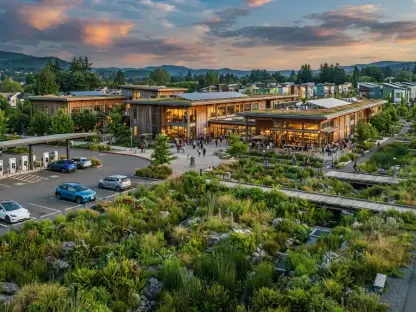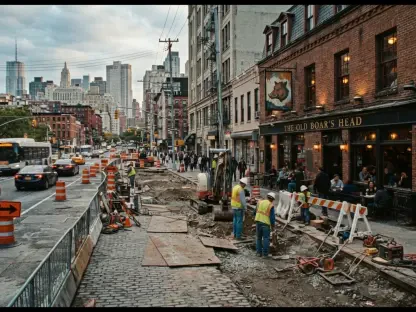

The global construction sector is no longer merely flirting with the concept of environmental responsibility; it has fundamentally reconstructed its operational DNA to treat carbon efficiency as a core engineering deliverable alongside structural safety. Historically, the industry acted as a massive contributor to global emissions, but a profound transformation is currently underway. As pressure to meet net-zero targets intensifies throughout the period from 2026 to 2031, “Sustainable Engineering Excellence” has evolved from a vague corporate ambition into a rigorous, data-driven operational mandate. This shift marks a departure from greenwashing toward a reality where every beam, slab, and joint is accounted for in a complex ledger of environmental impact. Engineers are now redefining the built environment by integrating verifiable data into every phase of the project lifecycle.
The Metrics of Change: Data and Real-World Implementation
Industry Adoption and Decarbonization Statistics
Analysis of recent industry performance indicates that leading firms have already achieved significant benchmarks, with some reporting a 33% reduction in absolute carbon emissions. These gains are particularly evident in direct operations, where transitions to renewable energy sources have pushed Scope 1 and 2 reductions as high as 71%. Currently, approximately 92% of operational power in top-tier projects is derived from renewable sources, reflecting a rapid move away from fossil fuel dependency. This is not merely a trend for smaller boutique firms but a widespread shift among major contractors who are setting a new standard for heavy industry.
Furthermore, the proliferation of low-carbon materials has moved beyond the pilot phase into mainstream application. Market data suggests that 45% of concrete utilized in major infrastructure now contains significantly lower embodied carbon, a figure that has already surpassed initial industry expectations. To maintain this momentum and ensure transparency, there is a growing movement toward independent validation. The adoption of the PAS 2080 certification provides a comprehensive framework for managing whole-life carbon, allowing contractors to provide clients with standardized, audited proof of their environmental claims.
Operationalizing Sustainability Through Innovation
Real-world applications of digital tracking have turned the concept of a circular economy into a functional reality on the job site. By utilizing advanced Building Information Modeling (BIM) and “materials passports,” modern projects are successfully diverting up to 98% of waste from landfills. These digital tools allow engineers to track the origin, composition, and future potential of every component. Instead of viewing a building as a permanent monolith, the industry is beginning to see structures as temporary assemblies of valuable assets that can be reclaimed and repurposed at the end of their initial use cycle.
A prime example of this precision engineering is seen in large-scale urban redevelopments like the 1 Broadgate project. Through proactive demolition management, engineers reclaimed 27% of materials for immediate reuse, effectively preventing over 13,000 tonnes of waste from entering the traditional waste stream. Beyond environmental metrics, firms are also focusing on “targeted” social return on investment (SROI). By conducting Community Needs Assessments, project teams are now tailoring their social initiatives to address specific local skills gaps and unemployment, generating hundreds of millions of dollars in social value while creating thousands of jobs and apprenticeships.
The Consensus: Insights from Industry Leaders
Industry experts increasingly argue that green practices are no longer “optional extras” but are just as critical as financial viability and structural integrity. There is a general agreement that the most successful projects are those where sustainability is baked into the initial design rather than added as an afterthought. This perspective has fundamentally changed how engineers approach their daily tasks, as they now weigh the carbon cost of a design choice with the same scrutiny traditionally reserved for its monetary cost.
Thought leaders also emphasize a technological evolution where digital tools allow for proactive management rather than retrospective reporting. Instead of measuring waste after it is generated, engineers use predictive modeling to prevent waste and carbon expenditures at the source. This transition relies heavily on collaborative procurement models. Professionals highlight that the next frontier of sustainable engineering requires early-stage collaboration with supply chains to lock in ethical sourcing and low-carbon materials long before the first shovel hits the dirt.
The Future Landscape of Sustainable Construction
The next phase of development focuses heavily on integrating carbon literacy across the entire workforce. It is becoming essential for everyone, from site managers to executive board members, to understand the carbon implications of their daily decisions. As this literacy grows, the use of “materials passports” is expected to become a regulatory standard rather than a voluntary innovation. This will effectively turn the built environment into a series of “material banks,” where every component is documented for eventual disassembly and repurposing in future projects.
While the transition promises long-term resilience and operational efficiency, firms still face the hurdles of data fragmentation and the high initial costs of pioneering technologies. Navigating these challenges requires a commitment to transparency and a willingness to share data across the industry to build a collective knowledge base. As these sustainable practices become the norm, infrastructure will transition from an environmental liability to a strategic asset. The ultimate goal is a built environment that supports both environmental health and social equity, ensuring that modern construction leaves a positive legacy.
Conclusion
The construction industry successfully bridged the gap between ambition and impact by prioritizing data accuracy and digital innovation. Engineers integrated carbon reduction directly into the procurement process, ensuring that ethical sourcing was no longer a secondary concern. The sector moved toward a model where social value and environmental stewardship were measured with the same rigor as structural durability. These efforts demonstrated that large-scale infrastructure could be delivered in harmony with net-zero goals when supported by standardized frameworks. Moving forward, the focus remained on empowering teams with the necessary literacy to make every decision a sustainable one. By establishing these new baselines, the industry secured a path toward a resilient and equitable future.