
The structural transformation currently unfolding in the heart of Georgia represents far more than just a typical municipal construction project; it is a meticulously designed economic catalyst intended to revitalize the local entrepreneurial ecosystem. As the development progresses through 2026, the focus has shifted toward ensuring that the financial benefits of this massive undertaking remain within the community. This commitment was recently exemplified during a high-stakes information and pre-qualification session held at the Macon Centreplex, where city leaders and construction executives converged to map out a path for local participation. By prioritizing Small, Minority, Women, and Disadvantaged Business Enterprises, the project aims to dismantle traditional barriers to entry that often exclude smaller firms from large-scale public works. This strategy is not merely about fulfilling quotas but about building a sustainable infrastructure where local talent drives growth.
Strategic Partnerships: Empowering Local Enterprise Through Outreach
The collaboration between Macon-Bibb County and industry giants like Barton Malow and Sheridan Construction has established a rigorous yet accessible framework for vendor engagement. During the most recent outreach events, project leaders emphasized the necessity of face-to-face interaction to demystify the pre-qualification process. This approach allows smaller firms to showcase their specialized capabilities directly to decision-makers, moving beyond the limitations of digital applications. For many local subcontractors, these sessions served as a vital networking hub where they could explore second-tier opportunities. By partnering with larger prime contractors, small businesses can gain invaluable experience on a project of this magnitude without shouldering the entire financial risk of a primary contract. This tiered participation model ensures that even specialized local artisans have a seat at the table as the massive arena continues to take shape.
Supporting this effort is the Office of Small Business Affairs, which has taken a proactive stance in preparing local firms for the competitive bidding environment. By providing comprehensive resources for businesses to register as official county vendors, the agency is effectively leveling the playing field. This preparation is crucial, as the bid packages currently being released cover an extensive array of trades, ranging from foundational concrete work to intricate interior finishes. The goal is to maximize the competitiveness of local enterprises so they can successfully vie for contracts against national firms. This institutional support transforms the arena project into a classroom for professional development, where local owners learn to navigate complex governmental compliance and insurance requirements. Consequently, the capacity of the local workforce is being elevated, leaving a legacy of expertise that will persist long after the venue opens its doors.
Economic Infrastructure: Building Capacity for Long-Term Growth
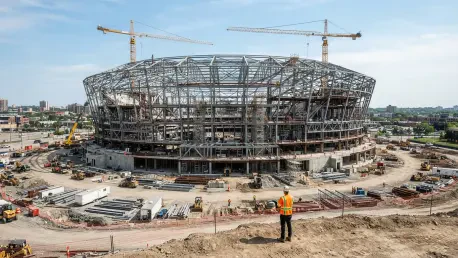
Beyond the immediate construction jobs, the physical specifications of the new 230,000-square-foot facility are designed to attract a higher tier of commerce to the region. Replacing the aging Macon Coliseum, the new arena will feature a maximum seating capacity of 12,298, which positions the city to compete for major national tours and sporting events. To maintain the continuity of local economic activity during the multi-year build, the project is being executed in strategic phases on existing surface parking areas. This careful planning ensures that the current coliseum remains fully operational until the new venue is completed in late 2028, preventing any dip in municipal revenue. The inclusion of luxury suites and a 35,000-square-foot flex hall provides a variety of spaces that local service providers, from catering to event security, can utilize to expand their own business operations as the city’s profile rises on the national stage.
The physical and cultural legacy of the arena is being cemented through its unique architectural design and the strategic inclusion of the local workforce. By drawing inspiration from the Ocmulgee River and the region’s rich musical history, the structure is becoming a permanent symbol of community pride and economic resilience. Project organizers have prioritized long-term engagement by establishing an online outreach portal that allows firms to access real-time data on bid packages and compliance needs. These proactive efforts ensure that the local business community remains at the forefront of the development process, securing its role in the city’s future prosperity. Businesses that take the initiative to formalize their certifications and register early find themselves in the strongest position to leverage this significant investment. Ultimately, the successful integration of local talent provides a blueprint for how infrastructure can effectively empower a regional entrepreneurial ecosystem.