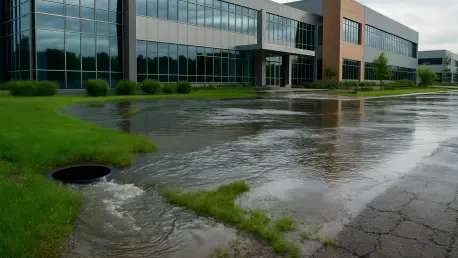

Poor site drainage represents more than just a maintenance issue; it is a significant legal liability that can lead to litigation if runoff impacts neighboring properties. This operational reality underscores a much broader shift in commercial real estate, where the strategic integration of sustainability into asset management is no longer a secondary luxury but a core requirement for survival. Today, in 2026, the boundary between environmental stewardship and energy affordability has effectively vanished, making them functionally identical in any professional business context. High energy costs directly threaten an asset’s bottom line, which has transformed efficiency measures into essential risk management tools rather than elective green initiatives. When owners proactively plan for energy performance during both the acquisition and holding periods, they create a more robust investment case based on long-term financial health. This convergence fosters a proactive management culture that prioritizes thoughtful, long-term operational planning over short-term fixes.
Maximizing the Potential of Existing Structures
Strategies for Long-Term Building Retention
A significant majority of the buildings standing today are expected to remain in active use through at least 2050, highlighting the undeniable permanence of current urban infrastructure. This statistical reality underscores the vital importance of renovation and adaptive reuse over the carbon-intensive process of demolition and new construction. As market demands shift, particularly with the evolving landscape of traditional office spaces, owners are increasingly finding success by repositioning underperforming assets into mixed-use environments. By extending the lifecycle of these structures through sustainable retrofits, managers can avoid the high capital and carbon costs associated with starting from scratch. These projects often involve stripping a building back to its core and shell to integrate high-performance systems that meet modern tenant expectations. This approach not only preserves the historical character of urban centers but also ensures that existing investments remain productive.
Moving Beyond Reactive Maintenance Traps
One of the greatest hurdles to achieving true sustainability in the built environment is the “like-for-like” replacement trap that plagues reactive maintenance departments. When a critical system, such as a large-scale chiller or a heating plant, fails unexpectedly, the primary objective is usually to restore service as quickly as possible to minimize tenant disruption. This urgency often leads to the installation of identical, outdated technology because it is more familiar and readily available in the local supply chain. Unfortunately, this decision locks the building into inefficient energy consumption patterns for the next fifteen to twenty years, effectively resetting the clock on decarbonization goals. To combat this, modern facility teams are now required to maintain a “plan on the shelf” that details high-efficiency, sustainable alternatives for every major building component. By pre-selecting these modern systems, teams can transform a technical failure into a strategic opportunity for building improvement.
Implementing Frameworks for Incremental Improvement
Utilizing Modular Standards for Renovations
The emergence of modular assessment frameworks has provided asset managers with a clear roadmap for improving building performance during localized renovations. These standards allow for a tailored approach, categorizing projects into distinct areas such as the building envelope, core services, and interior design. This flexibility is particularly useful for commercial real estate owners who may not be responsible for the entire interior of a building but still wish to improve the performance of central mechanical systems or structural integrity. By applying these rigorous standards, managers can benchmark their assets against global best practices, providing transparency to investors and tenants alike. This modularity ensures that even minor renovations contribute to a verifiable improvement in sustainability ratings. It allows for a phased implementation strategy that can be adapted to the financial and operational constraints of each property, making high performance more accessible.
Aligning Decarbonization with Leasing Cycles
For most institutional owners, the logistical challenge of performing massive, one-time building renovations is often prohibitive due to the need to keep spaces occupied and generating revenue. Consequently, the most effective strategy for deep decarbonization involves aligning major building interventions with natural leasing cycles and tenant turnover. When a floor becomes vacant, it provides a window of opportunity to perform comprehensive system upgrades, such as installing variable refrigerant flow units or updating building management systems, without disrupting existing operations. This incremental approach allows for the gradual modernization of the entire building over several years, spreading the capital expenditure across multiple fiscal periods. It also ensures that the property is constantly evolving to meet the expectations of new tenants who increasingly prioritize energy efficiency and wellness in their space selection. By integrating these upgrades into the leasing strategy, managers can justify higher rental premiums.
Enhancing Resilience and Community Value
Managing Local Physical Climate Risks
Physical climate risk assessments have transitioned from a niche reporting interest to a fundamental requirement for institutional owners and lenders in a remarkably short period. Resilience is now centered on protecting physical assets from localized threats such as flash flooding, extreme heatwaves, and increasingly volatile weather patterns that were less frequent in previous decades. Managers are prioritizing practical, structural interventions, such as relocating critical mechanical and electrical systems from basement levels to higher elevations. This simple shift can be the difference between a building remaining operational after a storm or facing months of costly remediation and lost rental income. Furthermore, installing reflective roofing materials and enhancing facade shading can mitigate the impact of urban heat islands, reducing the strain on cooling systems during record-breaking summers. These resilience measures provide a layer of security for stakeholders who are wary of climate-related financial losses.
Recognizing Properties as Community Hubs
Asset management is increasingly accounting for a property’s role within its local neighborhood, particularly for retail centers and mixed-use developments that naturally serve as community gathering points. Resiliency in this context involves understanding how a building can support the general public during emergency events, such as providing reliable power for device charging or access to critical information when local grids fail. This community-centric approach requires minimal structural changes but yields significant reputational benefits and fosters a sense of trust between the owner and the local population. For instance, a property that remains a “beacon of light” during a regional power outage becomes an invaluable local resource, which can translate into higher foot traffic and long-term tenant loyalty. These social value considerations are becoming a standard part of management frameworks, as investors recognize that well-integrated buildings are less likely to face opposition and more likely to thrive.
The Economic Reality of Sustainable Management
The industry’s transition toward sustainable lifecycle planning proved that the most successful assets were those that treated environmental performance as a cornerstone of financial health. Asset managers who moved away from reactive, “like-for-like” maintenance and adopted modular renovation standards found themselves better positioned to weather the economic volatility of recent years. The business case for sustainability was ultimately driven by “sharpened pencils”—clear, data-backed financial metrics that demonstrated how resilient, green-certified facilities paid significant dividends through lower operating costs and superior tenant retention. These organizations successfully integrated physical climate risk assessments into their core operations, effectively future-proofing their portfolios against the realities of a changing environment. By recognizing the social value of their properties and fostering community hub functions, they built a level of brand equity that traditional management styles could not replicate.