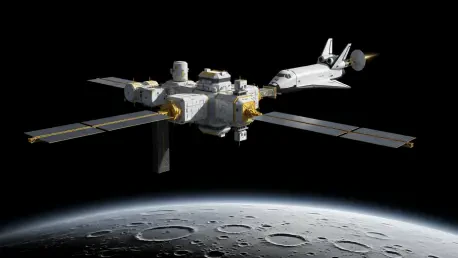

The lunar surface, once regarded merely as a remote destination for symbolic flags and brief scientific excursions, is currently undergoing a radical transformation into a permanent extension of human civilization. This evolution marks a significant departure from the twentieth-century mission mindset, moving instead toward a sophisticated campaign culture that prioritizes the construction of long-term infrastructure at specific lunar coordinates. Rather than executing isolated visits that leave little behind, the current strategy focuses on establishing a reliable foothold where astronauts can live and work for extended durations. This foundational shift is intended to turn the Moon into a vibrant hub for scientific research while simultaneously serving as a critical testing ground for eventual crewed voyages to Mars. By mastering the complexities of the lunar environment, humanity is preparing for the greater challenge of deep-space exploration, ensuring that the first permanent outpost serves as a gateway to the broader solar system.
Establishing a Sustainable Strategic Presence
The core of this updated approach involves a rigorous and sustained schedule of approximately 79 launches and 73 lunar landings planned over the next decade. Starting from the late 2020s, the mission architecture intends to ramp up to at least two human landings per year, allowing subsequent crews to build directly upon the work of their predecessors in an iterative fashion. This consistent presence is specifically designed to move beyond simple survival, teaching human beings how to live and operate effectively in a harsh, non-terrestrial environment. Establishing such a frequent launch cadence requires a massive coordination of government resources and private sector contributions to ensure that supplies and scientific equipment are always available. By maintaining this steady flow of traffic, the lunar gateway and surface bases will evolve from temporary shelters into functional laboratories. This operational tempo is essential for proving that human activities can be sustained indefinitely.
Identifying the perfect location for this permanent base is a complex process that prioritizes both safety and resource accessibility for the long haul. Ideal sites must feature relatively flat terrain to accommodate repeated landings and the physical expansion of facilities for both government and private-sector partners. Most importantly, these locations must be near permanently shadowed craters that harbor significant deposits of water ice. This ice is a foundational resource that can be harvested for life support and processed into rocket propellant, which is vital for any outbound journey. The Shackleton Crater and other regions near the lunar South Pole are currently the primary candidates because they offer peaks of eternal light where solar energy is nearly constant alongside the dark, icy depths. This combination of resources makes the South Pole an unparalleled strategic asset for building a self-sustaining lunar civilization.
Unlocking Economic Value and Technological Innovation
The lunar surface is far more than a scientific curiosity; it is a potential engine for a new global economy that could redefine terrestrial industries. The Moon contains significant deposits of Helium-3, a rare isotope that could transform the energy sector as a fuel for clean nuclear fusion and as a specialized coolant for quantum computers. Furthermore, the presence of rare earth metals—essential for everything from modern smartphones to national defense systems—offers a massive incentive for private investment and the deployment of advanced prospecting rovers. These autonomous machines are currently being developed to locate, refine, and transport these materials across the lunar landscape. By creating a marketplace for lunar resources, the cost of space exploration can be offset, making it a profitable venture. This economic potential draws in global stakeholders, turning the lunar outpost into a multinational industrial hub that supports technological growth.
To support these intensive industrial efforts, the outpost will require a steady, 24/7 power supply derived from a sophisticated mix of solar arrays, fuel cells, and nuclear fission reactors. This energy grid will facilitate in-situ resource utilization, allowing the base to become increasingly self-sufficient and less dependent on expensive supply chains from Earth. By mastering the ability to refine and use local materials, NASA and its commercial partners can create a cis-lunar economy that bridges the gap between the home planet and the rest of the solar system. The construction of landing pads using lunar regolith and the 3D printing of habitat shells are early examples of how this technology is currently being applied. Developing a localized power network ensures that critical life support systems remain operational during the long lunar nights. This independence from Earth is the ultimate goal for any permanent settlement, as it proves that humanity can thrive elsewhere.
Breakthroughs in Life Support and Sustainability
The challenges of building a lunar home are also driving breakthroughs with direct benefits for terrestrial life, particularly in the realm of sustainable resource management. For instance, the development of closed-loop life support systems focuses on the total recycling of water and organic waste, which could solve resource scarcity issues in drought-stricken areas on Earth. Additionally, the push for waterless mining techniques on the Moon offers a way to eliminate toxic tailing ponds in traditional mining operations. Because water is too precious to waste in space, engineers have developed mechanical and electrical extraction methods that do not rely on liquid chemicals. These innovations demonstrate that the journey to the Moon is not just about reaching another world, but about improving the home planet through high-stakes engineering. By testing these methods in extreme environments, companies proved their reliability before implementing them in sensitive ecosystems on Earth.
To ensure the continued viability of the lunar presence, mission planners prioritized the deployment of reusable shuttle systems between the surface and the lunar gateway. They mandated the creation of standardized docking interfaces that allowed for international cooperation and the shared use of critical resources like oxygen and fuel. Furthermore, the formalization of international resource treaties ensured that mining operations remained transparent and beneficial to all terrestrial stakeholders. Engineers expanded the footprint of the lunar energy grid, incorporating more robust nuclear fission units to power the growing industrial sectors. These actions secured the infrastructure necessary for the next phase of exploration, which focused on the construction of transit vehicles within the lunar orbit. By establishing these protocols early, leadership guaranteed that the expansion into the solar system remained organized, sustainable, and focused on the collective benefit of humanity.