
The rapid migration of residents and capital toward Florida’s Gulf Coast has catalyzed an unprecedented demand for sophisticated industrial infrastructure that requires high-level oversight. As the Sun Belt continues to dominate the economic landscape of 2026, the necessity for robust logistics and distribution centers has shifted from a convenience to a critical operational requirement for global commerce. In this high-stakes environment, Catamount Constructors has strategically elevated Jay Garrell to the role of Project Executive in Tampa to spearhead their regional growth. This promotion signals a deeper investment in the Florida market, where the complexity of modern industrial projects demands a leader capable of balancing technical precision with long-term vision. By positioning a seasoned professional at the helm of these operations, the firm aims to navigate the unique regulatory and environmental challenges inherent to the Southeast while maintaining the rapid delivery schedules that have become the industry standard for major e-commerce players.
Advancing Regional Operational Standards
Developing Technical Excellence through Multi-Sector Experience
Jay Garrell brings a diverse professional portfolio spanning fifteen years of intensive construction management experience, which provides him with a unique perspective on large-scale development. His career trajectory has moved through several high-complexity sectors, including the healthcare industry and Class A office developments, before solidifying his expertise in the industrial space. This multidisciplinary background is essential for modern project executives who must understand the integration of advanced mechanical systems, structural integrity, and architectural aesthetics within a single facility. His technical qualifications are supported by a Bachelor of Arts in business administration with a minor in construction management from Southern Polytechnic State University. Furthermore, his adherence to safety and operational standards is evidenced by his OSHA 30 and GSWCC IA certifications. These credentials allow him to speak the language of both onsite labor and corporate stakeholders, bridging the gap between field execution and strategic planning.
Strengthening Relationships with National Industrial Partners
The success of a regional expansion often hinges on the ability to maintain consistent delivery standards for high-profile national clients such as Amazon and Seefried. Garrell has demonstrated a consistent ability to manage these critical relationships by delivering complex projects on schedule while navigating the inevitable disruptions of a global supply chain. Within his new capacity, he is responsible for the oversight of regional project teams, where his focus lies in maintaining operational performance and workforce development. Senior leadership at Catamount, including Vice President of Industrial Stephanie Martinez and Senior Vice President Mitch Brown, noted that his ability to onboard effective teams has been instrumental in his rapid ascent. By ensuring that every jobsite adheres to a unified standard of quality, he mitigates the risks associated with rapid scaling. This approach not only preserves the company’s reputation for reliability but also fosters a culture of accountability among project managers.
Capitalizing on the Logistics Infrastructure Surge
Optimizing Distribution Networks through Specialized Design
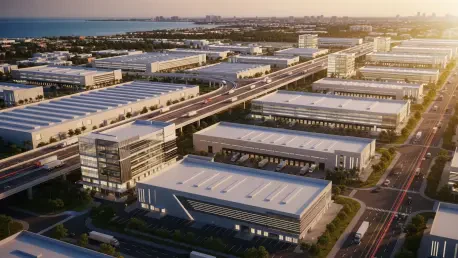
The current industrial landscape in Florida is characterized by a surge in demand for last-mile delivery centers and massive distribution hubs that can support the state’s growing population. This regional boom is driven by shifting consumer habits and the ongoing relocation of major corporate headquarters to the Southeast, necessitating a more robust infrastructure. Garrell’s leadership in Tampa is strategically timed to capitalize on these trends, focusing on the development of facilities that prioritize efficiency and scalability. His role involves evaluating the technical feasibility of design-build projects and ensuring that value engineering remains a core component of the pre-construction phase. By optimizing the layout and structural components of these warehouses, the firm can offer clients more cost-effective solutions without compromising on the quality or longevity of the build. This focus on technical optimization is what differentiates the firm in a competitive market where every square foot is vital.
Leveraging the Employee-Ownership Model for Growth
Catamount’s status as a 100% employee-owned company provides a distinct advantage in the recruitment and retention of top-tier talent like Garrell, fostering a culture of shared success. This ownership model aligns the interests of the individual employees with the long-term goals of the firm, resulting in higher levels of engagement and quality control on the jobsite. For nearly two decades, including the period from 2026 forward, the firm has maintained its position on Engineering News-Record’s Top 400 National Contractors list. This legacy of excellence is maintained through a commitment to internal talent development and a diverse portfolio that includes multifamily, healthcare, and government sectors. By leveraging this national expertise in the local Tampa market, the firm provides a full suite of services ranging from sustainable construction practices to complex design-build delivery. The integration of regional leadership within a national framework allows the company to remain agile while drawing on vast resources.
Implementing Scalable Solutions for Future Infrastructure
The promotion of seasoned leadership into the Florida industrial sector established a clear framework for managing the complexities of rapid urban expansion and logistics development. Stakeholders who prioritized the alignment of technical certification with practical field experience found that such a balance was necessary to mitigate the risks of high-volume construction schedules. Moving forward, developers and contractors should have focused on the integration of sustainable building practices and advanced value engineering to ensure long-term facility viability. The success of this transition highlighted the importance of fostering strong relationships with national tenants while simultaneously investing in the professional growth of local project teams. It became evident that firms which utilized an employee-ownership model were better positioned to navigate labor shortages and maintain consistent quality across multiple active sites. Organizations looking to replicate this growth trajectory should have considered the implementation of rigorous internal mentorship.