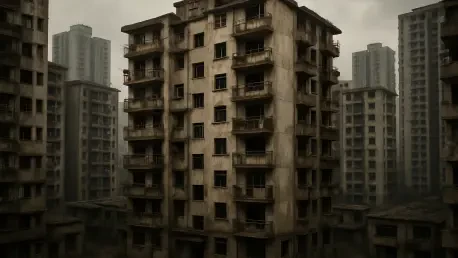

The widespread collapse of the residential property management industry across China has fundamentally altered the economic landscape, turning once-lucrative service contracts into liabilities for thousands of firms and millions of families. This systemic breakdown, often characterized as the “great retreat,” is no longer a localized issue but a pervasive threat to the financial stability of the middle class, whose primary wealth is tied to real estate equity. For decades, the property management model relied on a delicate balance of high fee collection and low operational costs, a formula that successfully fueled rapid urbanization. However, as the housing market cooled and consumer confidence plummeted, this balance shattered, leaving behind a wake of bankruptcies and service interruptions that are currently eroding the physical and financial foundations of modern residential complexes. The disappearance of professional management services signals a transition from an era of aggressive expansion to a period of desperate preservation, where the failure to maintain basic building standards is directly correlated with a precipitous decline in home values and community safety.
Industry Stability: The Scale of the Market Shift
The magnitude of the current industry contraction is reflected in the staggering number of property management companies that have officially ceased operations or filed for bankruptcy. Over 1,200 firms deregistered in 2025 alone, and the pace of these closures has remained high throughout the early months of 2026, marking a definitive end to the high-growth era of the previous decade. During the boom years of 2019 and 2020, property management was widely viewed as a “cash cow” for developers and investors due to its steady revenue streams and high-margin potential in a rising market. Today, that optimism has been replaced by a “cold winter” as many companies find their operating models completely unsustainable in the face of dwindling revenue and rising costs. This rapid disappearance of established players from the market is creating a vacuum in essential services, leaving hundreds of thousands of homeowners without a clear path for the ongoing maintenance of their residential assets.
Financial viability for most modern property management enterprises traditionally requires a fee collection rate of at least 80% to cover basic operational expenses and labor. Current data indicates that the industry is falling dangerously short of this target, with top-tier firms reporting average collection rates of only 71% and smaller, localized players seeing figures drop below 65%. This shortfall has triggered a destructive “death spiral” where the lack of liquid capital forces management to cut corners on security, cleaning, and essential repairs. These visible declines in service quality then serve as a justification for even more residents to withhold payments, further starving the firms of the funds they need to function. Without a mechanism to break this cycle of non-payment and deteriorating quality, the entire business model of professional property management is becoming increasingly untenable for both private enterprises and state-backed entities alike.
Workforce Pressures: The Impact on Professional Standards
The crisis has fundamentally transformed the nature of employment within the property management sector, shifting the focus of the workforce from service provision to aggressive debt collection. Property managers and support staff now spend the majority of their working hours chasing down unpaid fees and managing disputes, rather than ensuring the smooth operation of residential facilities. This shift has led to an environment of extreme stress and burnout, as employees are caught between management’s impossible collection targets and the growing hostility of residents. Stagnant wages and increased workloads have made it difficult for companies to retain talent, resulting in a significant brain drain as experienced professionals leave the industry for more stable careers. The remaining staff are often overworked and undertrained, leading to a noticeable decline in the day-to-day oversight of building systems and community safety.
The deterioration of professional standards is accompanied by a breakdown in the social contract between property staff and the people they serve. Where there was once a sense of community cooperation and mutual respect, the relationship has become increasingly transactional and often openly antagonistic. High turnover rates among staff mean that residents no longer have consistent points of contact, which erodes the institutional knowledge required to manage complex building infrastructures effectively. When elevators malfunction or plumbing issues arise, the lack of experienced maintenance personnel leads to delayed repairs and temporary fixes that do not address underlying structural problems. This loss of continuity and expertise not only frustrates homeowners but also accelerates the physical degradation of the property, creating long-term liabilities that are difficult and expensive to rectify once the management system fails completely.
Resident Defiance: The Friction Over Fee Obligations
A significant portion of the current liquidity crisis stems from widespread homeowner defiance regarding management fees, particularly concerning vacant properties. Many owners who hold real estate as an investment rather than a primary residence argue that they should not be held responsible for service charges if their units are unoccupied. Despite clear legal regulations stating that vacancy does not exempt an owner from contributing to shared costs like security, landscaping, and elevator maintenance, emotional and psychological resistance remains a major obstacle. This belief has led to a massive accumulation of unpaid fees across major urban centers, draining the resources that management firms depend on to maintain common areas. The resulting financial strain often forces companies to withdraw services from entire buildings, which inadvertently punishes those residents who have remained diligent in their payments.
Trust between residents and management has been further eroded by a perceived lack of accountability when major infrastructure failures occur within residential complexes. When issues like significant water damage, exterior wall cracks, or structural defects arise, property management firms frequently deflect responsibility toward the original developers or government agencies. This refusal to take ownership of problem-solving leaves homeowners feeling vulnerable and abandoned in their own communities. Many residents now view their monthly or annual management fees as a “luxury tax” that provides no real protection against the depreciation of their largest financial asset. In protest of what they perceive as a lack of value, even traditionally reliable payers have begun to withhold fees, leading to a further erosion of the service standards that are supposed to justify the costs in the first place.
Economic Realities: The Failure of Speculative Growth
The current turmoil highlights the inherent flaws in a capital-driven growth model that prioritized rapid portfolio expansion over the long-term sustainability of property services. During the peak of the real estate expansion, property management firms raced to secure contracts for massive square footage to satisfy investors and boost market valuations, often ignoring the actual operational costs of maintaining those areas. This strategy was effective when labor was cheap and electricity costs were stable, but the recent shift in the economic climate has left many firms with thin profit margins and no safety net. As inflation drives up the cost of basic utilities and maintenance materials, these companies are finding that their existing contracts are no longer profitable. The inability to adjust fees in real-time to match rising expenses has pushed many previously successful firms into a state of chronic insolvency.
For many homeowners, the burden of property management fees has become increasingly difficult to justify as the market value of their homes continues to soften. In many regions, the annual cost of high-end property services now feels disproportionate to the actual utility provided, especially when amenities like swimming pools or clubhouses are poorly maintained or closed entirely due to budget cuts. With housing prices dropping in several key markets, homeowners are looking for ways to reduce their monthly expenditures, and management fees are often the first expense to be targeted for reduction or elimination. However, this focus on immediate savings fails to account for the hidden costs of asset neglect. The short-term benefit of avoiding a few thousand dollars in service fees is quickly eclipsed by the long-term loss of equity as the lack of maintenance makes the property less attractive to potential buyers or renters.
Asset Preservation: Critical Steps for Long-Term Value
The ultimate irony of the “great retreat” is that the failure to maintain a professional property management system could effectively wipe out the majority of a homeowner’s equity over time. When a management firm abandons a residential complex or significantly reduces its presence, essential infrastructure such as fire safety systems, backup generators, and security monitoring begin to fail almost immediately. A neighborhood that loses its professional management quickly transitions into a state of physical decay, making it an “isolated island” that struggle to attract interest in a competitive real estate market. The cost of restoring a neglected property to its original condition is almost always significantly higher than the cumulative cost of regular maintenance fees. Consequently, the breakdown of these service providers represents a direct threat to the long-term financial health of every homeowner within the affected developments.
The resolution of the property management crisis necessitated a shift toward transparent auditing and more flexible service models that prioritized long-term asset health over immediate profit margins. Policy shifts favored the creation of independent oversight committees that provided transparent financial reporting and allowed residents to audit how their maintenance funds were being spent. These initiatives, alongside a more robust legal framework for resolving fee disputes, worked to bridge the gap between service quality and payment expectations. By focusing on the long-term health of the physical asset rather than short-term profit extraction, these strategies offered a blueprint for stabilizing a sector that had previously stood on the brink of total collapse. The transition toward a more collaborative and transparent model proved essential for stopping the bleeding of asset value in thousands of urban communities across the country.