
The fundamental structure of the American economy is currently undergoing a quiet but seismic shift as the traditional reliance on individual consumer spending gives way to an era defined by massive capital investment in digital infrastructure. While the headlines often focus on quarterly retail sales or the latest fluctuations in consumer sentiment, the real momentum is occurring within the specialized sectors responsible for building the physical foundation of the intelligence age. This pivot suggests that the next decade of fiscal growth will not be driven by what people buy at the grocery store, but rather by the billions of dollars flowing into high-tech industrial construction and the sophisticated hardware necessary to power next-generation computations. As the labor market stabilizes into a low-turnover environment, this surge in business spending provides a critical safety net that maintains gross domestic product stability even when households begin to tighten their belts in response to persistent inflation and elevated borrowing costs.
Industrial Transformation and the AI Infrastructure Boom
The Infrastructure Race: Capitalizing on the Data Center Surge
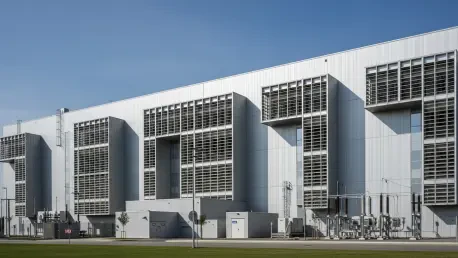
Business investment has recently emerged as the primary engine for national GDP expansion, with current data indicating that non-residential fixed investment is contributing significantly to a healthy growth rate between 2.5% and 3%. This momentum is largely anchored in the massive scale of data center construction, which recently recorded nearly $50 billion in “bricks and mortar” spending within a single quarter alone. Unlike previous technological cycles that relied predominantly on software adoption, this phase is defined by the heavy industrialization of the digital landscape. Large-scale facilities are being erected across the country to house the immense processing power required for advanced machine learning models, turning what was once a niche real estate sector into a dominant force in the national construction industry. This surge in capital expenditure reflects a strategic prioritization among the nation’s largest firms, as they commit unprecedented resources to ensure they possess the physical capacity to compete in an increasingly automated global marketplace.
Beyond the physical buildings, this infrastructure boom signals a fundamental change in how the corporate sector contributes to national wealth by filling the potential void left by moderating consumer demand. The AI sector provides a robust tailwind that stabilizes the broader economy, ensuring that even if household spending cools, the industrial side of the balance sheet remains in high gear. As companies prioritize specialized hardware, high-density server racks, and advanced cooling systems, the ripple effects of this investment-led model are expected to sustain growth through 2028. This shift represents a move toward “hard” assets that generate value through processing power rather than simple retail exchange. By focusing on these durable industrial investments, the corporate world is insulating the national economy against short-term consumer volatility, creating a more predictable and stable growth trajectory that relies on the expanding capabilities of artificial intelligence and the cloud infrastructure that supports it.
Corporate Capital: The Pivot to Investment-Led Growth
The strategic reallocation of capital toward automated systems and data processing facilities indicates that businesses are no longer waiting for consumer sentiment to improve before making major moves. Instead, they are aggressively expanding their technical footprints to gain a competitive edge in a market where efficiency and speed are the most valuable currencies. This proactive spending behavior has created a decoupling between traditional economic indicators and the actual health of industrial production. While the average consumer may feel the pinch of high energy costs, the business sector is operating with a longer-term horizon, viewing the current infrastructure build-out as an essential prerequisite for future profitability. This massive infusion of capital is supporting a wide range of secondary industries, from electrical grid modernization to specialized logistics, further diversifying the economic base and providing multiple points of resilience against localized financial downturns.
Furthermore, this investment-led growth model is reshaping the regional economic geography of the country, as data centers and AI hubs are often located in areas with favorable land costs and power access rather than traditional urban centers. This decentralized growth pattern helps to distribute wealth more evenly across various states, reducing the reliance on a few major metropolitan hubs for economic vitality. As these industrial projects reach completion, they serve as permanent anchors for high-paying technical jobs and ongoing maintenance contracts, ensuring that the initial capital expenditure results in long-term local benefits. The commitment to these physical assets suggests that the current technological revolution is far more than a digital trend; it is a physical reconstruction of the national industrial identity. By prioritizing the development of the AI backbone, the United States is positioning itself to maintain a leadership role in the global economy, driven by the capacity to process and analyze data at a scale that was previously unimaginable.
The Changing Dynamics of the Modern Workforce
Employment Stability: Navigating the Stagnant Labor Pool
The American workforce has entered a unique “no-hire, no-quit” phase characterized by remarkably low turnover and a “no-fire” mentality among employers who are hesitant to lose skilled staff. While employment continues to rise at a steady pace, the slower overall growth makes monthly labor reports more sensitive to temporary disruptions like weather events, labor strikes, or short-term government shutdowns. This lack of movement creates a stable but stagnant labor environment where the typical competitive churn of a high-growth economy is noticeably absent. Many workers are choosing to remain in their current roles primarily to maintain essential benefits, particularly health insurance, which has become an even more significant anchor in a period of rising living costs. For companies, this means that while talent acquisition is difficult, retention is naturally high, allowing firms to focus more on internal training and the integration of new technologies rather than constant recruitment.
This stagnation is accompanied by a psychological shift in how the public perceives job security and unemployment figures, leading to a disconnect between data and sentiment. Even though national unemployment rates remain historically low—often staying well under 4.5%—the prolonged period of extreme labor tightness has reset the public’s expectations for what a healthy job market looks like. For many Americans, even a slight uptick in the jobless rate now feels like a significant recessionary threat, despite the fact that these figures remain incredibly healthy by any long-term historical standard. This hypersensitivity to marginal changes in the data can drive negative consumer sentiment even when the reality of the market is one of extreme stability. Employers, recognizing this fragility, are often opting to keep workers on the payroll during slow periods to avoid the future costs of rehiring, a strategy that further reinforces the low-turnover nature of the current employment landscape.
Labor Evolution: Demographic Trends and AI Risks
Labor force participation is also being heavily shaped by the “silver tsunami,” as a large wave of older workers enters retirement and permanently exits the job market. While those in their prime working years are currently employed at peak levels, the overall workforce participation rate is shrinking due to these demographic shifts and a decrease in the number of teenagers holding traditional part-time jobs. This mass exit of experienced personnel creates a knowledge gap that businesses must urgently address, often by accelerating the adoption of automated tools to fill the void. The transition is particularly visible in sectors like manufacturing and logistics, where the loss of veteran staff is being offset by the implementation of sophisticated software and robotic systems. This demographic pressure serves as a catalyst for the AI infrastructure boom, as companies seek technological solutions to maintain productivity in the face of a naturally shrinking human labor pool.
The future role of artificial intelligence in the job market remains a point of intense debate, with two competing outlooks for the coming years of 2026 through 2028. One perspective suggests that AI will significantly drive down the cost of services, leading to higher consumer demand and potentially boosting employment to meet that increased volume. The alternative view warns of potential job displacement, though such impacts may only materialize if the broader economy enters a true recessionary period where firms are forced to cut costs aggressively. For now, many organizations are in a “wait and see” mode, pausing new hires until they can better understand how to best leverage these new tools within their existing workflows. This cautious approach contributes to the low-turnover environment, as both employers and employees wait for the full impact of AI integration to become clear. The result is a labor market that is essentially in a holding pattern, balanced between the necessity of human skill and the promise of automated efficiency.
Consumer Pressures and the Real Estate Market
Household Sentiment: Decoupling Emotion from Spending
A striking paradox exists in the current economy where consumer sentiment is lower than it was during the 2008 financial crisis, yet people continue to spend money at a resilient pace. High energy prices and “sticky” inflation in the service sector are the primary drivers of this widespread pessimism among households, creating a sense of financial fatigue despite steady employment. Interestingly, high-income earners, who traditionally feel more optimistic about their financial futures, are now reporting levels of dissatisfaction similar to lower-income groups. This is largely because they are feeling the pinch of rising costs for non-essential services such as luxury travel, high-end dining, and specialized personal care. The psychological burden of seeing higher prices at every turn has created a “vibe-cession,” where the emotional perception of the economy is far bleaker than the actual spending data would suggest, leading to a disconnect that puzzles many traditional economists.
In contrast to the gloom reflected in sentiment surveys, the actual behavior of consumers suggests a stubborn refusal to downgrade their lifestyles significantly. While they may complain about the cost of living, the data shows that households are still prioritizing experiences and convenience, often dipping into savings or utilizing credit to maintain their standard of living. This decoupling of sentiment from spending indicates that traditional surveys may no longer be the most accurate predictor of economic activity in an era of persistent but manageable inflation. People have seemingly adjusted to a “new normal” of higher prices, expressing their frustration in polls while continuing to drive demand in the broader economy. This persistence provides a floor for the service sector, which remains a vital component of the national GDP even as the industrial side of the economy takes a more prominent role in driving growth through 2.5% to 3% annual gains.
Real Estate Trends: Regional Growth and Interest Rate Impacts
In the real estate sector, high mortgage rates have created a “lock-in” effect, where homeowners are reluctant to sell their properties and lose their existing low-interest rates from previous years. This phenomenon has significantly slowed the pace of existing home sales and pushed many families toward renovating their current homes instead of moving to a new location. The resulting supply shortage has kept home prices elevated, creating a challenging environment for first-time buyers who are faced with both high costs and limited inventory. Despite these national hurdles, certain regional markets continue to thrive, highlighting a resilient real estate landscape that manages to grow even as the broader market feels the strain of restrictive monetary policies. These localized booms are often driven by specific industrial developments, such as the construction of new data center corridors or corporate relocations to more affordable, business-friendly states.
Industry leaders recognized that the period of high interest rates required a strategic shift toward internal optimization and regional diversification. Markets that remained resilient, such as Northwest Arkansas, demonstrated that localized demand could effectively decouple from broader national trends if the underlying economic base was strong. Moving forward, stakeholders identified that the integration of artificial intelligence into the physical economy acted as the primary safeguard against the volatility of traditional consumer markets. Businesses prioritized the acquisition of high-efficiency hardware and expanded their data processing footprints to ensure long-term competitiveness. This transition suggested that future economic health would be measured by the robustness of digital infrastructure rather than just the frequency of retail transactions. The shift toward a more capital-intensive model provided a new foundation for stability that withstood the pressures of a fluctuating labor market and evolving demographic shifts.