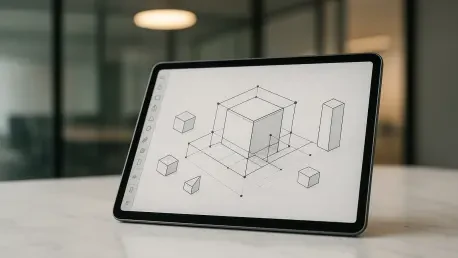

The shift from manual geometry construction to agentic design allows architects to focus on high-level decision-making while AI handles the labor-intensive task of generating 3D structures. Founded by a prominent team of veterans from the Autodesk AI Lab, Google DeepMind, and Tesla, the San Ramon-based startup Illoca has officially launched Plamo to tackle these systemic inefficiencies. This browser-based 3D workspace introduces vibe modelling, a concept that prioritizes creative intent over manual technical execution. Much like the transition to vibe coding in the software development sphere, Plamo empowers designers to steer architectural outcomes through conceptual goals rather than granular tool interactions. By reducing the friction between initial ideation and complex modeling, the platform allows professionals to rapidly iterate on designs without being constrained by the technical syntax of legacy CAD software. This approach enables a more fluid transition from vision to reality in the construction sector.
Advancing Precision Through Parametric Logic
Technical Innovations: Geometry Generation
Unlike many standard generative AI tools that produce non-editable meshes, Plamo utilizes boundary representation geometry to ensure that every generated structure is backed by parametric logic. This technical distinction is crucial for the AEC industry, as boundary representation allows for precise mathematical definitions of 3D objects rather than superficial shells. Because the resulting geometry is fully editable, users can adjust structural relationships and refine building systems without having to restart the design process from scratch. This ensures that the speed of artificial intelligence does not come at the expense of the professional control required for complex engineering. The ability to generate workable, high-fidelity models that integrate into established BIM environments allows architects to maintain high standards of precision while benefiting from automated workflows. By providing a bridge between conceptual AI and technical accuracy, the platform eliminates the need for manual geometry reconstruction.
System Integration: Parametric Logic
The inclusion of parametric intelligence means that the 3D models generated within Plamo are inherently aware of their own structural constraints and mechanical relationships. When a designer modifies a specific dimension or shifts a load-bearing wall, the AI agent automatically recalibrates the surrounding geometry to maintain the logical consistency of the building. This dynamic responsiveness is a significant departure from traditional modeling, where such changes often require hours of manual coordination to avoid errors. By automating the technical maintenance of the model, the platform allows professionals to focus on the aesthetic and functional aspects of their projects. This capability is particularly valuable during the early stages of design, where numerous iterations are tested and refined in quick succession. The agentic system ensures that every variation remains physically viable and technically sound, providing a robust foundation for subsequent engineering phases. Ultimately, this logic-driven approach reduces the risk of late-stage design errors and enhances efficiency.
Maximizing Efficiency with Agentic Workflows
Interactive Design: Collaborative Intelligence
Plamo functions as a proactive partner that interprets a wide variety of inputs, including natural language prompts, hand-drawn sketches, and detailed schematics, to build comprehensive 3D environments. This agentic workflow is designed to prevent the common pitfalls of AI hallucinations by incorporating a research-driven feedback loop. When the software encounters ambiguous design intent or missing data, the AI agent proactively asks the user for clarification rather than making unfounded assumptions. This ensures that the resulting models are grounded in real-world engineering constraints and the specific requirements of the site. By facilitating an interactive dialogue between the human designer and the machine, the platform creates a collaborative intelligence that enhances the creative process. Architects can provide high-level directives, while the agent handles the spatial computation and data coordination required to realize the vision. This synergy allows for the rapid generation of complex structures that remain logically consistent and structurally integrated.
Strategic Development: Industry Impact
The evolution of architectural design was significantly influenced by the integration of agentic workflows that solved the industry’s most persistent manual bottlenecks. Before the widespread adoption of these tools, architects and engineers spent a disproportionate amount of time on technical coordination rather than creative problem-solving. The launch of Plamo, supported by a thirteen-million-dollar seed round, demonstrated that AI could produce workable results that fit into professional manufacturing pipelines. This transition marked a historical shift where designers acted as directors of intelligent systems to maintain flexible workspaces. By moving toward vibe modelling, the AEC sector bridged the gap between conceptual design and physical reality more efficiently. To leverage this progress, firms should now focus on upskilling their staff to manage AI agents and integrating these tools into their core project management frameworks. This evolution ensured that the design community was better equipped to handle the rising complexity of modern infrastructure projects through collaborative intelligence.