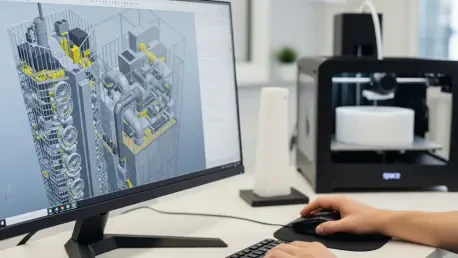

The traditional engineering landscape where designers relied on two-dimensional hand-drawn blueprints and physical prototypes has been completely superseded by a dynamic digital-first methodology that defines every modern manufacturing success. This systemic shift toward a digital development process allows for the creation of high-fidelity models that serve as a single source of truth for both designers and manufacturing facilities worldwide. Computer-Aided Design technology is no longer restricted to high-stakes industries like aerospace or automotive manufacturing; it now fundamentally supports architecture, consumer electronics, and small-scale industrial design projects. By replacing intuitive guesswork with data-driven certainty, these sophisticated tools ensure that every component is fully optimized before any raw material is ever utilized in the physical production process. This reliability allows for much more aggressive innovation cycles and reduced time to market for complex goods.
Enhancing Reliability Through Precision and Teamwork
Risk Mitigation: The Utility of Virtual Environments
A fundamental advantage of digital modeling technology is the radical reduction of human and mechanical errors that historically plagued the early phases of the design cycle. In legacy manufacturing environments, discovering a structural flaw during the assembly stage represented a financial disaster that resulted in wasted materials and stalled production lines. Modern platforms mitigate these risks by allowing engineering teams to inspect every millimeter of a three-dimensional model within a virtual space. This capability catches structural weaknesses or fitting issues long before a physical prototype is ever constructed, effectively avoiding costly correction loops and minimizing environmental waste. Because these models are computationally accurate, they allow designers to predict how materials will behave under various conditions, ensuring that the final physical product performs exactly as intended without the need for expensive trial-and-error sessions that once consumed valuable capital.
Collaborative Dynamics: Integrating Real-Time Feedback
Modern engineering environments have significantly improved workplace dynamics by effectively dismantling the operational silos that frequently separated designers, mechanical engineers, and production managers. These digital platforms facilitate a unified workflow where diverse stakeholders review the same high-resolution digital model in real-time, allowing manufacturing teams to provide critical feedback while the design remains flexible. This collaborative approach ensures that manufacturability is considered from the very first sketch, preventing the over-the-wall mentality that once led to designs that were aesthetically pleasing but impossible to fabricate efficiently. Furthermore, the integration of advanced simulation software turns these models into virtual laboratories where engineers conduct intensive stress tests to analyze thermal dynamics and complex motion. These simulations provide deep insights into product durability and safety, allowing companies to refine their designs based on empirical data rather than heavy safety margins.
Bridging Design With Physical Manufacturing and Market Growth
Production Synergy: Automation and Smart Robotics
The bridge between digital design and physical manufacturing has become nearly seamless through the widespread adoption of industrial automation and sophisticated additive manufacturing techniques. Current Computer-Aided Design models now interface directly with smart factory robotics and numerical control systems, allowing manufacturers to respond rapidly to volatile market trends such as the shift toward electric mobility and smart connectivity. This direct link between software and the factory floor eliminates the manual translation of blueprints, which was a frequent source of manufacturing defects in previous years. As a result, the production of highly customized components has become just as efficient as mass-produced items, enabling a level of product personalization that was previously cost-prohibitive. This synergy between digital design and automated fabrication has shortened the development cycle significantly, allowing innovators to move from an initial concept to a market-ready product in a fraction of the time.
Market Democratization: Accessibility and Strategic Growth
The democratization of these advanced design tools through cloud-based infrastructure enabled small and medium-sized enterprises to compete on quality and innovation with much larger global corporations. This shift leveled the industrial playing field, as access to high-end simulation and modeling no longer required massive upfront investments in local computing hardware. By 2026, the integration of artificial intelligence into these workflows further streamlined the generative design process, allowing systems to propose optimized geometries that human engineers then refined. To maintain a competitive edge, organizations prioritized the upskilling of their workforce to master these multi-disciplinary platforms, ensuring that technical staff could navigate both the digital and physical aspects of production. Future success relied on the continued adoption of interoperable data standards that allowed different software suites to communicate without friction. Organizations that embraced these integrated digital ecosystems successfully reduced their carbon footprints.