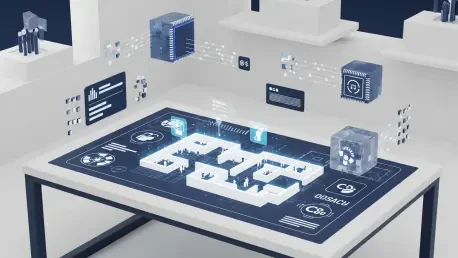

The sudden influx of autonomous building systems and generative diagnostics has left the facility management sector grappling with a profound paradox: buildings are getting smarter, but the workforce tasked with maintaining them is often left without the necessary digital blueprints. Modern facility managers are navigating a landscape where AI-driven HVAC optimization and predictive asset management are the baseline, yet a significant skills gap threatens to undermine these technological investments. While the physical environment undergoes a digital rebirth, the human element remains caught between legacy operational methods and a data-intensive future. Bridging this gap is no longer merely an optional upgrade for technical staff; it has become a strategic imperative for any organization aiming to remain competitive in a market defined by efficiency and sustainability. The challenge lies not in the availability of technology, but in the speed at which human capability can be scaled to match the pace of algorithmic innovation in the built environment.
Identifying the Current Training Deficit
The Disconnect: Adoption vs. Formal Instruction
Recent industry assessments indicate that the deployment of artificial intelligence within commercial real estate is moving at a velocity that exceeds the provision of formal institutional training. A majority of maintenance professionals now interact with automated agents or generative platforms as part of their daily routine, yet a startlingly small percentage report receiving structured curriculum from their employers. This vacuum of official guidance creates a precarious reliance on individual trial and error, which carries risks ranging from security vulnerabilities to simple operational inefficiencies. Without a centralized training strategy, the benefits of high-cost AI software are often localized to a few tech-savvy individuals rather than being leveraged across the entire enterprise. This disparity creates a “shadow skill set” where critical knowledge remains undocumented, preventing the organization from achieving a unified operational standard for its entire building portfolio.
Structural Risks: The Danger of Self-Taught Methods
When facility management teams are left to navigate complex algorithmic tools without a roadmap, the result is a fragmented ecosystem where innovation occurs in isolation. Individual workers may discover idiosyncratic ways to use AI for scheduling or energy tracking, but these localized breakthroughs rarely contribute to the broader institutional knowledge base. This lack of a formal framework makes it nearly impossible for senior leadership to scale successful pilots into portfolio-wide standard operating procedures. Furthermore, the absence of guided instruction often leads to a phenomenon where employees use only the most basic features of sophisticated tools, leaving the most transformative capabilities of AI largely dormant. To solve this, organizations must move away from the expectation that employees will naturally absorb these skills through proximity to technology and instead invest in deliberate, data-centric educational programs that ensure every team member operates from a shared baseline of competence.
Cultivating Applied Expertise
Practical Mastery: Literacy vs. Tangible Capability
A significant obstacle in current corporate development programs is an over-reliance on general AI literacy at the expense of specific, applied capabilities. Understanding the theoretical underpinnings of a large language model or a neural network provides little value to a building engineer who needs to interpret a real-time anomaly detection report for a cooling tower. To effectively bridge the existing gap, training initiatives must pivot toward the practical integration of these tools into the specialized workflows of facility operations. This involves teaching staff how to use predictive analytics to forecast mechanical failures before they happen and how to leverage automated systems to optimize carbon footprints across diverse real estate portfolios. By focusing on these tangible outcomes, organizations can ensure that their workforce views AI not as an abstract concept to be understood, but as a specialized instrument that enhances their ability to perform high-stakes maintenance.
Strategic Evolution: Shifting Toward Decision-Making
Moving into this practical phase necessitates a hands-on pedagogical approach where facility managers can safely experiment with data-driven interfaces without the risk of impacting live building operations. By utilizing digital twin technology or simulated environments, workers can gain the confidence required to manage AI agents that monitor building health and occupancy patterns in real-time. This transition fundamentally shifts the definition of the facility manager from a technician who reacts to broken pipes or faulty wiring to a proactive strategist who governs a network of intelligent sensors and actuators. This evolution requires a curriculum that emphasizes critical thinking and data interpretation over manual dexterity alone. When employees are empowered to act as the primary overseers of automated systems, they can unlock significant savings and improve the tenant experience, transforming what was once a cost center into a high-performance engine for organizational growth.
Navigating Operational and Workplace Transformation
Systemic Solutions: Creating Room for Professional Growth
Even when the curriculum is perfectly aligned with operational needs, structural barriers within the workplace such as chronic time constraints and limited software access often prevent skill development from taking root. Many frontline facility workers report that their daily schedules are so saturated with reactive maintenance tasks that they lack the necessary breathing room to engage with new digital platforms. This leads to a cycle of technological frustration where employees eventually revert to legacy methods simply because they are faster in the short term. To combat this, forward-thinking organizations are beginning to allocate dedicated professional development hours that are protected from routine operational interruptions. Ensuring that every technician has the appropriate hardware and personal login credentials to practice these new skills is also essential. Without equitable access to the tools of the trade, training remains a theoretical exercise.
Future Resilience: Strategic Reskilling for Future Needs
As the facility management industry undergoes a fundamental shift, the focus must move toward deep reskilling as AI continues to automate a growing number of routine administrative and monitoring tasks. With intelligent systems now capable of handling the constant adjustment of lighting levels and HVAC cycles, the workforce must be strategically redeployed toward higher-level management and complex problem-solving roles. This requires a shift in mindset where employees are trained to act as the final decision-makers in a collaborative relationship with autonomous agents. Preparing the workforce for this transition involves identifying the specific human-centric skills that AI cannot replicate, such as nuanced communication, ethical judgment, and complex spatial reasoning. Leadership plays a pivotal role in this transformation by prioritizing transparency and fostering cross-functional collaboration between IT departments and traditional facilities teams.
A Strategic Path Forward
The organizations that successfully bridged the AI skills gap between 2026 and 2027 adopted a philosophy that treated digital fluency as a core competency for every level of the facility management hierarchy. These leaders recognized that buying the latest software was only half the battle; the real victory lay in the systematic empowerment of the workforce to utilize those tools with confidence and precision. They moved beyond generic training modules and instead implemented site-specific simulations that mirrored the actual challenges faced by their technical staff. By creating clear pathways for advancement based on technical proficiency, they incentivized continuous learning and reduced the turnover of highly skilled personnel. Furthermore, the integration of AI-related metrics into performance reviews ensured that technological adoption became a shared organizational goal. This proactive stance allowed facilities to achieve unprecedented levels of energy efficiency, proving that the human element remained the most critical variable.