
The multi-billion-dollar AUKUS nuclear submarine project was designed to transform South Australia into a global defense powerhouse, yet a deepening residential development crisis in Adelaide’s strategic “submarine suburbs” threatens to stall this industrial momentum before it fully begins. While federal ambitions focus on the high-tech Osborne shipyard, the surrounding residential areas like Port Adelaide and West Lakes are witnessing a concerning withdrawal of private investment. Developers and real estate experts argue that a combination of aggressive interest rate hikes and prohibitive construction costs has created an atmosphere that is increasingly hostile to new business ventures. This friction between national security goals and local economic realities suggests that without a significant shift in housing policy, the state’s largest manufacturing project could face a catastrophic workforce shortage. The success of the AUKUS initiative depends not just on engineering prowess, but on the ability to provide stable housing for thousands of incoming workers who are expected to drive the region’s economy.
Obstacles in Residential and Industrial Synergy
Damon Nagel of Kite Projects has issued a stark warning regarding a looming “cliff” where the housing supply is expected to plummet significantly by next year due to what he characterizes as reckless government decision-making. To manage these escalating risks, established developers are increasingly following a specific sequence of defensive maneuvers designed to protect their assets from a volatile economic landscape. The first step in this strategy involves halting immediate construction on all planned residential high-rises to avoid the crushing weight of high-cost labor and scarce materials. By stepping back from active building sites, developers are attempting to wait out the current cycle of inflation and high interest rates. However, this defensive posture directly conflicts with the urgent need for housing to support the AUKUS project’s timeline. This shift toward land banking represents a fundamental loss of confidence in the federal government’s economic modeling, which Nagel has compared to an unsophisticated high school project lacking proper foresight.
Why Is the Fisherman’s Wharf Project Paused?
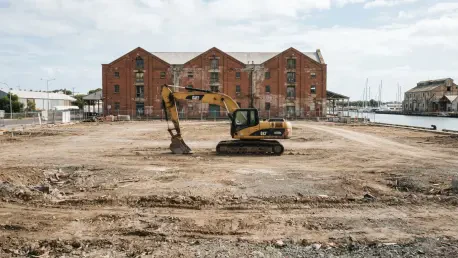
Prominent developer Hans Ehmann recently sent shockwaves through the local industry by placing a landmark 15-story residential complex at the historic Fisherman’s Wharf site on indefinite hold, citing a disastrous federal approach to tax settings. This project was intended to serve as a cornerstone for the region, providing 400 modern homes for the incoming submarine workforce at a location that is absolutely pivotal to the area’s logistical layout. Situated adjacent to the Birkenhead Bridge, the site was cleared for construction following the demolition of an old warehouse in 2022, but the transition from planning to execution has been paralyzed by fiscal uncertainty. Ehmann specifically highlighted potential changes to negative gearing and capital gains tax as the primary deterrents that forced his hand. For many established industry veterans, the financial math required for quality construction simply no longer aligns with what the current market can bear, leading to a total loss of appetite for major new builds.
Beyond local tax concerns, the Reserve Bank of Australia’s aggressive interest rate maneuvers have been identified as a more significant threat to the national economy than the inflation they were originally designed to curb. The resulting “alien atmosphere” has made it nearly impossible for developers to secure the necessary financing for high-density projects that were supposed to house the future AUKUS workforce. Ehmann’s decision to pause the Fisherman’s Wharf project reflects a broader trend among South Australian developers who are choosing to prioritize capital preservation over risky expansion. This site has a long history of intended residential use, dating back to 2018 when earlier plans for retirement living were first announced, but the current economic climate has rendered these goals unreachable. Without a stable and predictable fiscal environment, projects that are essential to the success of the Osborne shipyard will likely remain in a state of suspended animation, leaving the state’s housing strategy in a precarious position.
Assessing Market Stagnation in Submarine Suburbs
Real estate data from the past several years suggests that these specialized “submarine suburbs” have unexpectedly underperformed when compared to the broader Adelaide metropolitan average. While areas like Port Adelaide and Mawson Lakes saw property price increases of approximately 40 to 44 percent, they have lagged behind the city-wide growth average of 45 percent, signaling a cooling of investor interest. Real estate professionals report a total absence of investor inquiries over the last six months, a trend that directly contradicts earlier predictions of a local property boom. This lack of demand is attributed to shifting federal property policies and a profound lack of confidence in the long-term stability of the South Australian market. The discrepancy between the high-profile nature of the AUKUS project and the actual performance of the local real estate sector highlights a growing disconnect between government rhetoric and the realities of private property investment in the current climate.
In light of these challenges, the most effective path forward involved a complete recalibration of how the federal and state governments engaged with private residential developers. To ensure the long-term viability of the defense project, authorities had to implement a more business-friendly environment that prioritized the rapid delivery of high-density housing through streamlined approvals and targeted fiscal incentives. The synthesis of perspectives from industry leaders showed that the market was in a state of paralysis, waiting for a clear signal that the economic climate would improve before the first brick of these critical projects could be laid. Future considerations must include the integration of urban planning directly into defense strategy, treating housing as a vital component of industrial infrastructure rather than a separate market concern. Ultimately, the successful delivery of the nation’s submarine fleet was tied to the creation of a sustainable urban environment where workers could thrive and reside without fear of displacement.