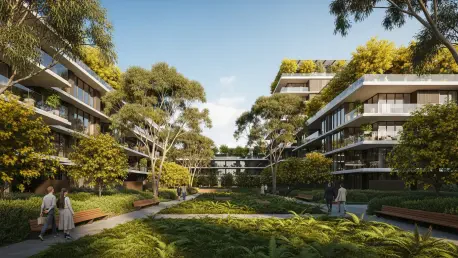

Modern urban landscapes have long been celebrated for their architectural prowess and technical achievements, yet the clinical efficiency of steel and glass often leaves a biological void in the daily lives of city dwellers. For decades, the definition of a “green” building remained confined to its mechanical performance, focusing on how well a structure could insulate heat or how much solar energy its rooftop panels could generate. While these advancements were necessary during the early transition to sustainable construction, they frequently neglected the fundamental human need for a connection with the living world. Architects and developers in major markets, including the burgeoning Australian property sector, are now recognizing that a building with a five-star energy rating can still be an ecological desert. This realization is fueling a transformative movement that seeks to reposition nature not as an ornamental addition to urban life but as the very foundation of modern metropolitan design and construction.
The Concrete Paradox: Moving Beyond Mechanical Sustainability Metrics
The current disparity between high-performance environmental ratings and the actual presence of biodiversity in residential developments highlights a significant flaw in traditional sustainability frameworks. Under the prevailing systems used by many global certification bodies, a skyscraper can achieve the highest possible accolades for resource conservation without hosting a single tree or providing a sanctuary for local bird populations. This “concrete and glass” paradox has led to a proliferation of sterile environments that, while technically advanced, remain fundamentally disconnected from the surrounding ecosystems. By prioritizing utility consumption over ecological richness, the industry inadvertently created dense neighborhoods that contribute little to the restoration of natural habitats. This approach suggests that as long as a machine runs efficiently, the environment in which it sits is secondary. However, the emerging focus on nature-based cities argues that true sustainability must be measured by a building’s ability to support life rather than just its ability to save power.
To address these shortcomings, the Nature Based Cities initiative provides a robust framework that advocates for greenery as essential urban infrastructure rather than a decorative luxury. Established to influence the trajectory of construction from 2026 to 2030, this movement emphasizes that urban design must integrate local flora and fauna into the planning stages of every major project. By introducing independent accreditation and specific design guidelines, the initiative encourages developers to adopt a “nature-first” philosophy that transforms rooftops, balconies, and public plazas into functional ecosystems. These guidelines push for the selection of indigenous plant species that can withstand local climates while providing food and shelter for native wildlife. This shift ensures that new developments do not merely exist in a vacuum but actively contribute to the ecological health of the city. As these standards gain traction, the industry is moving toward a future where a project’s success is tied to its biological impact, fostering a more harmonious relationship between the built and natural worlds.
Urban Resilience: Scaling Nature for Health and Environmental Defense
Integrating extensive living landscapes into the urban fabric provides critical defenses against the intensifying environmental challenges faced by modern metropolitan areas. As cities continue to expand and densify, the accumulation of heat-absorbing surfaces creates the “urban heat island” effect, which significantly raises local temperatures and compromises the safety of residents. Strategically placed tree canopies and green corridors serve as natural cooling systems, effectively lowering ambient temperatures and reducing the reliance on energy-intensive air conditioning. Beyond thermal regulation, these natural elements facilitate social connectivity by providing inviting outdoor spaces where community members can gather and interact. Research indicates that frequent exposure to these environments leads to measurable improvements in cognitive function and physical health, reducing stress levels across the population. This evidence is prompting a transition from designing isolated green buildings to developing comprehensive, master-planned communities that function as self-sustaining urban forests capable of withstanding climate volatility.
The evolution of this design philosophy was driven by a sophisticated demographic of property buyers who prioritized tangible environmental benefits over vague marketing jargon. Developers responded by committing to deeper ecological integration, ensuring that high tree canopy coverage and functional outdoor spaces became standard features in all new projects. To secure long-term success, the industry adopted site-specific botanical strategies that favored indigenous species capable of thriving without excessive chemical intervention. Stakeholders also began implementing smart monitoring systems to track the health of urban forests in real-time, allowing for proactive maintenance and better resource management. By shifting the focus toward “nature-positive” outcomes, the property sector transformed the city into a functional extension of the natural world. These strategic shifts provided a clear path forward, demonstrating that the most resilient urban environments were those that balanced structural engineering with the intricate needs of a living, breathing ecosystem.