
By translating the complex theories of Nietzsche and Plato into physical walking routes, Médongaule Garden creates a tangible dialogue between global philosophy and the natural world. This massive undertaking in Yangpyeong, Gyeonggi Province, represents the culmination of a fourteen-year vision to establish South Korea’s premier humanities-focused landscape. The site serves as a bridge between traditional aesthetics and modern existential inquiry, moving beyond simple decorative gardening to provide a structured intellectual journey for every visitor. By collaborating with international luminaries such as the Chilean architectural firm Pezo von Ellrichshausen and French landscape architect Guillaume Gosse de Gorre, the project ensured a diverse conceptual foundation. Local specialist Lee Jae-yeon played a critical role in anchoring these global ideas within the specific topographical and cultural nuances of the Korean peninsula. This synthesis has resulted in a space where architecture and nature function as a single unit.
Intellectual Mapping: The Convergence of Thought and Terrain
The conceptual framework of the garden is meticulously organized around two primary axes that define the visitor’s progress through the site: the Island of Thought and the Story of Korea. The former serves as an abstract playground for the mind, where the profound ideas of thinkers like Friedrich Nietzsche, Plato, and the Buddha are manifested in physical sightlines and winding paths. These routes are not intended to provide dogmatic answers or historical summaries; instead, they are carefully engineered to provoke personal introspection and encourage the formation of new questions within the individual. Complementing this philosophical exploration is the Story of Korea axis, which provides a narrative arc of the nation’s historical trajectory. This path guides visitors through the scholarly traditions of the past, the rapid challenges of industrialization, and the eventual triumph of democratization. This dual structure creates a unique atmosphere where history and thought exist in tandem.
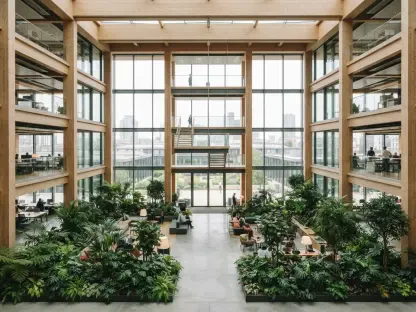
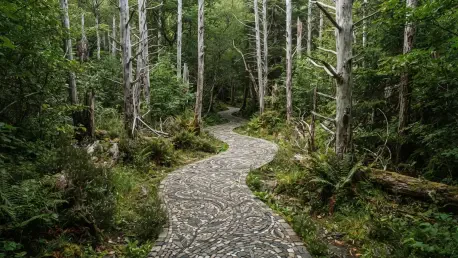
Dominating the highest elevation of the landscape is the Über House, a central architectural pavilion designed to symbolize the pinnacle of human cognitive achievement. Named after Nietzsche’s concept of the Übermensch, or the “Beyond-Man,” this structure offers panoramic views that allow visitors to gaze down upon the physical manifestations of their journey. The symbolic weight of the garden is further reinforced by the intentional use of specific materials throughout the various walkways. For instance, the Eternity mosaic path is intricately constructed from salvaged stone, representing the enduring nature of truth, while the Era of Overcoming walkway utilizes raw waste concrete to mirror the grit and resilience required during periods of intense social change. Even the forest trails contribute to this narrative, specifically the Era of Hardship trail, which deliberately preserves dead trees to integrate the natural cycles of life and decay into the broader design vocabulary.
Holistic Engagement: From Sensory Design to Culinary Arts
Complementing the rigid intellectual structures is a fluid botanical landscape designed by Guillaume Gosse de Gorre, who envisioned a meadow garden containing over twenty-five thousand carefully selected plants. The variety of flora ensures that the visual identity of the garden undergoes a dramatic transformation with the passing of each season, reflecting the impermanence discussed in the philosophical zones. A standout feature of this living tapestry is the signage-free maze garden, which serves as a departure from traditional navigation. By removing instructional markers, the design encourages visitors to embrace the act of getting lost as a valid form of moving meditation and self-discovery. This approach shifts the focus from reaching a destination to experiencing the present moment. The integration of such diverse botanical elements creates a soft contrast to the hard lines of the concrete pavilions, fostering a sense of organic growth that mirrors the development of human ideas.
The visitor experience reached its completion through the holistic sensory engagement provided by FATI, a garden-to-table restaurant led by the innovative chef Lee Dong-hee. By utilizing fresh produce grown directly on the grounds, the establishment successfully bridged the gap between philosophical contemplation and physical sustenance, offering a modern interpretation of Korean cuisine that mirrored the garden’s overarching themes. Looking ahead from this current 2026 milestone, the focus shifted toward establishing the site as a vibrant cultural sanctuary. Future plans prioritized the integration of site-specific performances, seasonal exhibitions, and rigorous academic programs designed to deepen the public’s relationship with the humanities. Stakeholders recognized that the true value of the space lay in its ability to evolve as an active hub for intellectual exchange rather than remaining a static monument. This transition solidified the garden’s role as an essential destination for those seeking meaning.