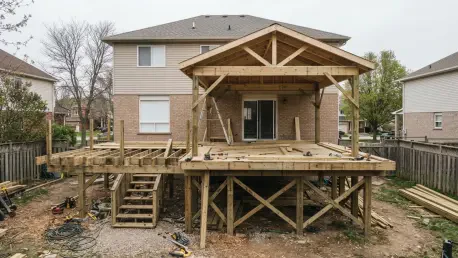

Financial discrepancies arose in a backyard renovation when a contractor admitted to underquoting the job before offering a meager refund for uncompleted tasks. This instance in Pleasant Grove, Alabama, involved the Lewis family and Capa Construction LLC, highlighting a systemic issue in the remodeling sector. What began as a $21,000 agreement for a deck overhaul transitioned into total abandonment after the homeowners disbursed over $25,000. The project was meant to deliver a functional, screened-in elevated deck with electrical components and professional staining. Instead, the family was left with a skeleton structure that failed to meet basic safety standards. The situation worsened when the contractor revealed an inability to finish the work due to poor budgeting. This failure demonstrates how easily a project can collapse when a builder lacks the financial credentials to manage high-value renovations, serving as a warning for any homeowner.
The Project Toll: Physical and Financial Risks
The most immediate threat posed by the incomplete project remains the physical safety of the residents. Because the deck sits between eight and twelve feet above the ground, the absence of finished railings and secure flooring creates a significant fall risk that has rendered the entire outdoor space unusable. The Lewis family took the step of prohibiting visitors from entering the area to avoid potential injuries or liability issues. This restriction effectively turns a high-cost investment into a liability, as the primary purpose of the renovation—socializing and relaxation—has been completely negated. Furthermore, the structural framing remains exposed to the elements without the protection of the promised staining and finishing. This lack of completion creates a dangerous environment where the homeowner is forced to monitor the site constantly, fearing that a structural failure could lead to a serious accident that current construction insurance might not cover.
Beyond the immediate danger of falls, the technical execution of the project raised serious alarms regarding the long-term integrity of the home. The unfinished roof installation became a primary point of concern, as improper flashing could allow rainwater to seep into the main residential structure. Such water intrusion often leads to mold growth and wood rot that remains hidden behind interior walls for years, eventually necessitating repairs that far exceed the cost of the deck itself. The contractor’s failure to complete the screening and electrical work also left open conduits and unfinished wiring exposed to humidity and precipitation. This negligence suggests a fundamental lack of understanding regarding building codes. For a homeowner, these technical failures represent a ticking time bomb that threatens the overall value of the property, turning a simple aesthetic upgrade into a catalyst for massive structural remediation in the following months.
Economic Overreach: Breaking the Contractual Budget
Financial mismanagement served as the secondary catalyst for the project’s total collapse, trapping the homeowners in an escalating cycle of payments. Despite the initial fixed-price contract of $21,000, the total expenditure surpassed $25,000 as the contractor requested additional funds to cover materials he had failed to account for originally. This pay-as-you-go methodology is a classic red flag in the industry, often indicating that a builder is using funds from one project to finish another. When the money eventually ran out, the contractor conceded that he had underquoted the job, admitting that the initial bid was either incompetent or intentionally misleading. The result was a $4,000 overpayment for a project that remained far from completion. This financial drain was exacerbated by the realization that finishing the work would require an additional $10,000 investment with a different professional to fix the existing errors and finalize the original design.
Transparency and documentation were entirely absent during the final stages of the Lewis renovation. When the homeowners requested a detailed breakdown of how the $25,000 was spent, Capa Construction failed to produce invoices or receipts to justify the overages. Instead, the company management offered a statement claiming they had invested significant personal labor and funds into the site, even implying that more money was technically owed to them. This defensive posture is common among unlicensed operators who do not maintain the standard accounting practices required for legitimate business operations. The offer of a $3,250 refund paid over six months was seen as a hollow gesture, given the massive scale of the remaining work. This lack of fiscal accountability leaves homeowners with no clear understanding of their investment’s status, making it nearly impossible to resolve the dispute through simple negotiation or professional mediation without a paper trail.
Regulatory Red Flags: The Deception of Fake Licensing
An investigation into the contractor’s credentials revealed that the licensing number displayed on social media was entirely fraudulent. The Alabama Home Builders Licensure Board confirmed that neither the company nor its manager held the necessary state certifications for residential work exceeding $10,000. This threshold is critical because it ensures that contractors have passed competency exams and maintain appropriate insurance to protect the public. By operating with a fake license number, the builder bypassed the regulatory safeguards designed to prevent exactly this type of financial catastrophe. State laws are explicit about the requirements for structural repairs, yet the lack of proactive enforcement often allows unscrupulous actors to continue soliciting business through digital platforms. This deception creates a false sense of security for homeowners who trust online advertisements without performing independent verification through state databases.
The resolution of this dispute provided clear lessons for homeowners seeking to navigate the complex landscape of residential construction. Industry experts recommended that individuals always verify license numbers through the official state portal before signing any binding agreements. It became evident that while regulatory boards managed the professional status of builders, they lacked the statutory power to force refunds, leaving legal action as the only viable path for financial recovery. Homeowners realized that obtaining copies of a contractor’s insurance directly from the provider offered another layer of protection. Successful renovators also utilized milestone-based payment schedules to ensure that funds were only released after specific, inspected phases of the work were completed. By adopting these rigorous vetting procedures, families mitigated the risks associated with fraudulent operators who prioritized profit over quality and safety.