
The frustration of standing in a dark room while a voice assistant claims it cannot find a smart bulb that worked perfectly just five minutes ago has become a rite of passage for many modern homeowners. For years, the promise of a seamless, automated living environment was consistently undermined by a fragmented market where competing tech giants prioritized proprietary ecosystems over user convenience. This lack of interoperability turned what should have been a simple upgrade into a complex logic puzzle, requiring consumers to verify compatibility across various “walled gardens” before making even the smallest purchase. Building a smart home felt less like achieving a futurist dream and more like managing a collection of disparate digital silos that refused to acknowledge one another’s existence.
This era of digital isolationism reached a breaking point as the number of connected devices per household surged, making the manual management of multiple apps and hubs increasingly unsustainable. Consumers grew weary of checking for specific logos and worrying whether a new thermostat would integrate with their existing security sensors or if a high-end smart lock would be rendered useless after a smartphone switch. The industry required a fundamental shift—a common language that could bridge the gap between Amazon Alexa, Apple Home, Google Home, and Samsung SmartThings. The emergence of the Matter standard represents this necessary evolution, promising to finally dissolve the barriers that have kept the smart home from reaching its full, unified potential.
The End of Ecosystem Lock-In
Moving Beyond Brand Monopolies
The arrival of the Matter standard has initiated a significant dismantling of the “walled garden” strategy that once defined the smart home industry. Previously, purchasing a device often felt like signing a long-term contract with a specific ecosystem; if you started with Apple HomeKit, you were largely excluded from the vast array of gadgets designed exclusively for Amazon Alexa or Google Assistant. This forced loyalty often stifled innovation, as consumers were unable to choose the best-performing hardware for their specific needs if it did not happen to support their chosen platform. Matter effectively neutralizes this problem by ensuring that a single piece of hardware can communicate across multiple ecosystems simultaneously, allowing for a truly heterogeneous environment.
This liberation allows for a “mix and match” strategy where the hardware brand becomes secondary to the device’s actual utility and performance. A household can now utilize an Apple HomePod for music and voice control while simultaneously managing a Google Nest thermostat and a series of affordable Amazon-branded smart plugs, all within the same interface. By removing the technical barriers that once kept these devices separate, Matter enables a more competitive market where manufacturers must compete on the merits of their hardware—such as battery life, aesthetic design, or sensing accuracy—rather than relying on ecosystem exclusivity to retain customers. This shift puts the power back into the hands of the homeowner, who is no longer penalized for wanting a diverse and functional smart home.
Simplification of the Buying Process
Shopping for smart home technology has historically been a cognitive burden, requiring customers to navigate a labyrinth of compatibility symbols and technical specifications. Before the widespread adoption of Matter, a simple trip to the electronics store involved double-checking whether a smart bulb was “Made for iPhone” or if a motion sensor supported the specific version of a hub already installed at home. This complexity created a high barrier to entry for non-technical users, who often feared that an incorrect purchase would lead to hours of troubleshooting or a product that simply wouldn’t work. The resulting “buyer’s remorse” was a significant drag on the industry’s growth, as many potential adopters opted to stay away from smart tech altogether.
The Matter logo has now emerged as the definitive seal of approval, streamlining the decision-making process for consumers of all technical levels. When a customer sees the Matter symbol on a retail box, they are guaranteed that the device will function within any of the major smart home frameworks without needing specialized bridges or complex workarounds. This universal standard empowers individuals to shop based on factors that actually matter, such as price, energy efficiency, and industrial design. By standardizing the underlying communication layer, the industry has effectively commoditized connectivity, allowing the consumer experience to focus on the tangible benefits of automation rather than the invisible plumbing that makes it possible.
The Technical Backbone of Unity
Leveraging Existing Hardware as Hubs
One of the most pragmatic and sustainable features of the transition to Matter is its ability to breathe new life into existing household electronics. Instead of forcing consumers to purchase a dedicated “Matter Controller,” the standard allows for many popular smart speakers and displays already in use to be updated via software to act as the central brain of the network. This approach significantly lowers the financial barrier to entry for those looking to modernize their setups. For example, a Google Nest Hub or an Apple TV 4K that was purchased several years ago can now serve as a fully functional Matter hub, managing connections between various lights, locks, and sensors from entirely different brands.
This backward compatibility ensures that the smart home remains an accessible upgrade rather than a luxury reserved for those willing to overhaul their entire infrastructure. By repurposing the processing power of devices that are already plugged in and connected to the internet, the Matter ecosystem avoids the unnecessary electronic waste associated with phased-out hardware. This strategy also provides a sense of security for the consumer, knowing that their investment in a high-quality smart display or speaker won’t be rendered obsolete by shifting industry standards. The industry has effectively turned the “hubs” of yesterday into the universal controllers of today, proving that a unified home can be built on the foundation of what people already own.
The Speed and Reliability of Thread
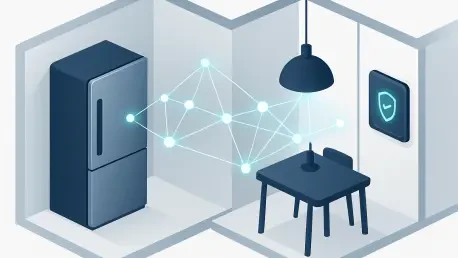
While Matter serves as the universal language for smart devices, a secondary protocol known as Thread provides the high-performance infrastructure needed for these conversations to happen quickly and reliably. Thread is a low-power, self-healing mesh networking technology designed specifically for the Internet of Things, addressing many of the limitations inherent in traditional Wi-Fi or Bluetooth connections. In a Wi-Fi-based smart home, every device competes for bandwidth on the router, which can lead to congestion and slow response times. In contrast, Thread devices strengthen the network as more are added, with each mains-powered device acting as a “router” that can pass information along to its neighbors.
The most noticeable benefit of the Thread-Matter combination for the average user is the near-elimination of “cloud lag.” Because Thread allows devices to communicate locally within the home, a command to turn on a light no longer needs to travel to a server in a different state and back again; the signal stays within the four walls of the house. This results in instantaneous response times that make smart technology feel like a natural extension of the home’s physical switches. Furthermore, because the network is decentralized and does not rely on a single point of failure, the smart home remains functional even if the primary internet connection goes down. This local reliability is a crucial step in moving smart technology from a finicky novelty to a dependable household utility.
Infrastructure Without Proprietary Bridges
In the legacy era of home automation, the area around a consumer’s router was often a cluttered graveyard of plastic bridges and gateways, each required for a specific brand of smart bulb or sensor to function. These proprietary bridges added cost to every setup, consumed precious power outlets, and created multiple points of failure that made troubleshooting a nightmare for the average person. Matter and Thread aim to eradicate this “bridge clutter” by allowing devices to connect directly to existing border routers. A border router is simply a device—like a modern Wi-Fi router, a smart display, or even certain smart lights—that can bridge the Thread network to the rest of the home’s Wi-Fi or Ethernet network.
This shift toward a standardized, transparent infrastructure significantly simplifies the physical setup of a smart home. Instead of managing a dozen different apps just to update the firmware on a dozen different bridges, a homeowner can rely on a single, unified mesh network that is managed automatically by their Matter-enabled devices. This streamlined approach not only makes the initial installation easier but also reduces the long-term maintenance burden. When the underlying network is standardized, the smart home ceases to be a collection of fragile add-ons and starts to feel like a built-in utility, as reliable and invisible as the electrical wiring behind the walls.
Evolution Through Continuous Updates
From Simple Plugs to Complex Appliances
The development of the Matter standard is not a static event but an ongoing process overseen by the Connectivity Standards Alliance (CSA), which releases regular updates to expand the protocol’s capabilities. In its initial stages, Matter focused on the “low-hanging fruit” of the smart home—devices like light bulbs, smart plugs, and basic switches that are found in almost every connected household. However, the roadmap has quickly evolved to include more mission-critical and complex systems. Recent updates have integrated HVAC controllers, thermostats, and garage door openers, allowing these essential components to participate in cross-platform automations that were previously difficult or impossible to configure.
This rapid expansion into more diverse device categories ensures that Matter remains relevant as the smart home market matures and moves into more specialized areas of the domestic environment. For instance, the inclusion of sophisticated air quality sensors and window covering controllers allows for automated “whole-home” responses, such as opening blinds and turning on fans when specific environmental thresholds are met. By continuously adding support for new types of hardware, the CSA is building a future where every powered device, regardless of its complexity or function, can communicate through a single, standardized interface. This trajectory suggests that the fragmentation of the past will soon be an anomaly rather than the norm.
Expanding into Large Household Goods
Beyond simple sensors and switches, the Matter standard is making significant inroads into the world of “white goods” and major domestic appliances. Support now exists for refrigerators, dishwashers, washing machines, and even robotic vacuums, marking a major shift in how we interact with the most expensive pieces of technology in our homes. In a Matter-unified world, a washing machine from one manufacturer can send a notification to a television from another manufacturer to alert the user that a cycle is complete. This level of cross-brand communication was once the exclusive domain of expensive, single-brand ecosystem suites, but it is now becoming a standard feature of any modern appliance.
As the standard continues to mature, it is also addressing the urgent need for better energy and water management within the home. The integration of electric vehicle (EV) chargers and water leak detectors into the Matter framework allows homeowners to monitor and optimize their resource consumption through a single dashboard. By centralizing this data, users can create sophisticated automations that reduce energy costs—such as scheduling the dishwasher to run when electricity rates are lowest or automatically shutting off the main water valve if a leak is detected under the sink. This holistic view of home efficiency is only possible when all devices, large and small, are speaking the same language.
Addressing the Remaining Gaps
The Challenge of Security Cameras
While the progress of the Matter standard has been remarkably swift, it still faces significant hurdles in certain high-stakes device categories, most notably security cameras. Although the protocol officially supports video streaming as of more recent versions, major manufacturers have been hesitant to fully open their camera feeds to third-party platforms. This reluctance often stems from a combination of valid privacy concerns, the need for high-bandwidth data security, and a desire to protect proprietary features like facial recognition or advanced cloud storage subscriptions. As a result, many users still find themselves trapped in a brand-specific app when they want to check their doorbell camera or review security footage.
For many homeowners, security is the core reason for investing in smart technology, making this lack of full integration a notable pain point in the quest for a unified home. Until live video streams and recorded events can be viewed natively across all major smart home apps without losing high-resolution quality or low-latency performance, the “single-app” dream will remain slightly out of reach. This situation highlights the ongoing tension between the idealistic goal of open standards and the cold reality of corporate business models that rely on ecosystem lock-in to drive service revenue. Overcoming this barrier will require not just technical innovation, but a shift in how tech giants value interoperability versus exclusive control over user data.
Achieving True Feature Parity
A secondary challenge facing the Matter ecosystem is the “lowest common denominator” problem, where a device’s most advanced features are stripped away in favor of universal compatibility. While Matter allows a smart light from a niche brand to turn on and off within the Apple Home app, the more complex “dynamic scenes,” specialized color-cycling patterns, or rhythm-based lighting modes might still require the manufacturer’s original application. This creates a disjointed user experience where the primary controls are unified, but the “smartest” parts of the smart device remain siloed. For power users who buy hardware specifically for these unique features, the promise of a single-app home can feel somewhat hollow.
This gap in functionality means that even in a Matter-centric home, users may still find their smartphones cluttered with various manufacturer apps for deep configuration and firmware updates. Bridging this gap requires the Connectivity Standards Alliance to develop more flexible ways for brands to expose their unique capabilities through the Matter protocol without breaking the standard itself. As the standard matures, the goal is to reach a level of feature parity where the “Matter version” of a device’s controls is indistinguishable from the proprietary version. Until then, the smart home will remain in a state of transition—vastly more connected than it was a few years ago, but still requiring a bit of extra effort to unlock its full potential.
A Fundamental Shift in Power
Prioritizing Local Control and Privacy
The transition to Matter represents a profound philosophical shift in the smart home industry, moving away from a total reliance on the cloud and toward a model of localized control. In the early days of the Internet of Things, almost every action—from turning on a light to checking a door sensor—required a round-trip to a corporate server, raising significant concerns about data privacy and the long-term viability of the devices. If a manufacturer went out of business or suffered a server outage, the “smart” features of the home would instantly vanish. Matter changes this dynamic by prioritizing local communication, ensuring that your devices can talk to each other without ever needing to leave your home network.
This localized approach provides a much-needed layer of privacy for the modern consumer, as sensitive data about daily habits and household routines no longer needs to be transmitted to the cloud for basic functionality. For those concerned about the “surveillance capitalism” model of modern tech, Matter offers a way to enjoy the conveniences of automation without turning their private lives into a stream of data for advertisers. By making the local network the primary path for communication, Matter transforms the smart home from a centralized data-gathering tool into a private, resilient utility. This shift is essential for building the trust required for smart technology to move from early adopters into the mainstream.
The Maturation of a Modern Utility
The evolution of the Matter standard marks the point where smart home technology has finally moved from a hobbyist’s plaything to a reliable household utility. We are entering a phase where “smart” is no longer a distinct category of goods but a standard feature expected of all modern products. Just as a homeowner expects a new toaster to work with any standard electrical outlet, they will soon expect any new appliance or sensor to integrate effortlessly into their existing digital ecosystem. This level of standardization signifies the maturation of an industry that has finally learned that cooperation is more profitable and sustainable than isolation.
For those looking to optimize their living spaces, the path forward is clear: prioritize Matter-certified devices to ensure maximum flexibility and longevity. As you continue to expand your home’s capabilities, look for hardware that supports both Matter and Thread to take advantage of the fastest, most reliable local networking currently available. While minor gaps in feature parity and security camera integration remain, the foundation for a truly unified home has been successfully laid. The coming years will see these remaining barriers dissolve as the standard becomes the universal language of the domestic environment, allowing technology to fade into the background and serve the residents rather than the manufacturers. Matter has moved from a promising concept to a tangible reality, and the result is a smarter, more private, and significantly more user-friendly home.