
The recent graduation of Dersel Bonai from the University of Hawaiʻi at Mānoa marks a historic shift in how academic institutions integrate the profound ecological insights of Indigenous communities into the formal study of landscape architecture. This West Papuan scholar became the first in his tribal lineage to earn a Master of Landscape Architecture, signaling a transition from viewing Indigenous land management as primitive to recognizing it as a sophisticated framework for environmental survival. By bridging the vast geographical gap between West Papua and Hawaiʻi, Bonai demonstrated that the principles of stewardship are universal across the Pacific. This academic milestone reflects a growing recognition that modern design often lacks the deep-seated spiritual and cultural connection to the earth that Indigenous populations have maintained for millennia. The integration of these perspectives offers a roadmap for more sustainable urban and rural planning, emphasizing that the environment is a living entity rather than a resource.
The Synergy: Island Environments and Cultural Identity
The path to this synthesis was not linear, as Bonai initially sought education at the University of Rhode Island under the misconception that the state’s name implied a tropical island climate similar to his home. Realizing the stark environmental differences, he transferred to UH Mānoa in 2024 to find a setting that mirrored the ecological and social fabric of West Papua. This transition allowed for a profound exploration of how shared Pacific island traits—such as humidity, specific flora, and communal land use—could inform design practices. By immersing himself in the Hawaiian landscape, he identified parallels between the two regions that transcend political borders. These similarities provided a foundation for a new architectural language that prioritizes local materials and endemic species. The move highlighted the necessity of situating landscape design within a context that feels instinctively familiar to the practitioner and the community it serves.
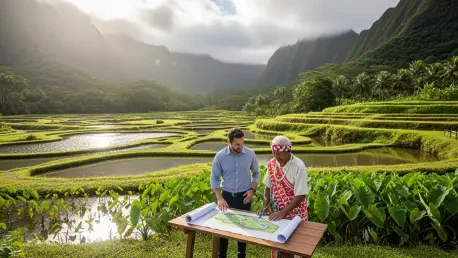
Central to this evolving philosophy is the concept of designing for healing, a principle that Bonai explored extensively through his capstone project. By comparing sites in Oʻahu and Yapen, West Papua, the research argued that effective landscape architecture must do more than manage runoff or provide aesthetic value; it must actively restore the human spirit. Healing is defined here as a holistic reconnection with ancestral lands, achieved through the preservation of traditional practices like the yospan dance or the physical labor involved in maintaining a loʻi, or taro patch. These activities are not merely cultural relics but are functional components of a healthy ecosystem that fosters resilience. When designers incorporate spaces that facilitate these rituals, they create environments where community identity is reinforced daily. This approach challenges the sterile, utilitarian nature of many modern public spaces, suggesting instead that the land should serve as a living archive.
Collaborative Resilience: Future Environmental Stewardship
Moving beyond theory, the application of Indigenous wisdom is currently being tested in real-world scenarios such as the Olowalu: The Road to Resilience initiative in West Maui. Serving as a project assistant in collaboration with The Nature Conservancy, Bonai applied his architectural training to address the pressing environmental health challenges facing the region. This work emphasized that land is far more than a physical location or a commodity to be developed; it is a vessel for memory and collective identity. By working directly with local stakeholders, the initiative sought to implement strategies that mitigate climate change impacts while honoring the historical significance of the site. Such projects demonstrate that Indigenous perspectives are essential for creating infrastructure that can withstand the increasing frequency of extreme weather events. The success of these efforts relies on the ability of professionals to listen to the land’s traditional caretakers and incorporate their observations.
The emergence of Indigenous scholars in professional design fields established a critical precedent for future environmental advocacy across the Pacific. Practitioners recognized that the true potential of landscape architecture lay in its ability to empower local communities rather than imposing external aesthetic standards upon them. Stakeholders in the industry began prioritizing interdisciplinary partnerships that blended high-tech ecological modeling with the nuanced observations of Indigenous elders. To move forward, professional organizations must actively recruit and support students from marginalized backgrounds to ensure that diverse worldviews continue to shape global ecological systems. Governments and private developers found that investing in culturally sensitive design reduced long-term maintenance costs and increased public engagement with the natural world. This shift ultimately transformed the discipline into a tool for social justice and long-term sustainability. The commitment to these practices ensured that the past remained a guide.