
The landscape of American nonresidential construction has transitioned into a period of calculated expansion where predictability replaces the chaotic fluctuations that previously plagued the industry. While developers are witnessing a moderation in the steep price hikes seen in the past, this relative stabilization is happening alongside intense demand within specialized high-tech and industrial sectors. The rapid expansion of massive data centers, advanced manufacturing facilities, and large-scale infrastructure projects is sustaining significant upward pressure on both labor and essential resources. Traditional commercial markets like retail and standard office space are beginning to see more competitive bidding and a leveling off of prices, but the industrial sector remains a high-cost environment. This dual reality means that while the broader market is cooling, the specific segments driving national growth are operating under different economic pressures that require precise navigation.
Analyzing Cost Trends and Market Momentum
During the first quarter of 2026, the cost of nonresidential construction rose by a modest 1.69 percent, which signals a significant cooling period compared to the drastic spikes seen during the early part of the decade. This moderation suggests that the initial inflationary shock has largely subsided, yet the year-over-year escalation continues to hover near the 7 percent mark, indicating that the baseline cost for materials and labor has permanently shifted to a higher tier. Investors and developers have not been deterred by these higher figures, as market momentum remains remarkably strong with institutional and industrial sectors providing a steady stream of high-value work. This environment is characterized by a new normal where predictability has returned to the bidding process, even if the final prices are substantially higher than historical averages. Stabilization has allowed for more accurate long-term budgeting, which is essential for multi-year timelines.
A notable surge in construction starts occurred in the early months of 2026, highlighted by a 13 percent increase in new project commencements recorded during the month of March alone. This growth suggests that the industry is successfully decoupling from broader economic anxieties and general market volatility as developers prioritize long-term capacity over short-term interest rate fluctuations. The steady volume of work is primarily fueled by massive federal and private investments in infrastructure and specialized high-tech facilities, ensuring that the national project pipeline remains full despite the elevated cost of capital. This trend illustrates a fundamental shift in how construction assets are valued, with an emphasis on strategic interest and technological sovereignty. As these large-scale commitments move from the design phase to active construction, they provide a reliable floor for the industry, preventing any major contraction while sustaining demand for equipment.
The Influence of Industrial Megaprojects
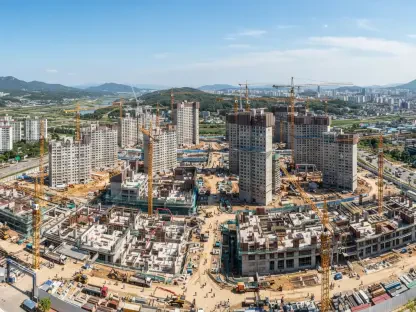
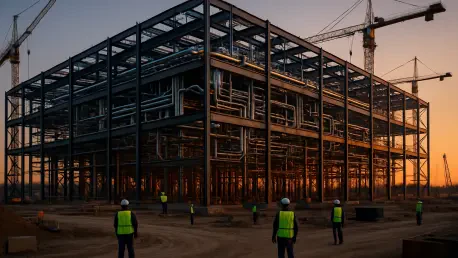
The defining characteristic of the current construction market is the overwhelming influence of megaprojects, particularly those focused on data centers and advanced manufacturing plants. Driven by the massive global demand for artificial intelligence processing and cloud computing services, these data centers require highly specialized power distribution systems and high-density electrical infrastructure that far exceed the needs of standard buildings. Simultaneously, the aggressive push for domestic semiconductor production and green energy technology has led to a boom in advanced manufacturing facilities that demand complex mechanical systems and massive structural footprints. These projects are not merely large in scale but are technically demanding, requiring specialized contractors who can manage the integration of sophisticated automation systems. The scale of these developments is so vast that a single project can often dictate the economic health and labor availability of a region for several years.
These massive industrial projects create a metaphorical gravity well that pulls in a significant portion of the available skilled labor pool, particularly within the critical electrical and mechanical trades. This phenomenon has resulted in a bifurcated market where regions hosting these industrial giants face extremely tight labor markets and high regional costs, while other areas remain relatively stagnant. In locations where data centers and battery plants are being built, the competition for certified electricians is so fierce that smaller institutional or commercial projects often struggle to secure manpower. Conversely, areas that rely on traditional commercial office space are seeing more aggressive competition among local contractors, which occasionally provides more favorable pricing for owners in those specific sectors. This regional disparity is forcing developers to look beyond general national trends and instead focus on the micro-economic conditions created by these projects.
Strategic Risk Management and Supply Logistics
While global logistics networks have largely stabilized, the cost of raw materials—especially various metals—remains a significant and volatile risk factor for project managers. Structural steel, metal decking, and essential conductive components like copper and aluminum are experiencing sustained price increases due to their high demand in electrical infrastructure and manufacturing equipment. Furthermore, lead times for critical power distribution hardware, such as switchgear and high-capacity transformers, have not returned to historical levels, which forces project schedules to be designed around equipment delivery rather than physical site readiness. This reality has changed the fundamental sequence of construction, where the procurement of mechanical and electrical packages must often happen before the first shovel hits the ground. Projects that fail to account for these extended procurement cycles risk major delays, as the lack of a single component can stall a multi-billion dollar facility.
To navigate these complex challenges, successful industry stakeholders shifted toward proactive risk management rather than waiting for prices to drop to historical levels. Success in this environment was defined by early engagement with trade contractors to lock in pricing and the strategic procurement of long-lead items through direct purchasing agreements. Owners recognized that construction outcomes were increasingly dictated by regional labor availability and proximity to industrial hubs, allowing them to better manage the stable escalation of the current market. Strategic planning evolved to include redundant supply chains and the pre-fabrication of modular components to bypass on-site labor shortages in high-demand zones. By prioritizing transparency and fostering deeper partnerships, project teams mitigated the most severe impacts of material volatility. Ultimately, the industry moved away from reactive scheduling, embracing an integrated approach that ensured industrial projects remained viable despite the high costs.