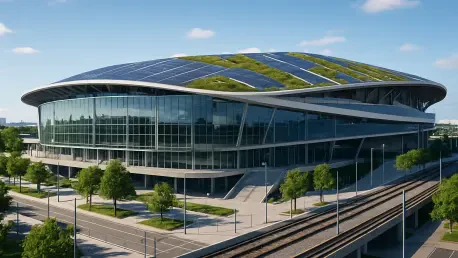

The environmental impact of professional sports has undergone a profound transformation as massive stadiums and arenas evolve from energy-intensive monoliths into sophisticated hubs of sustainable innovation and resource conservation. With the recent launch of an interactive map by the U.S. Green Building Council, the public now has unprecedented access to data regarding LEED-certified venues that are leading the charge in ecological responsibility. This digital resource tracks the progress of hundreds of facilities, illustrating how various leagues and international organizations are prioritizing carbon reduction and energy efficiency. By visualizing these achievements, the platform highlights the geographical diversity of green building adoption, from the humid climates of the southeastern United States to the arid environments of the Middle East. This transition represents a broader commitment within the sports industry to reconcile high-capacity entertainment with the urgent need for environmental stewardship, turning stadiums into living laboratories for new technology.
Mapping the Landscape of Global Green Athletics
Integration of Standardized Performance Metrics
The framework for evaluating these massive structures relies heavily on the LEED rating system, which has been adapted to meet the unique challenges of high-occupancy athletic venues. Unlike traditional office buildings, stadiums face extreme surges in energy and water demand during game days, necessitating specialized engineering solutions that can handle intermittent loads without sacrificing efficiency. The interactive map categorizes these venues based on their certification levels, such as Silver, Gold, or Platinum, providing a clear hierarchy of excellence that motivates franchises to improve their operational footprints. Beyond mere energy savings, the criteria now encompass site selection, proximity to public transit, and the use of low-carbon building materials during the construction phase. This standardized approach ensures that a stadium in California can be accurately compared to one in London, fostering a global culture of accountability where data-driven insights guide the next generation of sustainable architecture.
Enhancing Public Literacy on Sustainable Infrastructure
One of the primary objectives of this interactive initiative is to bridge the gap between technical sustainability achievements and the general fan experience. When spectators visit a venue, they are often unaware of the complex systems behind the scenes, such as the thermal storage units or the greywater treatment plants that keep the facility running. The map serves as an educational bridge, allowing fans to explore the specific green features of their favorite team’s home ground before they even step through the turnstiles. This transparency encourages a more informed public discourse regarding the role of sports in society, pushing organizations to be more vocal about their environmental milestones. Furthermore, the tool enables researchers and city planners to identify clusters of sustainable development, demonstrating how a green stadium can act as an anchor for broader urban revitalization projects. By making this information accessible, the council is effectively turning every venue into a teaching tool.
Operational Excellence Through Integrated Systems
Renewable Energy Adoption and Grid Interaction
Modern arenas are increasingly functioning as decentralized power plants, utilizing vast roof surfaces to host massive photovoltaic arrays that feed back into the local municipal grid. Many of the venues highlighted on the new map have implemented advanced battery storage systems that allow them to capture solar energy during the week and deploy it during high-demand event windows. This capability not only reduces the carbon footprint of the venue but also enhances local grid resilience during periods of extreme weather or high utility stress. Smart microgrid technology has become a staple in new constructions, enabling facility managers to optimize energy distribution across lighting, HVAC, and digital signage in real time based on occupancy levels. By integrating these systems, sports organizations are significantly lowering their operational costs while simultaneously providing a reliable energy buffer for their surrounding communities. These advancements represent a shift from passive energy consumption to active generation.
Water Stewardship and Zero Waste Implementation
Beyond energy, the focus on water stewardship and waste circularity has become a defining characteristic of top-tier sustainable venues showcased in the interactive database. Innovative stadiums are now designed with complex rainwater harvesting systems that collect millions of gallons of runoff from roofs and concourses to irrigate playing surfaces and flush toilets. This reduces the strain on municipal water supplies, particularly in drought-prone regions where water conservation is a critical priority for local governments. Concurrently, zero-waste initiatives are transforming how concessions operate, with many facilities moving toward completely compostable packaging and on-site anaerobic digesters that convert food waste into energy or fertilizer. The map tracks these efforts, showing which venues have achieved high diversion rates from landfills, a metric that is increasingly important to corporate sponsors and environmentally conscious fans. These closed-loop systems demonstrate that even the largest public gatherings can be managed responsibly.
Strategic Advancements in Facility Longevity
Stakeholders across the professional sports industry identified the necessity of moving beyond symbolic gestures to embrace verifiable, data-backed environmental performance. The implementation of interactive tracking tools provided the necessary transparency for teams to benchmark their progress against global leaders and adopt more rigorous sustainability standards. Facility managers and city officials recognized that the long-term viability of these massive investments depended on their ability to adapt to changing environmental conditions and rising energy costs. To maintain this momentum, organizations prioritized the retrofitting of existing structures with smart technologies while ensuring that new developments integrated circularity from the early design phases. These actions solidified the role of stadiums as pioneers in urban sustainability, proving that large-scale entertainment and environmental health were not mutually exclusive. Future strategies focused on deepening community engagement and expanding the scope of the current LEED requirements.