The Australian residential landscape is currently undergoing a profound transformation as traditional construction methods struggle to meet the escalating demands for durability, precision, and environmental responsibility. While the conventional building model often relies on a fragmented network of disconnected land developers and independent contractors, a more integrated approach is proving that architectural excellence and structural resilience can coexist within a single, unified workflow. By controlling every facet of the development lifecycle—from the initial master planning of vast communities to the intricate final finishes of a luxury residence—the industry is witnessing a shift toward higher standards of accountability. This methodology ensures that the original design intent is never lost in translation between different stakeholders, resulting in neighborhoods that feel cohesive and homes that perform exactly as engineered. This evolution represents a departure from the volume-driven strategies of the past, favoring a model where technical innovation from global markets is tailored to address the unique climatic and social challenges found throughout Australia.
Historical Resilience and Local Market Integration
The core philosophy driving this shift in the Australian property sector finds its origins in the early 1960s, emerging from a necessity to build structures capable of surviving the most severe environmental pressures. This historical dedication to safety and longevity served as the blueprint when operations expanded into the Australian market in 2009, marking the beginning of a calculated growth strategy along the eastern seaboard. Since that pivotal transition, the delivery of approximately 13,000 dwellings has demonstrated a successful fusion of international engineering and domestic sensibility. This progress highlights a move away from simply importing foreign ideas, instead focusing on a localized model that utilizes Australian manufacturing to support a diverse portfolio of luxury apartments and freestanding homes. By rooting their identity in a history of resilience, the organization has managed to build a reputation for reliability that resonates deeply with modern homeowners seeking stability in an often volatile construction environment.
Efficiency in the modern era is increasingly defined by the ability to disrupt outdated industrial hierarchies through “end-to-end” operational control. In the typical Australian scenario, a homebuyer must navigate a complex path between land sellers and various building entities, a process that frequently leads to technical inconsistencies and budgetary overruns. The integrated developer-builder model eliminates these friction points by maintaining total oversight of the project trajectory, ensuring that the final product aligns perfectly with the initial urban planning vision. This strategy is particularly effective when applied to spec-built homes, which are designed based on exhaustive market research and high-precision engineering principles rather than the unpredictable variables of custom one-off builds. This specialized focus allows for a uniform standard of excellence that is reproducible across different regions, providing a dependable benchmark for quality that helps stabilize the broader residential market and offers buyers a clear, transparent path to homeownership.
Engineering Precision and Environmental Longevity
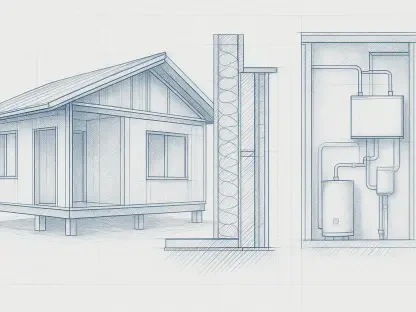
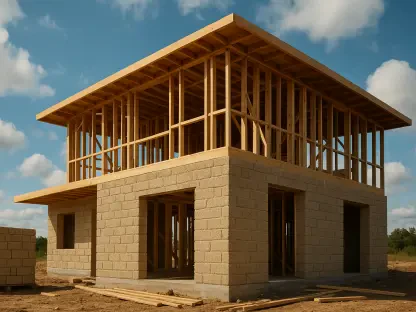
Central to the technical revolution occurring in residential construction is the implementation of the SHAWOOD housing system, which represents over six decades of dedicated research and development. This premium construction method utilizes high-grade laminated timber and pre-engineered components to achieve a structural tolerance of just two millimeters, a level of accuracy that is virtually impossible to reach with traditional on-site framing techniques. While the underlying technology was perfected in Japan, the actual manufacturing of these components takes place within Australia, ensuring that the materials are optimized for local building codes and the harsh southern sun. This extraordinary precision does more than just provide a sturdy frame; it creates a perfectly level and square foundation for all subsequent trades, resulting in superior internal finishes and a structure that is far less prone to the warping, creaking, or settling issues that often plague standard timber-framed houses over time.
Sustainability in the current building climate has moved beyond the mere addition of solar panels, focusing instead on the inherent performance and longevity of the building envelope itself. The guiding principle is that the most eco-friendly home is one that remains structurally sound and functionally relevant for many generations without requiring intensive repairs or premature demolition. To achieve this, advanced materials such as ceramic-coated cladding are utilized to provide a self-cleaning exterior that eliminates the need for periodic repainting, thereby reducing chemical runoff and long-term maintenance costs for the owner. Furthermore, the integration of breathable wall systems allows for the effective management of moisture and airflow, preventing the structural decay associated with condensation. These technical advancements contribute to exceptional thermal stability, meaning the internal temperature remains consistent with minimal reliance on mechanical heating or cooling, directly lowering energy consumption and creating a healthier living space.
Harmonizing Aesthetic Design and Social Responsibility
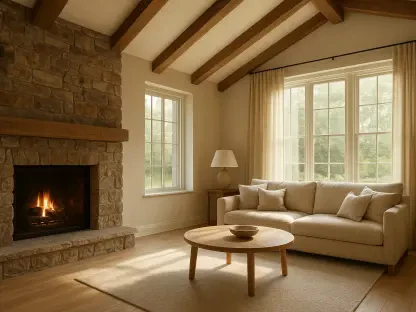
The aesthetic direction of modern Australian developments is increasingly influenced by the concept of “Satoyama,” a design philosophy that seeks a harmonious balance between human habitation and the natural world. This approach prioritizes the creation of living spaces that are flooded with natural light and designed to encourage cross-ventilation, reducing the boundary between indoor and outdoor environments. It is not merely an architectural style but a functional strategy intended to enhance the psychological and physical well-being of the residents by ensuring they remain connected to greenery and open air. By applying these principles to the broader community layout, developers are able to foster a sense of social cohesion and environmental stewardship, as shared parks and walking paths are integrated into the fabric of the neighborhood. This focus on the human experience ensures that the development serves as a sanctuary that promotes a higher quality of life rather than just a collection of residential units.
High-level engineering must be matched by a culture of transparency and rigorous quality assurance to truly redefine the building experience for the consumer. While the industry standard for quality inspections during a typical build might only involve a handful of checks, a more comprehensive approach involves over 18 detailed inspections throughout the construction journey. This commitment to accountability is further solidified by providing homeowners with a documented history of the craftsmanship involved, including certifications for the specific tradespeople who worked on the residence. Internally, this is supported by a highly collaborative environment where multi-disciplinary design reviews are conducted in person to ensure that every aspect of the project—from the structural engineering to the interior marketing—is perfectly aligned. This elevated customer experience turns the purchase of a home into a long-term relationship based on trust, ensuring that the buyer feels supported long after the keys have been handed over and the initial move-in period has concluded.
Strategic Evolution and Future Housing Solutions
As the residential market continues to evolve, the focus is shifting toward measured growth and the development of innovative housing typologies that address the critical issue of affordability. There is a noticeable trend where the demand for “supersized” suburban homes is being replaced by a preference for more “considered homes” that prioritize efficiency and verticality without sacrificing luxury or comfort. Drawing on extensive experience with high-density urban environments, developers are now creating compact footprints that utilize intelligent layouts to maximize usable space. Recent flagship projects, such as the net-zero SHINKA House, serve as vital proofs of concept for this new direction, achieving record-breaking energy performance and setting new benchmarks for what is possible in the Australian market. These developments demonstrate that sustainable, high-quality living is achievable at scale, provided there is a willingness to invest in advanced technology and rethink traditional notions of residential space.
The future of Australian home building was defined by a commitment to the philosophy of continuous, incremental improvement, often referred to in industrial circles as “Kaizen.” By seeking to be slightly better in every operation every single day, the organization moved toward a synthesis of international precision and local expertise that effectively addressed the needs of a modern, environmentally conscious society. Stakeholders and future residents should look toward integrated models that prioritize the lifecycle of the building over short-term profit margins, as this approach has proven to yield more resilient and valuable assets. Moving forward, the industry must adopt these rigorous quality standards and design philosophies to ensure that the housing stock of the future is capable of supporting both human health and ecological balance. The transition toward high-precision, net-zero dwellings is no longer an optional luxury but a necessary evolution that will define the standard of living for the next generation of Australian families.