
Urban construction sites often present a logistical nightmare where every square inch of space translates directly into project overhead and potential safety risks. In these environments, traditional heavy machinery frequently struggles to maneuver without encroaching on active traffic lanes or neighboring structures, creating a demand for equipment that balances massive lifting capacity with a minimized physical footprint. The introduction of the Case E Series short-radius models represents a calculated response to this industry-wide challenge, offering a sophisticated blend of mechanical strength and digital precision. By focusing on the specific needs of infrastructure and utility contractors, these machines provide a solution that allows for high-output digging in areas where standard excavators simply cannot operate effectively. This shift toward compact yet powerful machinery reflects a broader trend in the construction sector where efficiency is no longer measured solely by raw horsepower, but by the ability to perform complex tasks within the restrictive boundaries of modern metropolitan development.
Engineering Performance for Restrictive Environments
Power Density in Short-Radius Frames
The mechanical foundation of the CX145E SR and CX255E SR models demonstrates how engineering can overcome the physical limitations of a compact chassis. The CX145E SR operates as a highly versatile 15-ton machine, utilizing a 105-horsepower engine to handle residential and light commercial tasks with ease. In contrast, the larger CX255E SR enters the 27-ton class with a robust 160-horsepower output, proving that a short-radius design does not necessitate a compromise in breakout force or lifting capacity. These machines utilize advanced hydraulic configurations to ensure that the engine output is converted into usable work with minimal energy loss. By optimizing the weight distribution across the undercarriage, Case has managed to maintain the stability required for heavy lifting while ensuring the counterweight stays within a tight rotational arc. This specific design choice allows the machines to work adjacent to walls or within single-lane closures without the risk of the rear of the machine swinging into obstacles or oncoming traffic.
Building on the mechanical prowess of these units, the integration of specialized work modes allows for an even greater level of refinement during operation. Operators can choose from four distinct work modes—Super Power, Power, Eco, and Lifting—each of which recalibrates the engine and hydraulic responses to match the task at hand. When combined with ten different throttle settings, the system provides a granular level of control that was previously unavailable in machines of this size. This versatility ensures that whether a contractor is performing delicate utility daylighting or aggressive trenching, the excavator is always operating in its most efficient state. The result is a significant reduction in fuel consumption and mechanical wear, as the machine never exerts more energy than is required for the specific job. This level of customization is essential for modern contractors who must manage tight margins and strict environmental regulations while maintaining high productivity levels on diverse jobsites across the country.
Integrated Systems for Operational Accuracy
To further enhance the productivity of these short-radius models, Case has embedded “smart” technologies that handle the complex calculations of load management and hydraulic distribution. A primary feature is the integrated payload weighing system, which provides real-time data to the operator to ensure that every truck leaving the site is loaded to its maximum legal capacity without being overloaded. This eliminates the need for external scales or time-consuming trips back to the stockpile, streamlining the entire hauling process. Additionally, the customizable hydraulic flow balance allows the operator to prioritize flow to the boom, arm, or swing functions depending on the application. For instance, when performing high-reach work, the operator can increase flow to the boom for faster cycle times, whereas precision grading may require more focus on arm control. These adjustments can be made on the fly, allowing the machine to adapt to changing site conditions without requiring a technician to manualy adjust valves.
Safety and structural integrity are maintained through a suite of digital safeguards designed to prevent common jobsite accidents. The Dynamic Stability Assist system is particularly noteworthy, as it continuously monitors the machine’s pitch and roll to alert the operator of potential tipping risks, especially when working on uneven terrain or at the limits of the machine’s reach. Furthermore, the inclusion of height and depth alarms allows contractors to set specific boundaries for the excavator’s movement. This is a critical feature when working under live power lines or near sensitive underground infrastructure, as it provides an automated stop to prevent accidental contact. The Selectable Free Swing function also adds a layer of safety during lifting operations, as it allows the upper structure to swing freely when positioning heavy loads, preventing the side-loading of the boom. By merging these safety protocols with the machine’s core hydraulic functions, the E Series creates a more predictable and controlled operating environment for the user.
Digital Innovation and Long-Term Reliability
The Modern Operator Experience and Interface
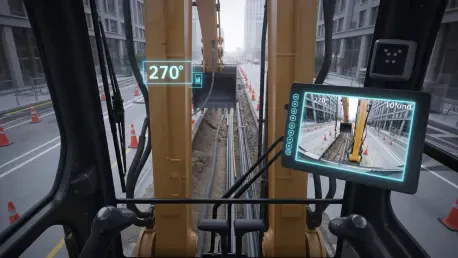
The interior of the E Series cab has undergone a complete transformation to resemble the ergonomic standards of a high-end automotive environment. Central to this experience is the 10-inch LCD display, which serves as the primary interface for all machine functions and provides a comprehensive 270-degree bird’s-eye view of the surrounding area. This visibility is vital for short-radius machines, as it compensates for the inherent blind spots created by working in close proximity to structures and other equipment. The interface also allows operators to store specific hydraulic settings for up to 10 different attachments, enabling quick transitions between buckets, hammers, and shears without the need for manual recalibration. By reducing the physical and mental fatigue of the operator through an intuitive control layout and improved climate control, these machines ensure that productivity remains consistent throughout the duration of a long shift, which is often a bottleneck in high-stakes infrastructure projects.
Furthermore, the integration of advanced telematics has changed the way these excavators are managed from a fleet perspective. The two-way communication system allows for remote diagnostics and software updates, which can be performed by the dealer without a service truck ever visiting the site. This proactive approach to machine health is supported by the ProCare program, which includes a three-year or 3,000-hour factory warranty and a comprehensive planned maintenance schedule. Such a robust support system is designed to maximize uptime and provide owners with a predictable total cost of ownership. By moving the service intervals for fuel and oil filters to 1,000 hours, Case has effectively halved the routine maintenance downtime compared to older machine generations. This focus on reliability ensures that the machines stay in the field longer, providing the high-duty cycle performance that is required for the heavy demands of modern construction, where project timelines are increasingly compressed and equipment failure can lead to massive financial penalties.
Maximizing Infrastructure Longevity through Smart Maintenance
Looking ahead to the operational lifecycle of the E Series, the emphasis on ease of maintenance and remote connectivity provides a clear path for sustained performance in the coming years. The accessibility of ground-level service points simplifies the daily checks that are often neglected on crowded jobsites, ensuring that fluid levels and filtration systems are consistently monitored. This physical accessibility, paired with the digital oversight of telematics, creates a dual-layer approach to equipment longevity that protects the contractor’s investment. When dealers can identify a potential hydraulic issue or an engine fault code before it leads to a catastrophic failure, the savings in both time and money are substantial. This model of equipment management reflects a shift toward data-driven maintenance strategies that prioritize prevention over reaction. As urban infrastructure projects become more complex, the ability to rely on equipment that monitors its own health will be a defining factor in the success of major construction firms and independent contractors alike.
In the context of modern project management, the use of short-radius excavators with high-end digital features provides a strategic advantage in competitive bidding. Firms that utilized these advanced E Series models achieved a higher degree of precision in their project timelines because they could operate in spaces where others had to rely on smaller, less capable equipment. The implementation of the payload weighing system and customizable hydraulics allowed for a more granular control over material costs and labor hours. This operational transparency facilitated a smoother workflow between different trades on site, reducing the likelihood of delays caused by equipment limitations. By prioritizing a machine that combines compact dimensions with high-end power and smart technology, the industry took a significant step toward solving the space constraints of the modern urban landscape. The focus shifted from simply moving dirt to managing a complex ecosystem of data, safety, and mechanical efficiency, setting a new benchmark for what heavy machinery should deliver in the field.