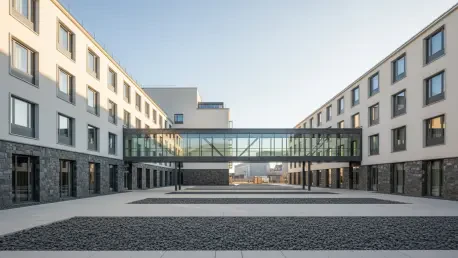

Modern travelers and investors are increasingly demanding that hospitality expansions balance increased room capacity with a demonstrable commitment to environmental stewardship and operational seamlessness. The recent completion of the DoubleTree by Hilton expansion in South Burlington, Vermont, serves as a masterclass in this delicate balancing act. Spearheaded by AAM 15 Management and executed by PC Construction alongside Smith Buckley Architects, the 47,000-square-foot project successfully integrated 66 new guest rooms and four executive suites into a pre-existing, fully functional campus. This 20% capacity boost was not merely a physical addition but a strategic response to the surging demand for premium accommodations in regional markets. By utilizing a sophisticated sky bridge to connect the original structure with the new wing, the development team managed to enhance guest circulation and staff workflows without disrupting the established aesthetic or functional rhythm of the hotel grounds.
Strategic Integration: The Live-Site Expansion Model
Logistical Precision: Maintaining Operations During Vertical Growth
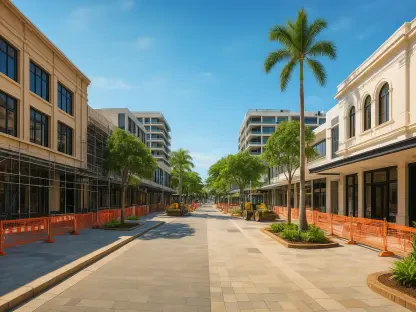
Executing a massive construction project while a hotel remains fully booked requires a level of coordination that transcends traditional general contracting. In the South Burlington project, the team had to navigate tight urban constraints that left zero room for error regarding material deliveries and heavy machinery movement. Contractors implemented a just-in-time delivery schedule, ensuring that large-scale components arrived only when they were ready for immediate installation, thereby preventing blockages on local roads or in guest parking areas. This meticulous planning extended to noise mitigation and dust control, which were vital for maintaining the high service standards expected of the Hilton brand. By working closely with municipal agencies and local transportation officials, the project managers demonstrated that urban density and active site operations are not insurmountable obstacles but rather parameters that demand a specialized, phased approach to hospitality development.
The success of this model hinges on the ability to treat the construction site as an extension of the hospitality experience rather than a separate, intrusive industrial zone. For the DoubleTree expansion, the use of a new sky bridge served as a critical piece of infrastructure that permitted the new and old wings to function as a singular, cohesive unit before the project even reached total completion. This bridge facilitated the seamless movement of housekeeping and maintenance staff, ensuring that the increased room count did not result in a fragmented service delivery model. Building on this operational foundation, the project highlights a shift where developers prioritize the continuity of the guest experience above all else. Consequently, the ability to execute phased expansions while managing live-site risks has become a core competency for firms aiming to lead in the hospitality sector through 2028 and beyond, as it allows owners to capture immediate revenue while modernizing their physical assets.
Sustainable Infrastructure: Engineering for Energy Autonomy
Beyond the physical footprint, the technical specifications of modern hotel expansions now prioritize lower-carbon solutions that drastically reduce long-term utility expenditures and carbon footprints. The South Burlington development opted for an all-electric heating and cooling framework, utilizing advanced room-based heat pumps instead of conventional fossil-fuel-dependent HVAC systems. This shift was complemented by the installation of a 4,250-square-foot solar array on the building’s rooftop, which provided a significant portion of the energy needed to power the new wing’s amenities. This approach naturally led to a more resilient building profile that is better insulated against fluctuating energy costs and tightening municipal emissions regulations. By integrating these high-efficiency technologies from the ground up, the project demonstrated how developers can leverage new construction to upgrade the overall sustainability profile of an entire campus, creating a green flagship that attracts eco-conscious travelers.
Environmental responsibility in modern construction also extended beneath the surface through sophisticated site-wide resource management and runoff mitigation strategies. The Vermont project addressed these challenges by implementing an advanced stormwater management system that used gravel wetlands to process and filter rainwater runoff before it entered the local ecosystem. This holistic view of sustainability—combining renewable energy generation with ecologically sound site engineering—established a new standard for hospitality developments located in sensitive or high-density environments. Moving forward, the adoption of these resilient building systems was instrumental in proving that profitability and environmental stewardship are complementary rather than competing goals. For construction owners and builders, the takeaway was clear: the integration of high-efficiency technology within a compressed, active-site schedule was the definitive method for ensuring that hospitality assets remained competitive, compliant, and cost-effective in an era where sustainability is a requirement for growth.