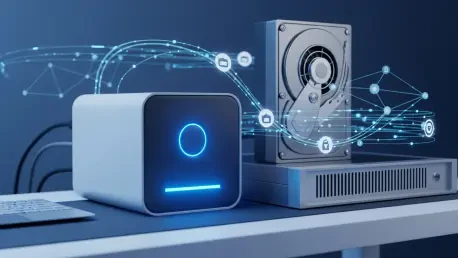

The modern landscape of residential protection has become increasingly tethered to recurring monthly invoices that often exceed the value of the physical hardware itself. As homeowners search for ways to secure their property without falling into the “subscription trap,” companies like eufy Security are pivoting toward a local-first philosophy that prioritizes data ownership and financial transparency. This shift is not merely a reaction to consumer fatigue but a fundamental redesign of how smart home ecosystems handle sensitive information. By moving the processing power and storage from distant cloud servers directly into the household, the brand manages to provide high-end features like facial recognition and high-definition video archiving without a persistent fee. This approach challenges the industry standard where premium features are locked behind a paywall, suggesting that professional-grade security is achievable through a one-time investment in sophisticated hardware and intelligent software integration.
Direct Access and Control: The Smart Display Interface
Interaction Dynamics: The E10 Hub Experience
Centralizing home management through a dedicated terminal offers a significant departure from the mobile-first approach that has dominated the industry for years. The Smart Display E10 functions as a permanent mission control center, featuring an eight-inch high-resolution touchscreen that remains active and accessible at all times. Unlike a smartphone, which may be buried in a pocket or silenced during a critical event, this stationary hub provides an immediate visual link to the property’s perimeter the moment a sensor is triggered. Its presence in a high-traffic area of the home, such as a kitchen or entryway, allows every member of the household to interact with the security system without needing a personal device or specific app permissions. This accessibility ensures that identifying a visitor or checking a live feed becomes a seamless part of the daily routine rather than a frantic search for a phone during an alert.
This dedicated hardware approach also addresses the latency issues often associated with cloud-dependent mobile applications. When the E10 hub is integrated into the local network, the speed of communication between the display and the cameras is noticeably faster, providing near-instantaneous live views. The interface is designed to be intuitive, allowing users to toggle between different camera views or adjust system settings with minimal navigation. Furthermore, the inclusion of an eight-core processor ensures that the high-resolution video streams are rendered smoothly, preventing the stuttering or freezing that can occur on lower-powered devices. By prioritizing a physical, always-on interface, the system reinforces a sense of constant vigilance and reliability, making it easier for residents to maintain an active role in their home’s safety without the friction of traditional digital monitoring methods.
Technical Integration: High-Speed Connectivity and Alerts
The efficiency of a modern security system relies heavily on its ability to handle massive amounts of data across multiple channels simultaneously. Equipped with Wi-Fi 6 technology, the E10 hub provides the necessary bandwidth to support multi-view monitoring, which allows residents to observe four distinct camera feeds on a single screen. This capability is particularly useful for larger properties where monitoring the front door, the driveway, the backyard, and a side entrance at the same time is essential for full situational awareness. The high-speed connection ensures that these high-definition streams do not experience significant lag, which is critical when tracking a moving subject or responding to a real-time event. This level of technical performance bridges the gap between consumer-grade gadgets and the professional monitoring stations found in commercial security environments.
Safety features within the hub extend beyond visual monitoring to include tactile and audible emergency responses. A prominent physical emergency button is integrated into the device, allowing users to trigger a system-wide alarm or contact local authorities with a single press. This feature serves as a vital safeguard for situations where a resident might feel threatened and cannot spend time navigating a digital menu. Additionally, the hub acts as a bridge for two-way audio communication, enabling users to speak directly to someone at the door through the display’s built-in speakers and microphone. This interaction is facilitated by low-latency protocols that make conversations feel natural and immediate. By combining robust connectivity with dedicated safety hardware, the system creates a comprehensive communication loop that keeps the homeowner in total command of their environment at all times.
Artificial Intelligence: Enhancing HomeBase Intelligence
Intelligent Recognition: The BionicMind AI Framework
The true intelligence of a security system is measured by its ability to distinguish between routine activity and genuine threats. At the heart of this ecosystem lies the HomeBase S380, which utilizes BionicMind AI to process visual data with remarkable precision. This self-learning algorithm is designed to recognize human faces, body shapes, and even specific vehicles over time, becoming more accurate as it gathers more data within its local environment. By identifying frequent visitors, such as family members or delivery personnel, the system can filter out redundant alerts that typically plague standard motion-sensing cameras. This reduction in “notification noise” ensures that when a homeowner receives an alert, it is for an event that actually requires their attention, thereby increasing the overall effectiveness of the security network.
Beyond simple facial recognition, the AI framework is capable of categorizing different types of movement to provide more context to the user. For instance, the system can differentiate between a neighbor walking a dog and a stranger lingering near a window, providing specific descriptions in the resulting mobile notifications. Because all of this processing happens locally on the HomeBase S380, the data never leaves the home, which enhances privacy and significantly speeds up the identification process. The AI is also programmed to learn from its mistakes; if a user identifies a false positive, the system adjusts its parameters to avoid repeating the error in the future. This level of sophisticated, localized machine learning represents a major step forward in making smart home security more autonomous and less dependent on constant human oversight or expensive remote server processing.
Data Infrastructure: Local Storage and Network Stability
The most significant barrier to professional-grade security has historically been the ongoing cost of storing high-definition video footage. The HomeBase S380 addresses this by offering a scalable local storage solution that eliminates the need for monthly cloud subscriptions entirely. While the unit comes with built-in memory, it features an expandable bay that can accommodate a hard drive with up to 16 terabytes of capacity. This massive storage potential allows for years of continuous recording or archived events to be kept safely within the home, providing a level of historical data access that is rarely seen in consumer products. Homeowners retain absolute ownership of their footage, ensuring that private moments are not stored on third-party servers where they could be vulnerable to data breaches or unauthorized access.
In addition to acting as a digital vault, the HomeBase serves as the central nervous system for all connected peripheral devices. It functions as a signal repeater, extending the range of the cameras to ensure that even the most distant corners of a property remain connected to the network. This centralized architecture also allows for coordinated responses to security breaches; for example, if an outdoor camera detects an intruder, the HomeBase can trigger its internal 100-decibel siren while simultaneously activating the alarms on all other connected devices. This synchronized approach creates a formidable deterrent against potential trespassers. By consolidating storage, processing power, and network management into a single local hub, the system provides a robust and reliable foundation for a comprehensive security strategy that remains completely free of recurring operational costs.
Perimeter Security: Outdoor Surveillance Efficiency
Strategic Monitoring: The SoloCam S340 Dual-Lens System
Effective outdoor surveillance requires a combination of wide-area coverage and the ability to capture fine details at a distance. The SoloCam S340 achieves this balance through a sophisticated dual-lens configuration that pairs a 3K wide-angle lens with a 2K telephoto lens. This setup allows the camera to maintain a broad view of the property while simultaneously zooming in on specific points of interest, such as a person’s face or a vehicle’s license plate. When the camera’s AI detects movement, the motorized pan-and-tilt mechanism can rotate the lenses up to 360 degrees to follow the subject automatically. This dynamic tracking ensures that there are no blind spots, as the camera effectively “chases” the activity across its entire field of view, providing a continuous and detailed record of the event from multiple perspectives.
The integration of hybrid zoom technology allows for up to 8x magnification, making it possible to identify details from as far as 40 feet away with high clarity. This precision is vital for gathering evidence or identifying unknown individuals who may be casing a property from the street. Because the camera processes these visual changes in real-time, the transition between lenses is seamless, providing a smooth video feed that captures both the context of the situation and the critical details needed for identification. This dual-lens approach effectively does the work of multiple static cameras, reducing the amount of hardware needed to cover a large area. By focusing on optical versatility and automated tracking, the system provides a high level of perimeter defense that is both thorough and easy to manage, ensuring that nothing goes unnoticed in the surrounding environment.
Sustainable Engineering: Solar Power and Total Ownership
Maintaining a wireless security network often involves the tedious task of removing cameras to charge their batteries, but sustainable engineering has largely solved this inconvenience. The SoloCam S340 features an integrated solar panel that can be adjusted to capture the maximum amount of sunlight throughout the day. With just a few hours of direct exposure, the camera can maintain a full charge indefinitely, creating a truly “set and forget” security solution. This self-sustaining power model is particularly beneficial for cameras mounted in hard-to-reach locations, such as high rooflines or remote gates, where manual charging would be impractical. By removing the need for wired power or frequent battery swaps, the system offers a level of operational autonomy that matches the reliability of professional hardwired installations.
The transition toward decentralized, subscription-free security models represented a significant pivot for the smart home industry as consumers prioritized data ownership. Investors and homeowners alike found that the initial cost of high-quality hardware was quickly offset by the elimination of recurring service fees, which often amounted to hundreds of dollars over several years. This economic shift encouraged a more strategic approach to property protection, where the value was found in the longevity and intelligence of the local system rather than the convenience of cloud-based storage. Moving forward, the focus will likely remain on enhancing local AI capabilities and expanding storage horizons, ensuring that the privacy and financial independence of the user remain at the forefront of technological development. Those looking to secure their homes should consider these local-first ecosystems as a viable path toward professional protection without the burden of endless monthly payments.