
The traditional boundary separating the sanctuary of the interior from the untamed outdoor environment has undergone a radical transformation as homeowners increasingly demand spaces that prioritize seamless continuity. This evolution is not merely a matter of placing a few pieces of furniture on a patio; rather, it represents a fundamental shift in residential architecture where the “outdoor living room” is treated with the same aesthetic rigor as a formal indoor lounge. By 2026, the focus has moved toward creating fluid and transitional zones that allow for a lifestyle of ease, where the movement from a climate-controlled interior to a curated exterior feels entirely natural. This movement is fueled by a desire for greater connectivity with nature without the historical compromise of comfort or style. Designers are now tasked with synthesizing structural integrity with high-end luxury, ensuring that every element—from the choice of flooring to the specific weave of a cushion—contributes to a singular, cohesive narrative that spans the entire property. As the demand for these sophisticated environments grows, the industry is seeing a convergence of architectural precision and advanced material science to redefine what it means to live “outside.”
Material Advancement in Modern Outdoor Environments
The rapid development of material technology serves as the primary engine driving the sophisticated aesthetics of contemporary outdoor living rooms. In previous years, the selection of exterior furnishings was limited by the inherent volatility of natural elements, forcing a choice between durability and style. However, the current landscape of 2026 offers an array of high-performance materials that provide the tactile softness of indoor fabrics alongside the resilience required for constant exposure to UV rays, moisture, and temperature fluctuations. This technological leap has empowered designers to specify upholstered sectionals, intricate rugs, and even delicate-looking window treatments for exterior use. By utilizing advanced polymers and solution-dyed acrylics, manufacturers have successfully eliminated the “plastic” feel once associated with outdoor gear. This ensures that the transition from a silk-blend rug in the library to a high-density poly-fiber rug on the terrace is visually and physically imperceptible, reinforcing the concept of the home as a singular, unified organism rather than a series of disconnected boxes.
Breakthroughs in High-Performance Textiles
The current generation of outdoor fabrics represents a pinnacle of engineering, where the microscopic structure of the fiber is designed to repel liquids while maintaining a breathable, soft-hand texture. These textiles are no longer mere surface coatings; instead, the pigments are integrated at the molecular level before the fiber is even spun, which prevents the fading that historically plagued sun-drenched patios. This advancement allows for a much broader palette of colors and patterns, including deep navies, rich charcoals, and intricate jacquard weaves that were previously reserved for protected indoor environments. Homeowners can now enjoy the luxury of velvet-like textures or chunky linen weaves in their outdoor lounge areas, knowing that these materials will resist mold and mildew even in humid coastal climates. The integration of antimicrobial treatments further enhances the longevity of these pieces, ensuring that the outdoor living room remains a hygienic and inviting space for family gatherings regardless of the season or local weather patterns.
Beyond the durability of the individual threads, the construction methods for outdoor cushions and pillows have seen significant upgrades. Moisture-wicking cores and open-cell foam technologies allow water to pass through the material rapidly rather than soaking into the center, which significantly reduces drying time after a rainstorm. This functionality is essential for maintaining the “fluid” nature of modern living, as it minimizes the maintenance burden on the homeowner. Furthermore, the rise of recycled marine plastics in textile production has introduced a sustainable element to luxury design, proving that high-end aesthetics can coexist with environmental responsibility. Designers are increasingly layering these diverse textures—combining smooth performance suedes with rugged, weather-resistant knits—to create a sensory experience that rivals the most sophisticated interior showrooms. This layered approach adds depth and warmth to the outdoor room, transforming it from a static observation deck into a fully functional and deeply comfortable extension of the primary living space.
Innovations in Durable Surface Finishes
The structural surfaces of the modern outdoor living room have transitioned from basic concrete or wood to highly engineered materials like sintered stone and ultra-compact surfaces. These materials are created through a process of extreme heat and pressure that mimics the natural formation of stone but results in a product with near-zero porosity. In the context of 2026, these surfaces are preferred for outdoor flooring and cabinetry because they are virtually immune to scratching, staining, and thermal shock. This means that a sleek, matte-finish countertop can withstand the direct heat of a built-in grill or the freezing temperatures of a harsh winter without cracking or losing its luster. The ability to print high-resolution patterns onto these surfaces allows for the replication of rare marbles or exotic woods, providing the visual warmth of natural materials with the industrial strength required for exterior longevity. This technical capability ensures that the design language established in the kitchen or master bath can be mirrored perfectly in the outdoor lounge.
Accompanying these stone-like surfaces is the widespread use of architectural-grade powder coatings on aluminum and stainless steel components. These finishes provide a sophisticated, tactile quality to furniture frames and structural supports, offering a range of textures from fine-grit metallic to smooth, satin-like sheens. Unlike traditional paint, these coatings are electrostatically applied and cured under heat, creating a bond that prevents chipping and corrosion even in salt-heavy environments. This durability is critical for maintaining the geometric precision of modern design, where clean lines and sharp angles are paramount. By utilizing these advanced finishes, designers can incorporate slim-profile furniture that appears delicate but possesses the structural integrity of heavy-duty industrial equipment. The result is an outdoor living room that feels light and airy while maintaining the permanence and solid feel of a permanent interior installation, effectively bridging the gap between the ephemeral beauty of the landscape and the solid reality of the home.
Architectural Integration and Structural Harmony
A truly modern outdoor living room is defined by its relationship to the primary structure, functioning as a deliberate extension of the home’s architectural DNA. This integration requires a shift in perspective, where the exterior space is considered during the initial planning phases rather than being treated as a secondary landscaping project. Architects are increasingly focusing on the alignment of sightlines, ensuring that the view from the interior lounge flows uninterrupted into the outdoor seating area. This is often achieved through the use of consistent flooring materials that transition from the inside out without a change in level or threshold. By utilizing the same large-format porcelain tiles or hardwood planks across both zones, the visual brain perceives the two areas as a single, expansive room. This strategy not only makes the home feel larger but also reinforces the “fluid and transitional” lifestyle that characterizes contemporary high-end residential design in the current era.
Mirroring the Home’s Aesthetic Lines
The success of a transitional space depends heavily on the intentional mirroring of the home’s existing geometric profile and material palette. For instance, if a residence features prominent black steel window frames or a specific style of cedar siding, these elements should be repeated in the outdoor living room’s pergolas, privacy screens, or furniture accents. This repetition creates a sense of “groundedness,” making the outdoor area feel like a permanent part of the residence rather than a temporary addition. Designers often look to the proportions of the interior rooms to dictate the scale of the outdoor furniture, ensuring that the volume of a sofa or the height of a coffee table remains consistent across the threshold. This attention to detail prevents the jarring sensation that often occurs when moving between different styles of furniture, fostering a serene and cohesive environment that promotes relaxation and social engagement.
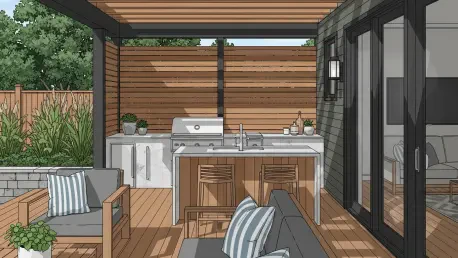
Furthermore, the use of vertical elements such as slatted wood partitions or metal trellises can echo the rhythm of the interior architecture. These structures serve a dual purpose: they provide necessary privacy and shade while acting as a visual bridge between the solid walls of the house and the open landscape. In 2026, the trend has moved away from heavy, opaque barriers in favor of “permeable” structures that allow light and air to pass through while still defining the boundaries of the room. This approach maintains the airy feel of the outdoors while providing the enclosure and intimacy associated with a traditional lounge. By carefully selecting materials that age gracefully—such as pre-weathered steel or thermally modified timber—designers ensure that the outdoor living room will continue to harmonize with the main house for decades. The goal is to create a space that feels as though it has always been there, a natural outgrowth of the home’s central design philosophy.
Utilizing Glass to Blur Boundaries
Structural advancements in glazing technology have fundamentally changed the way homeowners interact with their outdoor spaces by removing the visual weight of traditional walls. Expansive glass wall systems, such as oversized sliding panels or bifold doors that tuck away into hidden pockets, allow the interior and exterior to merge completely. These systems are no longer just windows; they are dynamic architectural components that can be reconfigured based on the weather or the occasion. When fully retracted, the living room literally expands into the garden, creating a massive, ventilated pavilion that is perfect for large-scale entertaining. Even when closed, these high-clarity glass surfaces act as a near-uninterrupted lens, bringing the colors and textures of the landscape into the home. This visual connection is vital for well-being, as it maintains a constant link to the natural world while providing protection from the elements.
The integration of glass extends beyond just doors to include glass railings, skylights, and even transparent roof sections for covered patios. These elements minimize the visual “clutter” that can sometimes make a backyard feel cramped or disconnected. By using frameless glass balustrades on a raised deck, for example, the view of the pool or the horizon remains unobstructed from the comfort of the sofa. In modern design, the objective is to make the structural supports as invisible as possible, emphasizing the transparency of the space. This is often complemented by the use of “low-iron” glass, which eliminates the green tint found in standard glazing, ensuring that the colors of the outdoor furniture and the surrounding greenery appear vibrant and true. This commitment to transparency and openness is a hallmark of the 2026 design aesthetic, prioritizing a lifestyle that is unencumbered by the rigid confines of traditional masonry and wood construction.
Technological Integration for All-Season Comfort
To truly function as a living room, an outdoor space must be usable throughout the year, regardless of seasonal shifts in temperature or light. This requirement has led to the integration of sophisticated climate control and automation systems that were once the exclusive domain of luxury interiors. In the current residential market, the outdoor living room is equipped with a suite of technologies designed to maintain a “Goldilocks” environment—not too hot, not too cold, but just right. This is achieved through a combination of radiant heating, automated shading, and precision misting systems that respond to real-time environmental data. By embedding these technologies into the architecture of the space, designers can extend the “patio season” to include the entire calendar year. This transformation elevates the outdoor area from a fair-weather luxury to a primary living zone that offers consistent comfort and utility.
Sophisticated Climate Control Systems
Heating technologies have evolved significantly, moving away from bulky, orange-glowing propane towers toward discreet infrared heaters integrated into the ceiling or walls. These systems work by warming objects and people directly rather than trying to heat the air, which is highly efficient in an open-air environment. Many of these units are designed to be “flush-mounted,” disappearing into the architectural lines of a porch or pergola. In 2026, these heaters are often connected to smart home hubs, allowing them to activate automatically when the ambient temperature drops below a certain threshold or when motion is detected in the seating area. This level of automation ensures that the outdoor living room is always ready for use, removing the friction of manual setup and making the space feel like a true extension of the climate-controlled interior.
Conversely, managing heat and airflow is equally important for maintaining comfort during the summer months. High-volume, low-speed fans and integrated misting systems can reduce the perceived temperature of an outdoor space by as much as fifteen degrees. Modern misting technology uses ultra-high pressure to create a “dry mist” that evaporates instantly, cooling the air without leaving a damp residue on furniture or clothing. Additionally, automated louvered roof systems allow homeowners to control the amount of sunlight and ventilation with the touch of a button. These roofs can be adjusted to track the sun for optimal shade or closed completely to provide a watertight seal during a rainstorm. The integration of these various climate tools creates a microclimate that is entirely within the user’s control, ensuring that the outdoor living room remains a viable sanctuary even in the face of extreme weather conditions.
Smart Lighting and Audio Connectivity
The atmospheric quality of an outdoor living room is largely dictated by its lighting and audio-visual capabilities, which have become increasingly seamless and integrated. Lighting design for these spaces now mirrors the “layered” approach used indoors, incorporating task lighting for cooking areas, ambient lighting for lounging, and accent lighting to highlight architectural features or landscaping. Low-voltage LED systems are the standard, offering incredible energy efficiency and the ability to change color temperature to match the time of day or the desired mood. Integrated “smart” controllers allow for the creation of specific “scenes,” where a single command can dim the lights, activate the fire pit, and start a curated music playlist. This level of control is essential for creating the sophisticated, lounge-like ambiance that modern homeowners expect from their primary relaxation zones.
Audio technology has also seen a shift toward invisible integration, with high-fidelity speakers hidden within planters, disguised as rocks, or even embedded directly into the structural walls of the home. These systems provide an immersive soundscape that can be zoned specifically to the outdoor living room, preventing noise bleed into neighboring properties. For entertainment, weatherized television displays with high-brightness panels are now common, allowing for daytime viewing without glare or color distortion. These screens are often mounted on motorized lifts that hide the device when not in use, preserving the clean architectural lines of the space. By treating the outdoor living room as a high-tech hub, designers have succeeded in creating an environment that is as capable and entertaining as any indoor media room, further dissolving the distinction between the two environments.
Implementation Strategies for Sustainable Design
The evolution of the outdoor living room reached a point where the focus shifted from mere aesthetics to a holistic integration of technology, material science, and architectural principles. It was established that the most successful projects were those that treated the exterior as a primary living zone from the very beginning of the design process. Designers recognized that the selection of high-performance textiles and durable surface finishes was not an optional luxury but a fundamental requirement for creating a space that remained functional and beautiful over time. This approach facilitated a new standard of residential living where the boundaries of the home were defined by the entire property line rather than the exterior walls. The lessons learned from this period emphasized that comfort and style did not need to be sacrificed for durability, provided that the right materials and structural strategies were employed.
Moving forward, the focus must remain on the continued refinement of these transitional spaces to ensure they meet the changing needs of the modern lifestyle. Professionals should prioritize the integration of renewable energy sources, such as solar-integrated pergolas, to power the climate control and lighting systems that make these rooms usable year-round. There is also a significant opportunity to further explore biophilic design, incorporating vertical gardens and natural water features that enhance the sensory connection to the environment. By maintaining a commitment to high-quality materials and smart architectural integration, it was possible to create outdoor living rooms that served as enduring sanctuaries. The future of residential design lies in the continued pursuit of this seamless experience, where the “outdoor living room” is no longer a trend but a permanent and essential component of the modern home.