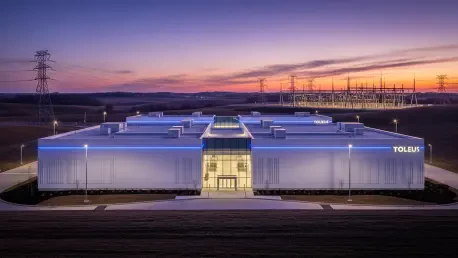

The traditional landscape of the American Midwest is undergoing a profound metamorphosis as the physical infrastructure of the digital economy begins to dominate the horizon of the Show-Me State through Amazon’s massive investment. This colossal ten-billion-dollar commitment represents more than just a cluster of server farms; it signifies a pivotal shift in Missouri’s economic identity, moving away from a primary reliance on manufacturing and agriculture toward a leadership role in global cloud computing infrastructure. By selecting Missouri for this expansive AWS footprint, the technology giant has effectively placed a multi-billion-dollar bet on the state’s logistical capabilities and power grid stability. As these massive structures rise, they bring a complex array of challenges and opportunities that will dictate regional prosperity for decades. This development serves as a catalyst for a broader technological ecosystem, attracting ancillary service providers and high-tech vendors.
Economic Impact: Assessing Local Growth
The immediate influx of capital has already begun to stimulate the local economy through a surge in high-skilled construction contracts and procurement of industrial materials. However, the true long-term value lies in the operational phase, where the presence of such a significant data hub necessitates a specialized workforce proficient in network engineering, cybersecurity, and hardware maintenance. Local businesses are pivoting to meet the needs of this new neighbor, creating a secondary economic wave that extends into hospitality, facility management, and logistical support. This massive concentration of investment provides a stable tax base that local municipalities can leverage to fund critical public services, including education and public safety. While initial headlines focused on the sheer dollar amount, the enduring legacy will be the diversification of the regional economy, making it more resilient against downturns in traditional sectors to ensure a stable future.
To sustain this momentum, Missouri is witnessing a fundamental realignment of its educational priorities, with universities and vocational schools developing curricula specifically tailored to the requirements of cloud infrastructure management. These institutions are working in tandem with industry leaders to ensure that the local talent pipeline is robust enough to fill the high-paying roles that such a facility requires. This synergy prevents the brain drain that has historically plagued the Midwest, as graduates now find lucrative, cutting-edge opportunities within their home state rather than migrating to coastal tech hubs. Furthermore, the presence of AWS acts as a magnet for other technology enterprises, fostering a burgeoning innovation district that encourages startups and venture capital to congregate in the region. This clustering effect transforms Missouri into a formidable competitor on the national stage, establishing a new narrative of Midwestern technological prowess.
Infrastructure: Power and Sustainability
Maintaining a data center of this magnitude requires an immense and consistent supply of electricity, which places unprecedented pressure on the existing energy grid and necessitates significant upgrades to transmission lines. Utility providers are now faced with the dual challenge of meeting this heightened demand while simultaneously pursuing aggressive decarbonization goals set by state and federal regulators. The success of this massive project hinges on the ability of the region to integrate diverse energy sources, including wind, solar, and perhaps small modular nuclear reactors, to provide the 24/7 reliability required by cloud operations. This transition requires careful planning to ensure that the costs of infrastructure expansion do not fall disproportionately on residential ratepayers. Consequently, the collaboration between the technology sector and utility companies is fostering a more modern, resilient, and intelligent electrical grid that benefits all residents.
The integration of this ten-billion-dollar project into the fabric of the state necessitated a forward-thinking approach from both public officials and private stakeholders to ensure long-term viability. State leaders recognized that the physical presence of the data center was only the first step and moved to establish comprehensive incentives for ongoing technological investment and research. Policymakers focused on streamlining regulatory hurdles while maintaining strict oversight of resource management to protect the interests of local communities. Local governments invested in infrastructure that supported high-tech corridors, ensuring that the benefits of this massive facility reached beyond the immediate construction site. By proactively addressing the needs of the digital economy, the state secured a position as a leader in the next phase of industrial evolution. These strategic actions proved that a well-coordinated response to investment could effectively redefine a region’s future.