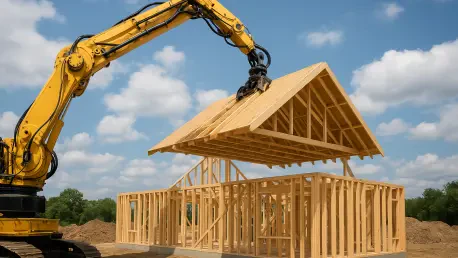

Following a successful pilot program in Alberta with Mattamy Homes, Promise Robotics is now expanding its automated production technology into the United States housing market with D.R. Horton. This landmark multi-year commercial agreement signifies a pivotal shift in how the nation’s largest homebuilder approaches residential construction. By integrating the startup’s advanced physical AI and automated systems, the collaboration aims to deliver more than 1,250 homes across various high-demand regions. The partnership represents a significant milestone for the Canadian-born startup as it establishes a formidable footprint within the American landscape. Beyond mere volume, this deal serves as a massive real-world demonstration of how decentralized robotic manufacturing can seamlessly merge with traditional building practices. It moves the industry closer to a model where high-tech efficiency is the standard for suburban development projects. The move reflects a deep commitment to modernizing the supply chain.
Modernizing Residential Construction: The Role of Physical AI
The core of this technological integration lies in a proprietary platform that effectively streamlines the entire production lifecycle from the initial blueprint to the final onsite assembly. Utilizing physical AI, the system possesses the unique ability to convert standard architectural home designs into comprehensive and highly detailed automated production plans. These plans are not merely digital files but include precise robotic manufacturing instructions that manage factory operations and coordinate complex onsite installations with surgical accuracy.
One of the most compelling advantages of this specific model is that it allows established homebuilders to leverage the power of high-tech automation without the massive capital investment normally required to construct and manage their own specialized robotic facilities. This “Factory-as-a-Service” approach democratizes access to sophisticated tools, enabling a faster transition toward modern industrial manufacturing methods at a fraction of the cost. By reducing the overhead associated with fixed plant operations, the industry can remain agile.
Overcoming Systemic Hurdles: Labor and Material Volatility
This strategic agreement arrives at a critical juncture for the North American housing industry, which continues to grapple with chronic labor shortages and volatile material costs. The persistent gap between housing demand and available inventory has created an urgent need for innovative solutions that can accelerate delivery timelines without compromising structural integrity or affordability. By implementing Promise Robotics’ technology, D.R. Horton aims to drastically improve construction cycle times and increase overall production capacity across its extensive portfolio.
The predictability offered by automated manufacturing allows for better resource management and more accurate project forecasting, which are essential components for stabilizing the market. Furthermore, the ability to produce housing components in a controlled environment mitigates the impact of adverse weather conditions, ensuring that projects remain on schedule regardless of external environmental factors. This level of reliability provides a much-needed buffer against the logistical uncertainties that frequently delay traditional residential construction projects.
A Blueprint for Innovation: Industrializing the Housing Market
The successful integration of automated manufacturing into large-scale residential development suggested a clear path forward for the broader construction sector. Stakeholders who observed this partnership noted that the bridge between traditional onsite methods and factory precision required a commitment to digital-first design principles. Moving forward, developers found it necessary to invest in retraining their workforce to manage robotic interfaces rather than just physical tools, ensuring that human expertise complemented mechanical efficiency.
This initiative provided a blueprint for how the industry could meet the growing demand for sustainable and cost-effective housing through smart, data-driven infrastructure. Companies that adopted this decentralized manufacturing model saw immediate benefits in waste reduction and logistical coordination. It became evident that prioritizing modular flexibility allowed builders to pivot quickly in response to shifting consumer preferences or economic fluctuations. The transition toward automated production ultimately redefined the competitive landscape for national homebuilders by 2028.