
Building price inflation is forecasted to stay between 3 and 5 percent throughout 2026 before accelerating as national infrastructure activity increases. This projection serves as a stark reminder that while the Irish economy remains fundamentally resilient, the construction sector is currently grappling with a period of intense transition and uneven recovery. Currently, the landscape is defined by a significant influx of government capital intended to modernize the nation, yet these financial commitments are colliding with the harsh realities of physical delivery. While the broader industry managed a marginal real-term growth of 0.4 percent, this figure masks the deep variances between different asset classes. Stakeholders are now looking beyond the sheer volume of available funding to question whether the necessary systemic changes are in place to turn these billions into tangible assets. The focus has shifted from securing the budget to managing the complex logistics of procurement and supply chain stability while ensuring that the labor market can expand to meet this unprecedented demand.
Navigating a Dual-Speed Construction Economy
Residential Resilience: Planning and Housing Dynamics
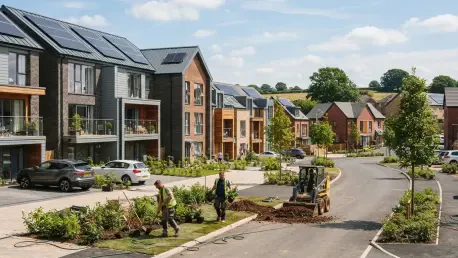
The residential market has emerged as the primary engine of construction activity, demonstrating a robust rebound that contrasts sharply with other sectors. In the second quarter of 2026, residential building recorded an impressive 5.5 percent annual growth rate, a trend bolstered by a staggering 60 percent surge in planning approvals. This uptick reflects a concerted effort to address the chronic housing shortage that has plagued the nation for years. However, the translation of these approvals into completed homes remains a point of concern for analysts. While the uptick in the AIB Ireland Construction PMI indicates that a broader recovery is beginning to take root, the residential sector is currently carrying the weight of the industry’s growth prospects. Developers are increasingly focused on high-density urban projects and social housing schemes, supported by the €9.1 billion in funding earmarked for these priorities. This concentration of resources is essential for the sector’s long-term health and for meeting the country’s urgent social infrastructure requirements.
Commercial Contraction: The Non-Residential Shift
In stark contrast to the housing boom, the non-residential building sector has faced a significant downturn, contracting by 9.7 percent over the past year. This decline is largely attributed to a cooling in demand for traditional office spaces and a shift in corporate real estate strategies following global economic shifts. Investors are now more cautious, leading to a visible slowdown in the commencement of major commercial hubs that previously dominated the Dublin skyline. This contraction has forced many specialist contractors to pivot their focus toward public works or retrofitting existing structures to meet new environmental standards. The reduction in private commercial investment serves as a corrective phase for a market that was perhaps overextended in previous cycles. As companies reassess their physical footprint, the industry is seeing a transition toward mixed-use developments that blend commercial utility with residential components to create more resilient urban environments that are capable of adapting to the changing needs of a modern workforce.
Strategic Hurdles for National Infrastructure Delivery
Financial Commitments: The Delivery Gap
The Irish government has set a bold course with its updated National Development Plan, committing a massive €102.4 billion in departmental funding from 2026 to 2030. However, the Arcadis report highlights a critical disconnect: as of August 2026, government capital spending was nearly 10 percent behind its projected schedule. This delivery gap is exacerbated by severe capacity constraints, as the construction workforce, though expanded to 160,000, struggles to keep pace with the sheer scale of the pipeline. Competition for specialist skills is intensifying, driving up costs alongside rising prices for asphalt and concrete. For ambitious initiatives like MetroLink to succeed, there must be a fundamental shift in how the state manages these bottlenecks. The current backlog of projects risks creating a massive resource squeeze that could lead to further inflationary pressure as multiple schemes hit the market at once, competing for a limited pool of qualified labor and the increasingly expensive materials needed for specialized builds.
Strategic Management: The Path to Systemic Reform
To ensure the success of this investment cycle, the Irish construction industry recognized that it had to move beyond reactive measures and toward a culture of strategic workload management. Experts concluded that the primary solution involved earlier market engagement, where developers and government bodies collaborated with contractors during the initial design phases. This shift allowed for more accurate cost forecasting and helped to identify potential supply chain bottlenecks before they impacted the delivery schedule. By prioritizing realistic procurement timelines and adopting more transparent communication channels, the sector was able to better manage the expectations of all stakeholders. The transition away from traditional competitive bidding toward more collaborative frameworks proved essential in maintaining progress during periods of high material price volatility. These adjustments were not merely administrative changes but represented a fundamental evolution in how the industry approached national development and long-term asset creation for the public.