
Homeowners across the Western United States and beyond are increasingly finding themselves at a crossroads between maintaining a beautiful, lush landscape and ensuring their property remains safe from the encroaching threat of seasonal wildfires. The shift toward distance-based planting zones represents a significant evolution in American landscaping, moving away from purely decorative gardens toward functional, fire-smart environments that protect human lives and property. There is a common misconception that creating a fire-safe yard requires clearing every piece of vegetation and leaving the home surrounded by a barren moonscape of dirt or concrete. However, modern fire ecology experts have demonstrated that a well-maintained, hydrated garden can actually serve as a protective barrier against flying embers. By implementing the 0-5-30 rule, residents can achieve a balance between high-end aesthetics and rigorous wildfire safety protocols. This strategy focuses on the management of vegetation density and moisture content within specific distances from structures, ensuring that if a fire does approach, it lacks the continuous fuel sources needed to gain intensity. As of 2026, these standards have become the baseline for insurance compliance and community safety, proving that the most resilient landscapes are those that integrate nature with careful, distance-oriented planning. This approach recognizes that the primary threat often comes not from a wall of flame, but from wind-blown embers that ignite flammable materials near the home.
1. Strategic Implementation: Securing the Inner and Intermediate Zones
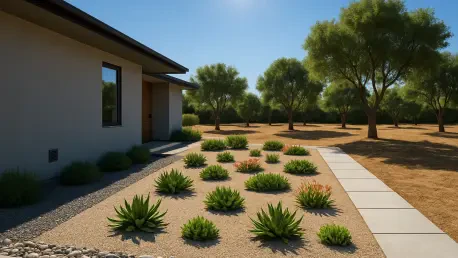
The initial five feet surrounding a structure, often referred to as the Immediate Protection Border, is the most critical area for preventing home ignition from embers. Within this zero-to-five-foot zone, the objective is to eliminate all combustible materials that could allow a fire to touch the exterior of the building. Homeowners should prioritize the installation of fire-resistant, non-woody plants such as succulents, low-growing perennials, or other moisture-rich greens that do not produce significant dry litter. It is essential to remove any tree branches that hang over the roofline, maintaining a minimum clearance of at least ten feet between the structure and the nearest limb. Furthermore, the ground in this zone must be kept strictly free of flammable debris like dried leaves, pine needles, and traditional wood mulch, which often acts as a wick for fire. Replacing organic mulch with gravel, river rock, or other non-combustible inorganic materials significantly reduces the risk of ground fires creeping toward the foundation. Every detail in this zone matters, including the space beneath decks and near crawlspace vents, where small accumulations of dry matter can ignite and trap heat against the home. By treating this innermost circle as a non-combustible buffer, the architectural integrity of the residence is shielded from the most common causes of structure loss during wildfire events.
Moving outward into the Intermediate Buffer Zone, which spans from five to thirty feet from the home, the strategy shifts toward breaking up the continuity of fuel. In this area, landscaping should be arranged in small groupings or islands rather than continuous hedges or dense thickets. This spatial arrangement prevents fire from moving across the yard in a single, uninterrupted path, forcing it to drop in intensity or go out entirely. A primary concern in this zone is the elimination of ladder fuels, which are low-lying shrubs or tall grasses that allow ground fires to climb into the crowns of trees. To prevent this upward spread, a significant vertical gap must be maintained between the tops of low-lying plants and the lowest branches of any overhanging trees. Ground cover in this buffer, including lawns, native grasses, and wildflowers, should be kept at a maximum height of four inches to limit the speed and heat of any surface fire. Regular maintenance remains a non-negotiable requirement, as the accumulation of fallen leaves and organic debris can quickly bridge the gaps between islands and create a fire path. When these zones are meticulously managed, they provide a visual transition from the home to the wilder parts of the property while serving as a robust second line of defense that slows the progress of heat and flames.
2. Perimeter Management: Protecting the Extended Safety Zone
The Extended Safety Perimeter, reaching from thirty feet out to a hundred feet or more, focuses on thinning the forest or brush to manage the overall intensity of an approaching fire. In this outer zone, the most critical intervention involves the management of the tree canopy to prevent crown fires, which are much harder to control than surface fires. A minimum horizontal gap of ten feet must be maintained between the crowns of neighboring trees to ensure that fire cannot easily jump from one treetop to the next. This spacing not only reduces fire risk but also improves the health of the individual trees by reducing competition for water and nutrients. Pruning lower tree branches up to ten feet from the ground is a standard practice here, provided that the tree retains at least seventy-five percent of its total foliage to maintain its health and structural stability. By lifting the canopy, homeowners significantly decrease the likelihood of a ground fire transitioning into a catastrophic crown fire. This zone acts as the primary filter for the property, where the density of vegetation is reduced just enough to break the momentum of a fire without sacrificing the natural beauty or privacy that large trees provide to the landscape.
Beyond canopy management, the ground-level vegetation in the extended perimeter requires constant vigilance to eliminate dead or dying material that serves as highly flammable fuel. All dead trees, withered bushes, and piles of fallen branches must be removed or chipped to prevent them from becoming hotspots during a fire event. The goal is to create enough space between various shrubs and trees to break up any continuous fuel sources on the ground, effectively compartmentalizing the landscape. In many regions, this zone transitions into native woodland or meadow environments, and the challenge lies in maintaining the wild character of the land while enforcing these critical safety gaps. Proper management of the thirty-to-one-hundred-foot area ensures that if a wildfire reaches the property, its flames remain low to the ground and move more slowly, giving suppression crews a much higher chance of successful intervention. This buffer of protection is not about total removal, but rather about the strategic thinning of biomass to create a sustainable environment that respects the natural fire cycle of the region. As vegetation in this area matures, periodic thinning and clearing are necessary to ensure that the growth does not eventually recreate the dangerous fuel ladders and canopy bridges that the 0-5-30 rule aims to eliminate.
3. Resilient Design: Using Hardscapes and Regional Plantings
Integrating hardscape elements into a fire-resilient garden serves both aesthetic and functional purposes, providing natural firebreaks while adding structure to the overall design. Using non-combustible materials like gravel, flagstone paths, and decorative stone walls creates elegant barriers that physically stop the spread of fire across the terrain. These features are particularly effective when placed between the various planting islands mentioned in the intermediate zone, as they create a visual and physical rhythm that guides the eye and the footsteps of visitors. High-quality local stone is often the preferred choice for these installations, as it helps the garden feel authentically connected to the surrounding environment and geological history. Beyond their role as firebreaks, stone walls and paths also help with soil retention and water management, preventing erosion during heavy rains that often follow dry seasons. By choosing materials that are inherent to the site’s geography, designers can create a landscape that feels rooted in its place while providing a sophisticated defense against heat and embers. These permanent structures require very little maintenance compared to living vegetation, offering a stable foundation for the property’s long-term fire safety strategy without sacrificing the luxury of a well-appointed outdoor living space.
Regional plant selection is another cornerstone of a resilient landscape, as native species are inherently adapted to local climate conditions, including periods of drought and high heat. Choosing plants that match the specific ecological context, whether it be high desert, woodland edges, or coastal meadows, ensures that the garden remains healthy and moisture-rich with minimal intervention. Native plants often have deep root systems that help them survive extreme weather, and many species possess natural fire-retardant properties compared to invasive or exotic ornamentals. For example, deciduous trees and shrubs generally have higher moisture content in their leaves and are less flammable than resinous evergreens like pines or junipers. By selecting for the right plant in the right place, homeowners can create a lush environment that thrives in the local microclimate while adhering to fire-wise principles. This ecological approach to design not only reduces the risk of fire but also supports local biodiversity by providing habitats for native pollinators and wildlife. The resulting garden is a reflection of the natural landscape, offering a sense of harmony and continuity that more artificial planting schemes often lack. When combined with strategic hardscaping, regional plant selection creates a landscape that is both beautiful to inhabit and capable of withstanding the environmental pressures of a warming climate.
4. Defensive Infrastructure: Expert Perspectives and Local Codes
Expert fire mitigation specialists emphasize that the creation of a defensible space is not just about protecting the home, but also about providing a safe environment for firefighters to operate. When a home is surrounded by a managed landscape that follows the 0-5-30 rule, fire crews are much more likely to stand and defend the structure rather than moving on to safer locations. This professional perspective highlights the Goldilocks approach to vegetation management, where having a just right amount of healthy, green plants can actually be more beneficial than having no plants at all. Healthy, hydrated vegetation can serve as a physical filter that catches flying embers and reduces wind speeds, which are often the primary drivers of fire spread in residential areas. In contrast, a completely cleared site offers no resistance to the wind, allowing embers to travel faster and hit the home with more force. Therefore, the goal of modern fire-smart design is to maintain a high-moisture, low-density plant community that behaves predictably in an emergency. This defensive system creates a buffer where fire intensity is significantly lowered, protecting the core of the property while preserving the cooling benefits and psychological comfort that greenery provides to the residents.
Regulatory compliance is a vital aspect of implementing these safety measures, as many local jurisdictions have established specific ordinances that may be stricter than general state guidelines. Homeowners must work closely with local fire departments and planning offices to ensure that their landscapes meet all regional requirements, which often account for specific local hazards like steep slopes or prevailing wind patterns. In some high-risk areas, the requirements for defensible space might extend beyond the standard hundred feet, or specify certain prohibited species of plants known to be particularly flammable. Staying informed about these evolving regulations is essential for maintaining property insurance and ensuring that the home remains compliant with modern safety codes. These rules are frequently updated as new data from fire events becomes available, making the landscape a dynamic part of the home’s infrastructure that requires regular assessment and adjustment. By proactively meeting or exceeding these standards, residents contribute to the collective safety of their neighborhoods, as a single well-defended property can act as a barrier that helps protect adjacent homes. The intersection of professional expertise and local regulation ensures that fire-resilient gardens are not only beautiful but also grounded in the most current science of wildland-urban interface protection.
5. Landscape Evolution: Integrating Fire Safety and Sustainability
The integration of fire-resilient design with drought-tolerant landscaping offered a comprehensive outdoor strategy that addressed the dual challenges of heat and water scarcity. By 2026, the most successful residential projects were those that recognized the synergy between these two goals, utilizing water-efficient irrigation systems to keep fire-wise plants hydrated during the peak of the dry season. This holistic approach ensured that the landscape remained a vibrant, living asset that enhanced the property’s value while providing essential environmental services. The transition toward these resilient landscapes required a fundamental shift in how homeowners perceived beauty and safety, moving away from high-maintenance, water-heavy lawns toward more sustainable and protective ecosystems. By adopting these principles, communities fostered a new relationship with their surroundings, one that prioritized longevity and resilience over traditional, often misplaced, aesthetic norms. This evolution in land management practices effectively bridged the gap between environmental stewardship and emergency preparedness, creating a new standard for modern residential design.
Actionable steps were taken by residents who sought to future-proof their homes, beginning with a thorough audit of the vegetation within the immediate five-foot zone of their foundations. They prioritized the removal of all organic mulches and the pruning of overhanging limbs, effectively breaking the primary paths for fire ignition. These efforts were expanded outward into the intermediate and extended zones, where the strategic thinning of tree canopies and the removal of ladder fuels became annual maintenance rituals. The inclusion of hardscape firebreaks and the selection of native, fire-resistant species allowed for the creation of gardens that remained lush without posing a significant risk to the structure. Homeowners who collaborated with local fire departments found that their properties were better prepared for seasonal threats, often resulting in lower insurance premiums and increased peace of mind. Ultimately, the successful implementation of the 0-5-30 rule demonstrated that the most effective way to live in fire-prone regions was to design with nature rather than against it. These refined landscaping practices ensured that the home remained a sanctuary, standing strong against the environmental challenges of the current era through the application of science-based design and proactive stewardship.