
The expansion of Evergreen Landscape Pros into the Galisteo Basin marks a transformative shift for a rural community that has traditionally lacked access to the high-level architectural and horticultural expertise required for this climate. For many years, local property owners faced a significant deficit in specialized contracting, often struggling to find builders who truly understood the nuances of high-desert ecosystems and the challenges posed by the regional soil conditions. This arrival of high-level design and installation firms has transformed the approach to land management in Santa Fe County, moving beyond basic yard maintenance toward sophisticated environmental integration. By addressing the specific needs of this high-altitude basin, professional landscape architects are now able to bridge the gap between human habitation and the raw, untamed elements of the New Mexico landscape. This shift ensures that residential gardens and commercial sites are no longer just patches of green struggling against the sun, but resilient, well-planned extensions of the natural world.
Embracing the Spirit of the High Desert
Respecting Heritage: Ecology and Climate
The Galisteo Basin possesses a rich historical and ecological narrative, serving as a vital home to various cultures for thousands of years, starting with early Paleo Indian settlements. At an elevation nearing 5,800 feet, the region is defined by its environmental intensity, where plants must endure extreme UV radiation and dramatic seasonal temperature fluctuations that can decimate non-native species. Adopting a native-first approach has become the standard for successful landscaping in this area, prioritizing flora that evolved within these high-desert grasslands. Rather than forcing a lush, water-intensive aesthetic onto the dry soil, designers are now focusing on species like blue grama grass, chamisa, and various sages that naturally harmonize with the local colors and textures. This ecological sensitivity ensures that new installations do not merely survive but actually enhance the biological diversity of the basin while requiring fewer interventions from owners.
Managing Terrain: Soil and Erosion Control
Beyond the atmospheric conditions, the physical composition of the terrain in Galisteo presents a unique set of challenges involving caliche-heavy soils and the movement of water during seasonal storms. The prevalence of arroyos means that erosion control is a primary concern for any development, necessitating the use of engineered solutions like boulder-reinforced retaining walls and strategic grading. Furthermore, the threat of wildfires in the high desert requires a proactive and defensive strategy when planning the layout of any estate or commercial property. By integrating fire-wise plant materials and creating defensible space through the clever use of gravel paths and non-combustible hardscaping, professionals provide a resilient buffer against hazards. These structural interventions are designed to be as invisible as possible, blending into the rolling hills while providing the critical stability needed to protect buildings and infrastructure from the unpredictable forces of nature.
Integrating Regional Design and Sustainability
Architecture: Stone and Shaded Spaces
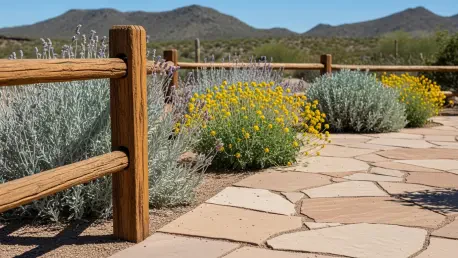
Achieving a successful outdoor space in the Galisteo Basin depends heavily on the integration of hardscaping and stonework that complements the iconic adobe architecture found throughout Northern New Mexico. Flagstone patios and decorative rock features are utilized not only for their aesthetic appeal but also for their incredible durability in an environment where wood and paint often fail under the sun. A central component of this regional design philosophy is the portal, a traditional covered walkway or porch that provides essential shade and protection from the elements. By incorporating these structures, landscape architects enable residents to enjoy the outdoors comfortably throughout the day, effectively extending the living space of the home into the surrounding environment. This balance of natural stone and shaded wood creates a timeless look that feels grounded in history while offering the modern functionality required by today’s sophisticated and discerning property owners.
Stewardship: Water Efficiency and Boundaries
Managing water and property boundaries within the expansive Basin requires a delicate touch to preserve the sense of openness while ensuring resources are used responsibly. High-efficiency drip irrigation systems and low-flow emitters are the backbone of any thriving garden here, ensuring that every drop reaches the root zone with minimal evaporation loss. Simultaneously, traditional fencing options like coyote fencing and latilla panels remain the preferred choice for boundary management, offering a rustic aesthetic that integrates with the landscape. These structures are effective for wildlife management, preventing larger animals from entering sensitive areas without creating a harsh visual barrier. This combination of advanced irrigation technology and classic site planning ensures that each property maintains its rural charm. By blending modern environmental science with traditional styles, the land remains vibrant and sustainable for the next generation of residents.
Establishing a Resilient Environmental Legacy
The evolution of landscaping in the Galisteo Basin demonstrated that ecological stewardship and high-end design could coexist through the application of specialized knowledge and modern technology. Property owners who prioritized local expertise found that their investments yielded more resilient and beautiful environments that required significantly less maintenance over the long term. Moving forward, the focus must shift toward even greater integration of passive water harvesting techniques and the further refinement of fire-resistant landscape zones. It was discovered that the most successful projects were those that treated the land as a partner rather than a blank canvas, resulting in outdoor spaces that felt like an organic extension of the high desert. For those looking to develop or renovate land in this unique region, the path to success lies in early consultation with professionals who understand the intersection of soil science, hydrology, and regional aesthetics to ensure a sustainable legacy.