
Traditional computer-aided design has long been a domain characterized by steep learning curves and rigid interface requirements that often stifle the creative spark of engineers and hobbyists alike. For many years, the divide between artistic mesh-based modeling and precise engineering-grade parametric design forced creators to choose between aesthetic freedom and functional accuracy. While visual tools allow for the creation of stunning digital assets, they frequently lack the dimensional rigor required for manufacturing physical components in the real world. Conversely, professional engineering software offers extreme precision but demands total mastery of complex constraint systems and nested menus. This historical friction is now being addressed through a transformative synergy between Claude AI and FreeCAD, utilizing the Model Context Protocol to bridge the gap between human language and technical execution. By enabling a large language model to interact directly with the underlying geometry engine of a professional CAD suite, the design process is being reimagined as a dialogue rather than a series of manual inputs. This shift promises to democratize high-precision engineering by allowing users to focus on the intent of their build rather than the specific mechanics of the software interface. As the barrier to entry drops, a new generation of makers can participate in professional-grade hardware development without the prerequisite of years of specialized CAD training.
Architecture of the Model Context Protocol Integration
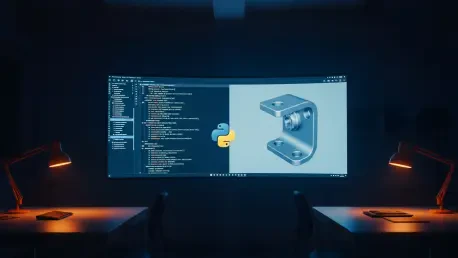
The technical foundation of this automated design environment relies on the FreeCAD MCP server, an open-source bridge that facilitates seamless communication between the artificial intelligence and the parametric modeling engine. This system operates by establishing a remote procedure call server within the FreeCAD environment, which essentially opens a secure channel for external instructions to be processed as native commands. For this to function, a dedicated addon is installed in the software, creating an active listener that monitors for requests from the Claude desktop application or other compatible AI interfaces. This architecture is revolutionary because it bypasses the traditional graphical user interface, allowing the AI to bypass the human-oriented menus and interact directly with the core data structures of the design document. By formalizing this connection through the Model Context Protocol, the AI is granted a structured environment where it can safely query the current state of a 3D model and propose modifications with a high degree of technical confidence.
The interaction between the language model and the CAD software is managed through a sophisticated mapping of capabilities that allow the AI to exercise control over the Python-based API inherent to FreeCAD. When a user provides a prompt, the MCP server translates that intent into specific tool calls that the AI can execute, ranging from simple object creation to complex geometric transformations. This setup effectively gives the AI a set of digital hands within the software, enabling it to perform tasks such as generating 2D sketches, applying constraints, and extruding shapes into three-dimensional volumes. Because the AI is operating within the same environment as a human designer, every action it takes is recorded in the document’s history tree, ensuring that the resulting file remains a standard, editable CAD project. This level of integration ensures that the AI is not merely a generator of static files, but a collaborative partner capable of manipulating live geometry in a way that respects the mathematical rules of parametric modeling.
Bridging Natural Language and Engineering Geometry
The most immediate benefit of integrating a large language model with professional CAD software is the transition from a mouse-driven manual workflow to a sophisticated natural language interface. In traditional design, a user must manually select planes, draw lines, and apply numerical constraints to ensure that a part meets the necessary specifications. This process is often tedious and prone to minor errors that can propagate throughout a complex project. With the implementation of the FreeCAD MCP server, a designer can simply describe the functional requirements of a part, such as a mounting bracket with four specific holes and a reinforced central rib. The AI interprets these requirements, calculates the necessary coordinates, and writes the Python code required to generate the geometry automatically. This allows the human designer to operate at a higher level of abstraction, focusing on the mechanical logic of the assembly rather than the specific sequence of clicks needed to produce a single feature.
Unlike traditional generative design tools that often produce “black box” models that are difficult to modify, this AI-driven approach maintains the full parametric integrity of the project. Because the AI is generating the part through the software’s native scripting interface, the output is a collection of features rather than a static mesh. If a hole needs to be shifted by two millimeters or a flange needs to be thickened, the human designer can simply select that feature in the history tree and adjust the parameters manually. This hybrid workflow provides the best of both worlds: the speed and linguistic ease of an AI assistant combined with the precision and editability of a professional engineering tool. The ability to iterate on a design through a conversation makes the prototyping phase significantly faster, as the AI can rapidly generate multiple variations of a concept based on simple verbal feedback, allowing for a more fluid and experimental approach to hardware engineering.
Optimization of Complex Engineering Workflows
The strategic utility of an AI-driven CAD assistant is most visible when handling repetitive or mathematically intensive tasks that are traditionally time-consuming for human designers. For instance, creating a complex circular pattern of bolt holes or ensuring that multiple components share perfectly aligned mounting points requires careful calculation and repetitive execution. By delegating these tasks to Claude, a designer can ensure mathematical perfection without the risk of human oversight errors. The AI is exceptionally capable of handling the underlying trigonometry and geometric relationships, allowing it to place features with absolute precision according to the user’s high-level instructions. This capability extends to the creation of complex textures or weight-reduction patterns that would be nearly impossible to draw manually but are easily described through a set of algorithmic rules that the AI can implement via the Python API.
Furthermore, the system excels at integrating standardized mechanical components into custom designs, a task that often involves looking up technical specifications and manually recreating them in the software. When a project requires compatibility with existing hardware ecosystems, such as the mounting hooks for an IKEA Skadis pegboard or specific tolerances for a standard ball bearing, the AI can leverage its training data to apply the correct dimensions automatically. Instead of the user spending time measuring existing parts and calculating offsets, they can simply instruct the AI to add the necessary interface features. This allows for the rapid development of functional accessories and repair parts that are guaranteed to fit with existing objects. By automating the “busy work” of hardware design, the integration allows makers to devote more of their cognitive energy to solving the primary engineering challenges of their projects, leading to more innovative and refined physical products.
Verification Mechanisms and Computational Resource Efficiency
To ensure the accuracy of the generated parts, the FreeCAD MCP integration utilizes a sophisticated visual feedback loop that allows the AI to “see” the results of its work. By taking periodic screenshots of the active workspace, Claude can analyze the current state of the 3D model and compare it against the original design requirements. This visual verification is crucial for catching errors that might not be apparent in the raw code, such as boolean operations that failed to subtract a volume or features that are overlapping in an unintended way. If the AI detects a discrepancy between the visual output and the intended design, it can automatically generate corrective code to fix the geometry. This closed-loop system significantly increases the reliability of the automation, providing a layer of self-correction that minimizes the need for human intervention during the initial drafting stages.
However, the use of visual tokens and frequent screenshot processing can be demanding on both system resources and AI processing limits, necessitating a strategic approach to workflow management. Constant visual updates can consume a large portion of the model’s context window, potentially leading to increased latency or higher costs for API usage. To maintain efficiency, experienced users often utilize a text-centric approach during the primary construction phase, relying on the AI’s internal logic and the software’s status reports to guide the build. Visual verification is then reserved for critical milestones or for polishing the final aesthetics of the part, ensuring that the spatial relationships are correct before the design is finalized. This balance between linguistic instruction and visual confirmation allows for a streamlined design process that maximizes the strengths of the AI while remaining mindful of the computational overhead involved in real-time 3D rendering and analysis.
The Strategic Shift in the Professional Designers Skillset
While the automation capabilities of Claude and FreeCAD are impressive, they do not replace the necessity for human engineering judgment and rigorous verification. Natural language can occasionally be ambiguous, and even the most advanced AI may interpret a request in a way that satisfies the prompt but fails to meet specific mechanical stress requirements or safety standards. Designers were required to use FreeCAD’s native measurement and analysis tools to validate the AI’s work, ensuring that wall thicknesses were sufficient for the intended material and that tolerances were appropriate for the planned manufacturing method. The role of the designer shifted from being a manual draftsman to acting as a high-level creative director and quality assurance lead. This evolution emphasized the importance of understanding the principles of mechanical engineering over the rote memorization of software shortcuts, as the ability to clearly define functional constraints became the primary driver of successful design outcomes.
The widespread adoption of the Model Context Protocol for CAD automation effectively lowered the barrier to entry for high-precision manufacturing, enabling a more diverse range of individuals to contribute to the physical world. This technological leap turned professional software into an accessible assistant, allowing creators to produce sophisticated hardware that was previously only possible for those with specialized technical backgrounds. Moving forward, the industry prioritized the development of more robust AI models capable of understanding material properties and manufacturing constraints directly within the conversational interface. Organizations that successfully integrated these tools into their prototyping cycles saw a dramatic reduction in development time and a corresponding increase in the complexity of their custom hardware solutions. The path toward a more conversational and intuitive engineering future was established by these early integrations, proving that the most powerful tool in the designer’s arsenal was the ability to effectively communicate a vision to an intelligent system.