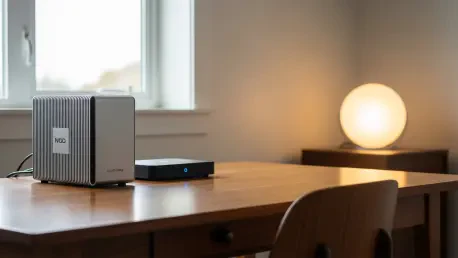

The frustration of standing in a dark hallway because a distant server went offline has highlighted the inherent flaws in early cloud-based automation systems. For too long, the consumer market prioritized the convenience of a simple “plug-and-play” setup at the expense of long-term reliability and personal privacy. Today, the landscape is shifting rapidly as homeowners reject the notion that their light switches or security cameras should be tethered to the health of a multi-billion-dollar corporation’s data center. This movement toward local control represents a design philosophy where devices operate independently of the wider web, ensuring that the digital butler remains functional even when the internet service provider fails or a manufacturer decides to discontinue a product line. By reclaiming the smart home from the whims of external providers, a new standard is being set for a robust, self-sustaining ecosystem that prioritizes the user over the service. This approach transforms a fragile web of connections into a resilient infrastructure where speed, security, and ownership are guaranteed by the hardware residing within the four walls of the residence.
Building a Robust Communication Infrastructure
Foundational Protocols: The Language of Local Connectivity
The bedrock of any locally controlled environment lies in communication protocols that do not rely on a traditional router for every internal command. Unlike standard Wi-Fi, which often becomes congested as more devices are added to a household, mesh networking technologies like Zigbee and Z-Wave create dedicated pathways specifically for smart accessories. These protocols allow a motion sensor to trigger a light bulb directly or through a central hub without the signal ever needing to travel to the open internet. Furthermore, the introduction of Matter has provided a universal language that allows products from disparate brands to communicate locally without the need for proprietary cloud-based bridges. By utilizing Matter over Thread, devices can form a self-healing network that is both energy-efficient and incredibly fast. This decentralized structure ensures that even if one device fails, the rest of the network remains intact, providing a level of reliability that Wi-Fi-only systems simply cannot match.
Transitioning to these localized protocols also significantly reduces the latency that often plagues cloud-dependent setups. When a command is sent locally, the response is nearly instantaneous because the data does not have to travel to a server in a different state and back again. This speed is particularly noticeable in high-traffic areas where lights or fans need to respond the moment a person enters a room. From 2026 to 2028, the industry expects a massive surge in Thread-enabled devices, which combine the speed of local connectivity with the ease of use typically associated with standard wireless networks. This shift effectively places the power of the home network back into the physical hands of the homeowner, ensuring that the responsiveness of the environment is dictated by local hardware rather than the current speed of the external internet connection. Consequently, the reliance on a stable external connection is removed, turning the smart home into a truly autonomous entity.
Centralized Intelligence: The Role of Local Hubs
While the protocols provide the communication pathways, a local hub acts as the brain that coordinates every automation and command within the system. Platforms such as Home Assistant and Hubitat have emerged as the gold standard for this, allowing users to run their entire digital ecosystem on local hardware like a Raspberry Pi or a dedicated mini-PC. By consolidating different brands into a single, offline interface, these hubs eliminate the need for dozens of proprietary applications that each require their own cloud login. This centralized intelligence ensures that complex automations—such as adjusting the shades based on the position of the sun or turning on the heater when a sensor detects a drop in temperature—occur within the home. Because the logic is processed inches away from the devices rather than in a remote data center, the entire system remains immune to the security risks and service outages that have historically hindered the smart home experience.
Moreover, utilizing a local hub provides a level of future-proofing that cloud services simply cannot offer to the average consumer. When a manufacturer goes out of business or decides to “sunset” a specific product line, cloud-dependent devices often become useless “bricks” overnight. In contrast, a device that communicates locally with a hub will continue to function as long as the hardware remains powered. This autonomy allows homeowners to invest in high-quality hardware with the confidence that their purchase will last for years, regardless of the corporate shifts of the manufacturer. As we look at the progress from 2026 into the future, the adoption of these local controllers is expected to grow as more users seek to avoid the subscription fatigue and forced obsolescence that define the current era of tech consumption. By centralizing the intelligence of the home, users can build a cohesive, long-lasting environment that evolves according to their specific needs.
Optimizing Reliability and Data Sovereignty
Localized Control: Lighting and Modern Interoperability
Lighting is often the first point of entry for many into the world of automation, and it is where the benefits of local control are most immediately felt. Systems like Lutron Caséta and Philips Hue demonstrate the power of using dedicated local frequencies and bridges to maintain responsiveness. By utilizing proprietary RF signals or Zigbee networks, these lights remain fully functional even if the home router loses its connection to the outside world or experiences a hardware reboot. This level of stability is essential for fundamental home functions, preventing a situation where a simple internet glitch leaves a household without the ability to manage its basic environment. Local control also eliminates the frustrating lag between a button press and a light turning on, providing a tactile experience that feels as natural as a traditional mechanical switch. This immediate feedback loop is a hallmark of a mature smart home, where technology enhances the living space without introducing new points of failure.
As the industry continues to evolve, newer brands are adopting standards that make local integration much easier for the consumer without requiring deep technical knowledge. Companies like Nanoleaf and Govee are increasingly utilizing local Wi-Fi APIs and Matter, which allows for a smoother “handshake” between devices and major ecosystems such as Apple Home. This transition is effectively dismantling the traditional “vendor lock-in,” giving homeowners the freedom to mix and match different brands based on quality and design rather than being forced into a single ecosystem. This interoperability ensures that a single local command can synchronize a wide array of devices from different manufacturers simultaneously. By reducing the overall strain on the central Wi-Fi network and moving toward these localized standards, the home network remains clear for high-bandwidth activities. The result is a more harmonious digital environment where every piece of hardware works together in a cohesive, high-speed ecosystem that does not demand a recurring monthly fee.
Security and Safety: Protecting the Domestic Sanctuary
Security and privacy are perhaps the most critical areas where local control has become a necessity rather than a luxury for the modern household. Surveillance systems from manufacturers like Ubiquiti, Reolink, and Eufy are moving aggressively toward on-device artificial intelligence and local storage solutions to keep video footage private. By processing person and vehicle detection on the camera itself and storing the resulting recordings on a home-based hard drive or Network Video Recorder, these systems keep sensitive visual data out of the cloud entirely. This architecture eliminates the risk of unauthorized access by third-party employees and protects the homeowner from data breaches that have plagued major cloud providers in the past. Furthermore, by removing the need for a monthly subscription to view recorded history, local storage offers a significant long-term financial benefit. This commitment to data sovereignty ensures that the owner retains absolute control over their personal information at all times.
Beyond surveillance, local control provides a life-saving “guard dog” for home infrastructure, specifically in the realms of water and fire safety. Local-control water valves can be paired directly with leak sensors to shut off a home’s main water line the very second a burst pipe is detected, regardless of whether the internet is working. This immediate response time is only possible when the decision-making process happens locally, bypassing the delays that can occur when a signal must travel to a remote server and back. Similarly, integrated smoke and carbon monoxide detectors that utilize local protocols can trigger sirens and unlock smart locks simultaneously, facilitating a faster exit during an emergency. By treating the internet as an optional luxury for remote notifications rather than a requirement for operation, homeowners can trust that their safety systems will perform exactly when they are needed most. This shift ensures that the most vital parts of the home remain shielded from the vulnerabilities of external network failures.
Achieving Resilience Through Strategic Hardware Implementation
The transition toward local control provided a clear roadmap for achieving a truly resilient and private living environment. Homeowners who moved away from cloud-dependent services found that their systems remained significantly faster and more secure than those relying on external servers for basic logic. To replicate this success, the first logical step involved auditing existing hardware to identify which devices required an active internet connection to perform their most basic tasks. Once these vulnerabilities were identified, the integration of a dedicated local hub like Home Assistant or Hubitat allowed for the consolidation of various brands into a single, offline interface that operated without external interference. Transitioning to Matter-over-Thread devices further simplified this process, ensuring that new additions to the network functioned seamlessly without the need for additional proprietary bridges. By prioritizing hardware that offered local APIs and on-device processing, users successfully built ecosystems that were not only more private but also entirely immune to the service outages and corporate shifts that once plagued the industry.