
The construction landscape has undergone a radical transformation where the margin for error has narrowed to the point that manual labor tracking is no longer a viable business strategy for any firm seeking longevity. As general contractors navigate a world of fluctuating material costs and tightening labor markets, the reliance on handwritten timesheets or informal verbal confirmations has become a primary source of financial leakage. These legacy methods are notoriously susceptible to human error, unintentional rounding, and the costly phenomenon of buddy punching, which collectively can inflate payroll expenses by nearly ten percent. Beyond the immediate fiscal impact, the administrative burden of chasing down missing signatures and reconciling conflicting reports creates significant delays in project timelines. To remain competitive in the current environment, firms are forced to rethink how they capture and verify every minute spent on the jobsite, moving toward a data-driven model that prioritizes precision and real-time accountability across all levels of the workforce.
Overcoming Modern Jobsite Management Challenges: Visibility and Risk
One of the most persistent hurdles for contemporary general contractors remains the inherent lack of visibility into daily field operations when crews are dispersed across multiple locations. When workers move between various jobsites throughout a single shift, it becomes nearly impossible for a project manager to verify exactly when work commenced or concluded at each specific site. This uncertainty creates a domino effect of operational failures, leading to inaccurate client billing and persistent payroll discrepancies that ultimately erode employee morale and damage the reputation of the company. Without a reliable mechanism to track movement and progress, managers are often left making critical decisions based on outdated or incomplete information, which increases the likelihood of project overruns and misallocated resources. The shift toward digital GPS tracking is not merely about oversight; it is about providing the clear, objective data necessary to balance the scales of production and labor costs in a highly volatile market.
Inaccurate timekeeping also introduces profound legal and compliance risks that can jeopardize the entire financial standing of a construction firm. In an era of increased regulatory scrutiny, the absence of a verifiable digital audit trail leaves companies vulnerable to costly disputes regarding overtime pay, meal breaks, and complex labor regulations. Modern GPS time clock applications serve as a critical defense mechanism by providing irrefutable proof of presence and engagement at designated work areas. This level of documentation ensures that contractors remain fully compliant with increasingly stringent industry standards and government requirements, such as those mandated by prevailing wage laws and the Davis-Bacon Act. By automating the record-keeping process, firms can significantly reduce the risk of litigation and government fines, allowing them to focus their energy on project delivery rather than defending against allegations of improper labor practices.
Core Technologies: The Evolution of Spatial Awareness and Verification
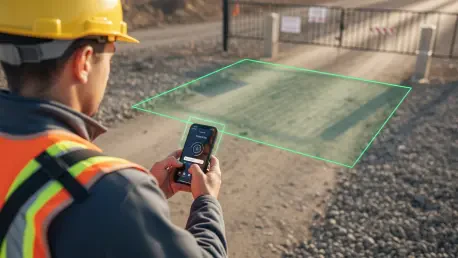
The current gold standard for time tracking is centered on advanced geofencing and spatial awareness technologies that redefine the boundaries of the jobsite. These sophisticated applications establish virtual perimeters around specific geographic coordinates, using a combination of satellite data and cellular triangulation to automatically prompt workers to clock in or out based on their physical proximity. This technology functions as a proactive digital assistant, ensuring that employees do not forget to log their hours even during the busiest moments of a project mobilization. This automation produces much cleaner data sets for the payroll department, eliminating the need for manual corrections and retroactive adjustments. By integrating these spatial triggers directly into the daily workflow, contractors can ensure that every logged hour is tied to a specific location, creating a level of geographic accountability that was previously unattainable with traditional clocking methods.
Accountability on the modern jobsite has been further enhanced through the implementation of multi-layered verification protocols that go far beyond basic GPS pings. Top-tier applications now incorporate secondary validation features such as facial recognition, high-resolution photo identification at the moment of clock-in, and real-time breadcrumbing that tracks movement throughout the shift. These features represent a shift in the industry from simple location monitoring to a comprehensive system of verified hours, where managers can see exactly where labor budgets are being expended in real-time. This granular level of detail allows for the confirmation of active engagement on the ground, preventing the padding of hours and ensuring that the work reported matches the physical progress seen on the site. These verification layers provide the necessary transparency to justify labor costs to clients and stakeholders, fostering an environment of trust and professional integrity.
Specialized Solutions: Precision Tracking and AI-Driven Optimization
For contractors who prioritize absolute data integrity, specialized platforms like Workyard have established themselves as premier choices for high-stakes environments. The distinguishing feature of these systems is the use of continuous, high-precision background tracking that captures exact entry and exit times with meter-level accuracy rather than relying on periodic location checks. This level of detail is particularly indispensable for businesses dealing with complex compliance requirements, such as certified payroll or prevailing wage projects, where even a few minutes of discrepancy can lead to major regulatory hurdles. By providing a constant stream of high-fidelity location data, these tools eliminate the ambiguity associated with mobile workforces, ensuring that every transition between jobsites is recorded automatically and accurately. This approach provides the back office with a level of confidence in the data that allows for nearly instantaneous payroll processing and project cost analysis.
In contrast to pure tracking solutions, some modern platforms like Planera emphasize project optimization through the strategic application of artificial intelligence. This platform shifts the focus from basic timekeeping to forward-looking strategic planning by using AI algorithms to analyze labor patterns and identify potential delays before they impact the schedule. It is an ideal tool for general contractors managing high-complexity projects with numerous moving parts and dependencies, helping them maintain a comprehensive view of the entire timeline. By correlating labor hours with task completion rates, these systems can provide predictive insights that allow managers to reallocate resources on the fly, ensuring that critical path items stay on track. This evolution represents a move toward proactive project management, where the time clock serves as a vital sensor in a larger ecosystem of project health and operational efficiency.
Productivity and Task Management: Bridging the Field and Office
Hubstaff approaches the market from a workforce analytics perspective, making it an exceptionally strong contender for firms managing mixed teams of field technicians and office staff. While it provides robust GPS tracking for mobile crews, it also offers specialized productivity monitoring tools, such as activity level tracking and keyboard usage metrics for administrative and design roles. This versatility makes it a comprehensive choice for construction companies that need to manage the entirety of their operations—from the jobsite to the digital workspace—within a single unified platform. By providing a holistic view of the organization’s labor investment, leadership can better understand how office support functions are impacting field productivity. This integrated approach helps break down the silos between different departments, fostering a more cohesive and efficient organizational structure that can respond quickly to changing project demands.
Other platforms, such as Fieldwire, integrate time tracking directly into the daily tactical workflow of a jobsite manager to ensure maximum relevance of the data. This system connects time logs directly to digital blueprints, task lists, and punch lists, ensuring that every hour worked is specifically tied to a verifiable project milestone or architectural element. While its GPS functionality may be more task-oriented than continuous, it is highly effective for crews that are already utilizing digital plans to drive their daily operations. By linking labor data to physical progress on the drawings, Fieldwire provides a unique perspective on job costing and productivity that purely location-based apps often miss. This level of context allows project managers to identify specific areas of a building or project phase that are consuming excessive labor, enabling targeted interventions that improve the overall efficiency of the construction process.
Team Coordination: Visual Accountability and Communication Hubs
BusyBusy has successfully carved out a significant niche as a leader in visual documentation and equipment tracking for heavy civil and infrastructure projects. By requiring photo verification during clock-in events, the app provides an extra layer of security that acts as a deterrent against time theft and ensures that the correct personnel are on-site at all times. Furthermore, the platform allows contractors to monitor machine usage alongside human labor, which is essential for accurate job costing on projects where equipment depreciation and fuel expenses are major financial factors. This dual-tracking capability provides a more complete picture of the total cost of production, allowing firms to see the interaction between their workforce and their heavy machinery. The visual nature of the app also serves as a historical record, documenting site conditions and personnel levels that can be invaluable for resolving future disputes or insurance claims.
For larger and more geographically dispersed workforces, Connecteam serves as a centralized digital hub that prioritizes communication and coordination just as much as tracking. It balances essential GPS time tracking with a suite of integrated tools for team messaging, digital checklists, and company-wide announcements, making it a flexible option for firms needing to improve overall organizational alignment. This platform is particularly useful for companies that have outgrown fragmented communication methods and need a single source of truth for both work hours and project instructions. By placing time tracking alongside training materials and safety protocols, the app encourages higher engagement from workers who see the tool as a resource rather than just a monitoring device. This holistic approach to employee management helps build a stronger company culture while simultaneously ensuring that the data required for payroll and compliance is captured consistently.
Accessibility and Reliability: Rugged Hardware and Intuitive Design
ExakTime remains a fundamental staple for firms that require a more traditional or rugged approach to timekeeping in environments where personal smartphones may be impractical. For jobsites characterized by extreme weather, heavy dust, or strict safety prohibitions on mobile devices, their weather-resistant physical clocks provide a stable and reliable alternative that can withstand the rigors of the field. As a veteran in the industry, the platform offers deep integration with legacy accounting software and enterprise resource planning systems, making it a reliable choice for long-standing firms with established back-office workflows. This hybrid approach—combining modern GPS mobile apps with durable on-site hardware—ensures that every worker, regardless of their technological literacy or jobsite conditions, can accurately log their time. This reliability is crucial for maintaining consistent data collection across diverse project portfolios.
ClockShark continues to be a preferred standard for smaller teams and local contractors who prioritize simplicity and ease of use over complex analytical features. It focuses on providing the essential components of geofencing and seamless payroll synchronization without the steep learning curve or high cost of more advanced AI-driven platforms. The design philosophy is centered on ensuring that the move away from paper-based systems is as frictionless as possible for both the workers in the field and the administrators in the office. By offering an intuitive interface that mimics familiar mobile interactions, the app reduces the administrative burden of onboarding and troubleshooting. For many growing firms, this entry-level accessibility is the key to successfully digitizing their labor tracking without disrupting the flow of their existing operations or overwhelming their staff with unnecessary complexity.
Software Standards: Mobile-First Design and Offline Capability
A non-negotiable requirement for any GPS time clock in the current market is a mobile-first design that prioritizes the user experience of the person in the field. Since the majority of data entry and interaction occurs on the jobsite, any tool that is difficult to navigate on a smartphone will inevitably result in poor data quality and resistance from the workforce. The focus must be on creating a frictionless process where clocking in, tagging cost codes, and documenting tasks can be completed in seconds. High-quality applications utilize large buttons, intuitive menus, and clear feedback loops to ensure that workers can focus on their actual construction tasks rather than struggling with software. When the technology feels like an asset rather than an obstacle, the rate of compliance increases dramatically, leading to more accurate records and a more satisfied team.
Offline reliability is another critical technical factor, as construction often takes place in signal “dead zones” like subterranean levels, reinforced concrete structures, or remote rural locations. Effective applications must include a robust offline buffer that stores all location and time data locally on the device when a connection is lost, syncing it automatically once cellular or Wi-Fi service is restored. This ensures that no data is lost during critical transitions and that the accuracy of the payroll remains intact regardless of the local infrastructure. A system that fails to account for these common environmental challenges is essentially useless in the construction industry, where reliable connectivity is never a guarantee. By ensuring that the tracking continues uninterrupted in the background, these apps provide a seamless experience that preserves the integrity of the labor record across all site conditions.
Strategic Rollout: Pilot Programs and Cultural Alignment
The successful implementation of a new GPS time clock system often depends on a structured pilot program rather than a broad, forced rollout across the entire organization. Smart contractors typically select a single, trusted crew to test the technology first, allowing them to identify potential friction points and calibrate geographic settings in a controlled environment. This period of testing is essential for fine-tuning geofence perimeters, ensuring they are precisely sized to capture actual entry into the workspace without being triggered by nearby traffic or neighboring projects. By involving the field staff in the testing phase, the company can address technical issues and gather feedback that makes the eventual full-scale deployment much smoother. This phased approach also allows for the creation of internal “champions” who can help train their peers and advocate for the benefits of the new system.
Transparent communication is the final and perhaps most important piece of the implementation puzzle for any contractor adopting location-based tracking. To avoid significant employee pushback regarding perceived “surveillance,” it is essential to frame GPS tracking as a tool for safety, organizational efficiency, and accurate compensation. When workers understand that the technology protects them from payroll errors, provides a verifiable record of their hard work, and can even be used to locate them in the event of an emergency, they are much more likely to embrace the transition. Leadership must be clear about how the data is used and, more importantly, how it is not used, setting clear boundaries between professional oversight and personal privacy. By building a foundation of trust and explaining the shared benefits of the technology, firms can transform a potentially contentious change into a collaborative step forward.
Strategic Outcomes: Financial Visibility and Risk Mitigation
Integrating labor data with specific cost codes allows contractors to gain a live, unfiltered picture of their project’s profitability as it evolves. This granular level of visibility enables project managers to identify labor cost overruns immediately, allowing for mid-project adjustments that can prevent a job from slipping into the red. By understanding exactly how much labor is required for specific tasks—such as framing, electrical rough-ins, or finishing—firms can refine their bidding processes with much higher precision. This data-driven approach to estimation reduces the risk of underbidding and ensures that profit margins are protected from the outset. In an industry where a few percentage points can be the difference between success and failure, the ability to analyze historical labor data to inform future quotes is a powerful competitive advantage.
Verified GPS records have also become a powerful tool for broader risk mitigation and insurance management within the construction industry. Having a permanent, digital audit trail of exactly who was on a jobsite at a specific time is invaluable during workers’ compensation disputes or third-party liability claims. This level of documentation protects the contractor from fraudulent claims and provides the transparency required to maintain or even lower insurance premiums in an increasingly high-risk environment. The presence of a sophisticated time-tracking system signals to insurers and clients alike that the firm is committed to high standards of accountability and operational control. By investing in these digital tools, contractors have effectively built a shield of data that protects their assets, their reputation, and their future growth potential in a demanding market.
Future Considerations: Actionable Steps for System Audits
The transition toward fully integrated GPS timekeeping reached a critical mass as firms recognized the direct correlation between data accuracy and net profitability. Contractors successfully moved beyond the initial hurdles of implementation by prioritizing platforms that offered a balance of high-precision tracking and ease of use for the field worker. The industry arrived at a consensus that the most effective systems were those that could exist silently in the background while providing the back office with the rigorous documentation required for modern compliance. These successful firms realized that the time clock was no longer just a payroll tool, but a foundational element of their broader project management strategy.
Looking forward, the industry found that the best course of action involved a comprehensive audit of existing digital infrastructure to ensure that labor data could flow seamlessly into accounting and scheduling software. Leaders in the field emphasized the importance of regular training updates to keep pace with evolving software features and data privacy regulations. The most resilient organizations were those that treated their time-tracking data as a strategic asset, using it to drive continuous improvement in their operational workflows and bidding accuracy. By adopting a proactive stance on technology, these contractors secured a significant advantage that allowed them to navigate market shifts with confidence and financial stability.