
The intersection of cultural preservation and environmental policy is becoming a fundamental requirement for the economic viability of modern city centers. For a long time, grassroots music venues were viewed as fragile entities, perpetually on the brink of closure due to rising overhead costs and property development pressures. However, the transformation of The Bunkhouse on Kingsway in Swansea provides a compelling narrative of how architectural intervention and green technology can rewrite this script. By 2026, the venue has effectively transitioned from a vulnerable local establishment into a model of climate-resilient infrastructure. This evolution was not merely a cosmetic upgrade but a strategic overhaul designed to insulate the space from both economic and environmental storms. As urban landscapes continue to evolve, the necessity of securing these creative hubs through permanent, sustainable means has moved from a progressive ideal to a practical necessity for city planners and the creative community alike.
Strategic Ownership: A New Financial Foundation
The foundation of this revitalization effort lies in a radical shift in property management and ownership models. Historically, independent music venues have been subject to the whims of the private rental market, where soaring commercial rents often outpace the revenue generated by local arts. In August 2024, a pivotal change occurred when Music Venue Properties, a Charitable Community Benefit Society, acquired the building. This move effectively de-risked the venue by removing it from the speculative real estate market, ensuring that the property remains dedicated to the arts in perpetuity. By securing the physical site, the organizers have provided the stability necessary to justify large-scale capital investments. This ownership model, championed by the Music Venue Trust, allows for a more proactive approach to business management, where the focus shifts from monthly survival to decade-long strategic planning and community-focused growth initiatives.
Securing the property was only the first step in a multifaceted financial strategy that leveraged both local and national resources. The success of The Bunkhouse project is largely attributed to a unified front of stakeholders, including the Swansea Council and the Welsh Government. Through programs like Transforming Towns and Green Infrastructure, these bodies provided the necessary capital to turn a decaying structure into a high-tech facility. This collaborative funding model illustrates a growing recognition that cultural assets are essential to the visitor economy and urban vibrancy. Furthermore, the involvement of the Music Venue Trust’s Off The Grid program introduced specialized energy interventions that target the high operational costs typically associated with running a live music space. By aligning public policy with grassroots needs, the project has successfully created a sustainable financial ecosystem that benefits artists, promoters, and the local government.
Sustainable Infrastructure: Blending Ecology and Performance
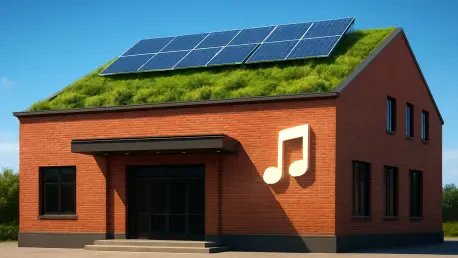
The physical upgrades implemented at The Bunkhouse represent a sophisticated integration of modern engineering and ecological sensitivity. Before these interventions, the venue faced significant operational challenges due to structural decay, specifically chronic water ingress through three aging flat roofs. These leaks often disrupted performances and damaged sensitive sound equipment, highlighting the vulnerability of the building’s envelope. The solution involved not just repairing the roofing but reimagining it as a biodiverse living roof. These green roofs now serve as a primary defense against the increasing frequency of heavy rainfall events by managing stormwater runoff more effectively than traditional surfaces. Additionally, the thick layer of vegetation provides natural thermal insulation, keeping the interior cooler in the summer and warmer in the winter. This architectural shift demonstrates how cultural venues can play a role in urban flood mitigation and local biodiversity.
Complementing the structural repairs is a robust renewable energy system designed to maximize the venue’s independence from volatile utility markets. The installation of a high-efficiency solar panel array allows the facility to generate a substantial portion of its own power, directly lowering the carbon footprint of every concert and rehearsal held within its walls. Moving forward from 2026, the integration of advanced battery storage systems is expected to further optimize this energy usage, allowing the venue to store excess solar power generated during the day for use during high-demand evening performances. This transition to green energy is a critical component of the Off The Grid initiative, which aims to make grassroots venues more resilient to fluctuating energy prices. By reducing one of the largest fixed costs in the music industry, The Bunkhouse is now better positioned to invest more of its revenue back into local talent and technical equipment, fostering a healthier creative environment.
Urban Development: The Cultural Anchor Strategy
The broader economic implications of these green upgrades extend far beyond the walls of the venue itself. In the current economic climate of 2026, independent businesses must find ways to mitigate the rising costs of labor, equipment, and logistics. By drastically reducing utility bills through solar power and improved insulation, The Bunkhouse has created a financial buffer that protects it against external market shocks. This resilience is particularly important for grassroots venues, which operate on thin margins and serve as the testing ground for the next generation of global musical talent. When a venue is financially stable, it can afford to take more creative risks, such as hosting emerging artists or experimental genres that might not be immediately profitable. This creative freedom is what maintains a city’s cultural competitive edge, attracting residents and visitors who seek authentic and diverse entertainment experiences within a modern, well-maintained urban center.
The successful integration of green technology and community ownership provided a definitive roadmap for urban planners seeking to protect vulnerable cultural assets. By moving beyond temporary grants and focusing on permanent structural resilience, the project established a new standard for how grassroots organizations navigated the intersection of art and ecology. This transition allowed the venue to serve as a testing ground for municipal sustainability programs, proving that even aging urban buildings could be retrofitted to meet modern climate standards. The collaboration between the Welsh Government, local councils, and environmental agencies suggested that the future of urban regeneration relied on this kind of holistic, cross-sector partnership. Ultimately, the transformation of the Kingsway site showed that environmental sustainability and artistic freedom were not competing interests but were deeply interdependent. These initiatives secured the venue’s legacy, ensuring that it continued to function as a carbon-neutral catalyst for local creativity.