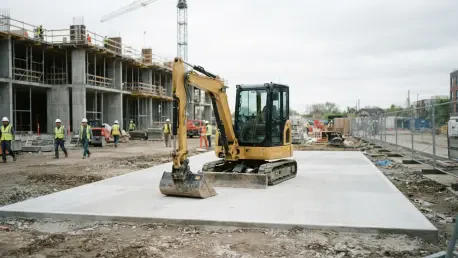

The construction industry has long been criticized for its heavy environmental footprint, yet current shifts in operational strategy are proving that massive reductions in carbon intensity are possible in the modern landscape. As global regulatory pressures mount, the Robertson Group has emerged as a frontrunner by integrating a comprehensive “Responsible Business” framework that dictates every facet of its project delivery. This strategy is not merely a collection of environmental targets but a foundational shift that aligns corporate profitability with the health of the planet and the needs of local populations. By moving away from traditional carbon-heavy methods and embracing a holistic approach to social value, the organization has demonstrated that large-scale infrastructure and sustainability can coexist through rigorous planning and data-driven decision-making. These advancements serve as a critical benchmark for competitors seeking to balance growth with ecological integrity.
Carbon Reduction
Operational Efficiency
Achieving a reduction in operational carbon intensity of more than 85% compared to baseline figures represents a transformative milestone for any major infrastructure entity operating in today’s economy. Robertson Group reached this benchmark by aggressively pursuing fleet decarbonization and transitioning to renewable electricity rates across its extensive network of offices and construction sites. This shift was accompanied by a deliberate pivot toward refurbishment and retrofit work, which naturally requires fewer raw materials and generates less waste than new-build projects. In the current reporting cycle, the firm achieved an additional 16.7% reduction in carbon intensity, proving that even as a company nears its efficiency limits, continuous improvement remains achievable through better energy management. These efforts are part of a broader trajectory aimed at reaching total zero emissions by 2030, a goal that requires the integration of advanced monitoring systems and high-efficiency machinery.
Supply Chain Oversight
Managing internal emissions is only one component of a truly sustainable business model, as the vast majority of environmental impact often resides within the complex layers of the supply chain. To address this challenge, the organization utilizes the Carbon Footprint+ program, which provides a rigorous methodology for tracking and mitigating emissions generated by third-party vendors and material suppliers. This data-centric approach ensures that the company is not simply offsetting its footprint but actively working to eliminate carbon at the source through collaborative efforts. By requiring partners to adhere to stringent environmental standards, the group fosters a culture of accountability that extends far beyond its own direct operations. This initiative is vital for achieving the 2030 net-zero targets, as it creates a transparent ecosystem where carbon data informs procurement decisions and fosters industry-wide transparency to meet the demands of global climate agreements.
Social Value
Career Mobility
Social mobility remains a cornerstone of the modern corporate responsibility agenda, particularly through initiatives that provide tangible career pathways for individuals facing systemic employment barriers. The “lives enhanced” metric has served as a primary indicator of success, tracking the positive outcomes of apprenticeships, professional mentoring, and work placements across diverse communities. As of 2026, the firm has successfully enhanced the lives of 8,292 individuals, moving rapidly toward a definitive goal of supporting 10,000 people by 2030. During the current reporting year, 772 apprentices were supported, alongside 229 work experience placements that provided critical exposure to the construction industry. Programs like “Ideal Candidate” have been specifically adapted to assist young adults and individuals within the prison system, offering them the specialized workshops and skills necessary for a successful reentry into the workforce and economic stability for the future.
Future Legacy
Directing capital into local economies remains one of the most effective ways to create a lasting legacy while simultaneously strengthening regional resilience. By prioritizing vendors within a 40-mile radius, the group kept 66% of its project spend within immediate areas, totaling £323.4 million in the most recent cycle. These efforts generated £1.42 billion in equivalent social value as of 2026, surpassing original targets and setting a new benchmark for the sector. Moving forward, the focus shifted toward the Social Impact+ framework, which empowered supply chain partners to measure and increase their own contributions. CEO Elliot Robertson noted that success was defined by long-term community benefits rather than project delivery alone. This comprehensive model established a unified approach to citizenship, ensuring that future infrastructure developments continued to prioritize both environmental stewardship and localized economic growth across the nation.