
The rapid expansion of the Elizabeth line has triggered a profound shift in the residential landscape of West London, turning previously overlooked neighborhoods into hotspots for high-density living solutions. This infrastructure-led growth has culminated in the acquisition of a prime 0.5-acre site located at 96-102 The Broadway in West Ealing, which is now slated for a massive £90 million redevelopment led by Prime Phenix. The project aims to address the chronic shortage of high-quality, flexible housing by introducing a sophisticated co-living scheme designed for a new generation of urban professionals. As populations continue to seek better connectivity and shared experiences, this development represents a pivotal moment in the regeneration of Ealing’s commercial corridor. The transition from a long-vacant lot to a vibrant residential hub highlights the evolving priorities of modern developers who are increasingly focusing on transit-oriented sites to maximize both social impact and financial returns in a competitive market.
Urban Renewal: Bridging the Gap Between History and Modernity
Legacy of the Broadway Site
The plot at 96-102 The Broadway carries a rich commercial history that reflects the broader economic shifts within the United Kingdom over the past century. Originally, the site served as the home of a flagship Woolworths department store, which opened its doors in 1926 and remained a cornerstone of the local community for decades. This landmark stood as a testament to the mid-century retail boom until the company’s high-profile closure in 2008, after which the building fell into a state of gradual decline. For years, the structure remained a hollow shell, serving as a reminder of a bygone era of brick-and-mortar shopping. Its eventual demolition in 2019 cleared the path for a fresh start, yet the land remained undeveloped for five years as the market adjusted to changing post-pandemic demands. The current intervention by Prime Phenix finally brings closure to this period of dormancy, signaling a definitive move toward residential-led revitalization for the West Ealing area.
The revitalization of this specific site is not merely an isolated construction project but a significant component of a wider urban strategy to repurpose underutilized retail footprints into high-density housing. By selecting a location with such deep historical roots, the developers are tapping into the existing character of the neighborhood while injecting much-needed modern vitality. The transition from a 1926 retail icon to a 2026 residential landmark illustrates the cyclical nature of urban land use, where former commercial hubs are reimagined to serve the housing needs of a growing workforce. This project stands as a model for how developers can navigate the complexities of long-vacant urban sites, turning historical liabilities into contemporary assets. The move effectively reintegrates the Broadway site into the daily life of West Ealing, ensuring that it once again contributes to the local economy and social fabric, albeit through a residential lens rather than a traditional retail one.
Design and Resident Experience
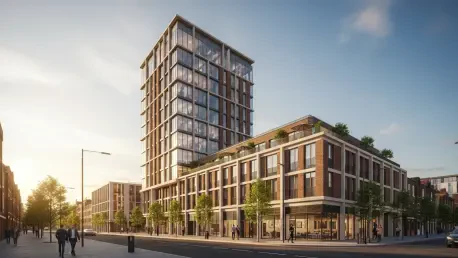
The proposed scheme is far more than a standard apartment complex; it is a meticulously designed C1 Apart-Hotel facility that will house 268 bedrooms tailored for the co-living market. This classification allows for a unique blend of residential comfort and hotel-style flexibility, catering to individuals who prioritize convenience and community over traditional long-term leases. Every aspect of the design focuses on maximizing space efficiency without compromising the quality of life, featuring high-end finishes and smart-home integrations that align with contemporary standards. The layout encourages social interaction while providing private sanctuaries for residents, a balance that has become increasingly essential in the modern rental market. By focusing on a high-density model, the project optimizes the available land, providing a significant volume of housing in a relatively compact footprint. This approach is particularly effective in London, where land scarcity often dictates the necessity for vertical growth and innovative architectural solutions.
Central to the appeal of this £90 million development is the extensive range of communal amenities that distinguish it from conventional studio flats. Residents will have access to a variety of shared spaces, including a sprawling communal roof terrace that offers panoramic views of the surrounding West London skyline. These shared zones are designed to foster a sense of belonging and provide functional areas for work, relaxation, and fitness within the building itself. The inclusion of these premium features reflects a broader industry trend where the “living sector” is moving toward a service-oriented model, effectively blending hospitality with housing. By providing these amenities on-site, Prime Phenix is creating a self-contained ecosystem that appeals to mobile professionals who value proximity to transit and a curated lifestyle. This focus on the “experience” of living, rather than just the physical space, ensures that the development remains competitive and attractive in an ever-evolving residential market.
Financial Synergies: Navigating the Living Sector Market
Strategic Partnerships and Debt Advisory
The successful realization of this acquisition was made possible through a complex financial and advisory framework managed by GLPG. Acting as a bridge between the buyer and the seller, the real estate group facilitated the transaction from Luxgrove Capital Partners to Prime Phenix, while also playing a critical role in securing the necessary funding. The involvement of GLPG’s Capital Advisory team was instrumental in arranging the development facility from Zorin Finance, a lender known for its focus on high-potential urban residential projects. This integrated approach to real estate services—combining brokerage with specialized debt advisory—allowed for a streamlined process that addressed the specific requirements of a large-scale co-living project. Zorin Finance cited the developer’s strong track record and the inherent demand for high-quality residential stock as primary reasons for their commitment. Such partnerships are vital in today’s climate, where securing capital for large-scale developments requires a clear demonstration of both site viability and operational expertise.
The deal highlights a growing institutional appetite for co-living and other “living sector” assets that offer resilient returns in a fluctuating economic environment. Because large-scale, consented development opportunities are becoming increasingly rare in London, the Broadway site represented a high-value prospect for Prime Phenix. The ability to secure a site that already possesses the necessary planning permissions significantly reduces the lead time for construction, allowing the developer to capitalize on current market conditions immediately. This financial agility is a hallmark of successful modern development firms, which must navigate high interest rates and construction costs by identifying sites with high “Gross Development Value” and robust exit strategies. The collaboration between Prime Phenix, GLPG, and Zorin Finance serves as a blueprint for how developers can leverage professional networks to unlock complex urban sites. This unified effort ensures that the project is well-funded and positioned for long-term success, providing a stable foundation for the upcoming construction phase.
Infrastructure Impact and Future Considerations
The geographical placement of the development is perhaps its strongest asset, situated just a five-minute walk from West Ealing station. This proximity provides residents with rapid access to central London via the Elizabeth line, making it an ideal location for those who work in the City or Canary Wharf but prefer a neighborhood feel. The “Elizabeth line effect” has already led to significant price appreciation and commercial growth in the surrounding area, and this project is poised to further enhance that trajectory. By bringing 268 new residents to the heart of West Ealing, the scheme will likely stimulate local businesses, from cafes and restaurants to retail shops, creating a positive feedback loop of economic activity. The integration of high-density housing with major transit hubs is a core tenet of sustainable urban planning, as it reduces reliance on private vehicles and promotes the use of public infrastructure. This development naturally reinforces West Ealing’s status as a key residential node within the Greater London area.
The transition of this project from a theoretical plan to an active construction site provides a clear roadmap for the future of urban residential development in the United Kingdom. Stakeholders focused on the immediate commencement of work to ensure that the delivery of these new homes aligned with the ongoing demand for modern, amenity-rich housing. Moving forward, the focus should remain on the successful integration of these co-living units into the existing community, ensuring that the development serves as a catalyst for further investment. Local authorities and private developers might consider exploring similar conversions of redundant retail space to alleviate the housing crisis in other well-connected boroughs. The Broadway project demonstrated that with the right combination of historical site selection, specialized financing, and transit-oriented design, long-dormant urban spaces could be successfully reclaimed. It was essential that Prime Phenix maintained its commitment to high delivery standards, as this project set a new benchmark for the redevelopment of West London’s commercial corridors.