
Property owners are increasingly reevaluating the utility of their external environments, moving beyond the traditional concept of a simple garden toward a sophisticated extension of the primary residence that emphasizes luxury and functionality. The pursuit of a seamless indoor-outdoor transition is no longer a luxury reserved for coastal estates but has become a standard expectation for modern residential design projects. By treating the garden with the same design rigor as any other room, homeowners can maximize their property’s footprint while creating a sanctuary that feels intentional and high-end. This design philosophy lies in the erasure of traditional boundaries between the inside and outside of a home. Landscape architects and interior designers now advocate for a holistic approach, ensuring that the garden reflects the same level of sophistication and comfort found in the living room or kitchen. This material and stylistic continuity ensures that the outdoor space does not feel like an afterthought but rather a natural, seamless progression of the existing architecture.
Sustainable Foundations and Material Flow
Enhancing Texture and Architectural Continuity
A significant trend in the foundation of modern backyards is the replacement of high-maintenance turf lawns with sustainable, textured alternatives like gravel and natural stone. Materials such as travertine or limestone are preferred for their European charm and their practical ability to manage stormwater runoff more effectively than standard grass. These alternatives reduce the need for chemicals and heavy irrigation, providing a durable and timeless backdrop that requires minimal upkeep over the long term. By selecting stones with specific finishes, such as honed or tumbled textures, designers create a visual bridge that connects the interior flooring with the exterior patio. This continuity in material selection tricks the eye into perceiving a larger, more cohesive living area, where the floor seems to flow effortlessly through sliding glass walls into the open air. The use of natural stone also offers a thermal mass benefit, absorbing heat during the day and releasing it slowly during cooler evenings.
Designers are also utilizing indoor-inspired materials like reclaimed beams, limestone, and plaster to foster a sense of architectural permanence in the open air. These elements help anchor the outdoor space, ensuring that it feels like a structural component of the house rather than a temporary installation. Reclaimed wood, in particular, adds a layer of history and warmth to modern structures, contrasting beautifully with the sleek lines of contemporary furniture. When these materials are mirrored from the interior—such as using the same plaster finish on an outdoor fireplace that is found on the indoor hearth—the distinction between the two zones vanishes. This approach creates a “living room without a roof” atmosphere, where the furniture is as comfortable and the decor as curated as any indoor space. High-performance textiles that mimic the feel of linen and velvet allow for this luxury without the fear of weather damage, ensuring that the aesthetic remains pristine and inviting throughout the seasons.
Integrating Permeable Solutions for Environmental Stewardship
The shift toward permeable paving systems represents a critical advancement in how modern landscapes are engineered to handle environmental stressors. Instead of vast expanses of non-porous concrete, which contribute to heat islands and drainage issues, current designs favor permeable interlocking pavers or open-cell grids filled with creeping thyme or fine gravel. These systems allow rainwater to infiltrate the soil directly, replenishing local aquifers and reducing the burden on municipal sewage systems during heavy storms. This functional choice does not come at the expense of style, as many high-end manufacturers now offer permeable options in a wide array of colors and patterns that rival traditional masonry. The integration of these systems reflects a growing commitment to ecological responsibility, where the beauty of the backyard is matched by its positive impact on the surrounding environment. This method effectively balances the desire for solid walking surfaces with the necessity of maintaining natural water cycles.
Furthermore, the reduction of traditional lawns in favor of biodiverse planting beds and drought-tolerant groundcovers has transformed the aesthetic of the modern backyard. By moving away from water-intensive monocultures, property owners are creating resilient landscapes that thrive in the local climate without the need for constant chemical intervention. These gardens often feature a mix of ornamental grasses, native perennials, and structural shrubs that provide year-round interest and habitat for local pollinators. The inclusion of these elements creates a dynamic, living tapestry that changes with the seasons, offering a far more engaging experience than a static green lawn. This ecological approach also extends to soil health, with many designers incorporating organic mulches and compost-rich beds to ensure the long-term vitality of the garden. The result is a landscape that is both visually stunning and fundamentally sustainable, providing a lush, green environment that requires significantly fewer resources to maintain.
Functional Luxury and Living Spaces
Advanced Culinary Stations and Outdoor Social Hubs
The evolution of the outdoor kitchen has surpassed the simple charcoal grill, maturing into fully equipped culinary stations that rival professional indoor kitchens in both scope and sophistication. Modern installations often include high-performance induction cooktops, artisanal wood-fired pizza ovens, and specialized wine refrigeration units designed to withstand external temperature fluctuations. These kitchens are constructed from durable, high-end materials such as marine-grade stainless steel, dekton countertops, and weather-resistant cabinetry that offers ample storage for all cooking essentials. By placing these amenities in a centralized location, the backyard becomes the primary venue for hosting and social interaction, allowing the host to engage with guests while preparing meals. The integration of expansive islands with bar-style seating further enhances the social dynamic, creating a casual yet refined atmosphere for dining. These stations are often sheltered by permanent structures, ensuring that the culinary experience remains uninterrupted by light rain or intense sun.
Beyond the kitchen, the social hub of the modern backyard is defined by carefully zoned seating areas that mimic the ergonomics and comfort of a high-end living room. Deep-seated sectional sofas, ergonomic lounge chairs, and even hanging daybeds are arranged to encourage conversation and relaxation around a central focal point, such as a sculptural fire pit or a water feature. These zones are often separated by subtle level changes or different flooring materials to define their specific functions without the need for restrictive walls. For instance, a lowered fire pit lounge creates an intimate “conversation pit” feel, while a raised dining deck provides a formal space for evening meals. The use of outdoor rugs, decorative lighting, and weatherproof art pieces adds a layer of personalization and coziness that was previously exclusive to indoor environments. This attention to detail ensures that the outdoor space is not just a place to visit, but a primary living area where families spend a significant portion of their time throughout the day.
Precision Climate Control and Intelligent Lighting Solutions
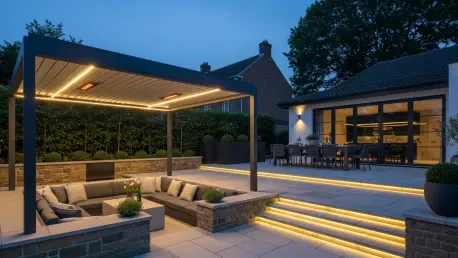
To ensure year-round usability, modern outdoor oases are equipped with sophisticated climate control technologies that mitigate the impact of the elements. Motorized pergolas and louvered roof systems allow users to adjust the amount of sunlight and ventilation with the touch of a button or via automated sensors that react to rain and wind. Integrated infrared heaters and misting systems are strategically placed to maintain a comfortable ambient temperature, regardless of whether it is the peak of summer or a cool autumn evening. These systems are often hidden within the architecture of the outdoor structures, maintaining a clean and minimalist aesthetic while providing maximum comfort. The ability to control the environment so precisely transforms the backyard from a seasonal luxury into a permanent, multi-functional space. This level of climate integration is essential for creating a truly seamless transition, as it removes the physical discomfort that often associated with spending extended periods outside.
Intelligent lighting and acoustic systems play a pivotal role in setting the mood and enhancing the functionality of the outdoor space after sunset. Zoning techniques are used to highlight architectural features, such as uplighting a majestic tree or illuminating a stone pathway, while soft, dimmable lights are integrated into seating areas to create a warm and inviting glow. Smart-home integration allows for the creation of “scenes” that adjust the lighting, music, and heating simultaneously to suit different activities, such as a “dinner party” or a “quiet evening” mode. High-fidelity, invisible speakers are often camouflaged within the landscape or built directly into the patio structures, providing a rich auditory experience without the clutter of visible wires and hardware. This tech-forward approach ensures that the backyard is as smart and responsive as the interior of the home, offering a level of convenience and atmosphere that was once unimaginable. By layering these technological elements, designers create a space that is as much about the sensory experience as it is about the physical layout.
Developing a Cohesive Long-Term Strategy
The successful integration of these elements required a shift in perspective, moving from decorative gardening to comprehensive environmental planning. Property owners who achieved the best results focused on high-quality materials like limestone and reclaimed wood, which provided both durability and aesthetic value. They invested in smart systems that managed everything from irrigation to atmospheric lighting, ensuring the space was usable year-round regardless of the weather. By prioritizing structural continuity and ecological responsibility, they created environments that served as both private retreats and high-performance entertainment zones. Future projects should prioritize the installation of permeable foundations to mitigate runoff while maintaining the architectural integrity of the home. Seeking professional consultations from both landscape designers and smart-home technicians proved to be a critical step in navigating the complexities of modern outdoor living. Ultimately, the transition toward resort-style backyards was driven by a desire for a holistic lifestyle that harmonized the built environment with the natural world.