
Egypt’s proactive approach to cooling infrastructure is expected to be replicated in burgeoning medical and hospitality zones where demand is high and constant. As the nation grapples with soaring temperatures and rapid urbanization, the Egyptian construction sector is executing a structural paradigm shift that moves away from fragmented, building-specific climate control toward integrated, large-scale district cooling systems. This evolution represents a fundamental reimagining of how urban infrastructure is planned, financed, and maintained across the desert landscape. At the heart of this transition is the integration of centralized cooling into the foundational blueprints of Egypt’s “new cities,” most notably the New Administrative Capital. By centralizing air-conditioning requirements, the government is opening vast economic and technical frontiers for the HVAC sector. This shift essentially transforms the market from a model based on individual product sales into a sophisticated environment centered on integrated infrastructure and lifecycle management.
Scaling Strategic Infrastructure
Historical Benchmarks: From Pilot Projects to Metropolitan Systems
The journey toward centralized climate control in Egypt began with targeted, commercial-scale applications that served as vital proof-of-concept benchmarks. The Smart Village in 6th of October City stands as the primary historical reference point, where a dedicated business and telecommunications hub successfully utilized a centralized plant to serve a dense cluster of office buildings. However, the current trajectory moves far beyond these contained business parks, signaling a departure from isolated projects toward a vision of city-wide utility services. The New Administrative Capital represents the scaling of this technology to an unprecedented metropolitan level, managed by the Administrative Capital for Urban Development. Current infrastructure data indicates an initial capacity of approximately 64,000 refrigeration tons, with a robust roadmap to scale toward 300,000 tons within the current growth phase. This expansion covers the Government District and over 180 individual buildings.
Market Transformation: The Industrialization of HVAC Equipment
The adoption of district cooling fundamentally alters the demand profile within the regional HVAC market, shifting focus away from thousands of small residential split units toward high-capacity industrial equipment. This creates a specialized and lucrative niche for manufacturers and engineering service providers who focus on core plant equipment, such as high-capacity centrifugal chillers and industrial-grade pumps. These components form the heart of the central plant, requiring sophisticated engineering and high durability to maintain the massive loads required by a city-scale network. Building on this demand, the market is seeing a surge in specialized procurement for heavy-duty cooling towers and automated hydraulic systems. This shift favors large-scale manufacturers who can provide not just hardware, but comprehensive technical support for the entire duration of the plant’s operational life. Consequently, the HVAC value chain is becoming more consolidated, prioritizing long-term reliability over initial costs.
Technical Evolution and Economic Impact
Infrastructure Integration: Beyond the Cooling Plant
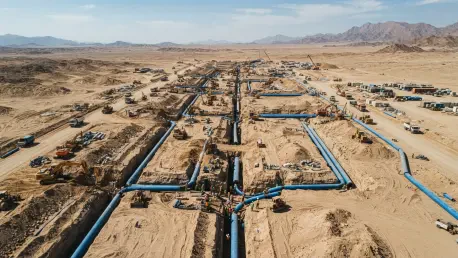
Beyond the central plant itself, the growth of district cooling necessitates extensive distribution infrastructure, including networks of insulated underground pipelines and specialized hydraulic management systems. In the New Administrative Capital’s Central Business District alone, six kilometers of cooling pipelines have been integrated into the subterranean landscape, creating significant opportunities for suppliers of specialized piping and thermal insulation. Furthermore, the market now demands advanced ancillary systems, such as heat exchangers at the building interface and water-treatment facilities to prevent system corrosion and scaling. This infrastructure must be perfectly synchronized with the urban grid, requiring precision engineering that was previously unnecessary for standalone building projects. The integration of these systems allows for a more streamlined urban aesthetic, removing the need for rooftop units and external condensers, which in turn reduces the noise pollution and heat island effect typically found in dense cities.
Operational Sustainability: Thermodynamic Efficiency and Grid Resilience
A primary driver for the adoption of district cooling is the pursuit of energy efficiency and operational cost-effectiveness in Egypt’s demanding climate. Central plants benefit from a “diversity of load,” as they can balance the cooling requirements of different buildings that reach peak demand at different times throughout the day. Additionally, modern designs incorporate thermal energy storage, allowing plants to produce chilled water or ice during off-peak hours when electricity is cheaper and outdoor temperatures are lower. This strategy significantly reduces the strain on the national grid during peak afternoon hours and lowers the overall demand charges for developers and tenants alike. By utilizing large-scale industrial chillers, these systems achieve a coefficient of performance that localized units cannot match. This technical advantage translates into a lower carbon footprint for the entire district, aligning the HVAC sector with national sustainability goals while providing a more stable and predictable energy consumption pattern.
Planning for Future Urban Growth
Strategic Coordination: Integrated Design as a Financial Prerequisite
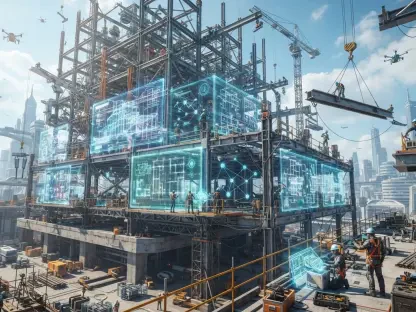
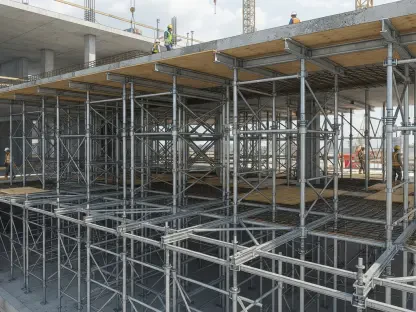
The success of district cooling is inextricably linked to early-stage urban planning, as the economic case for these systems is strongest when they are incorporated into the initial infrastructure budget. Retrofitting an existing city with such a system is often prohibitively expensive and disruptive to existing traffic and utility networks, making Egypt’s strategy of building “from the ground up” a unique window of opportunity. By coordinating the location of plants and pipelines before the first skyscraper is even completed, developers ensure a seamless transition for future occupants. This proactive approach allows for the optimization of space within individual buildings, as mechanical rooms can be downsized or repurposed for more valuable commercial use. The coordination between urban planners, HVAC engineers, and financial stakeholders has created a new procurement model where cooling is treated as a pre-installed utility, much like high-speed fiber optics or water supply, ensuring that the city is climate-ready from day one.
Regional Leadership: Strategic Partnerships and Market Maturity
The outlook for the Egyptian HVAC sector remains bullish as district cooling has successfully transitioned from a pilot-project novelty into a cornerstone of national urban infrastructure. For suppliers and contractors, the primary challenge and opportunity lie in early-stage engagement with developers, as technical specifications are typically locked in long before construction ends. As this model is replicated in other high-density commercial and medical zones, Egypt is positioning itself as a regional leader in large-scale, energy-efficient, and centrally managed climate control solutions. This maturity attracts international investment and fosters partnerships between local engineering firms and global technology providers. Moreover, the focus on centralized systems encourages the development of a local workforce skilled in high-capacity mechanical systems and digital control logic. This evolution ensures that the Egyptian market is no longer just a consumer of HVAC products, but a hub for sophisticated district energy expertise across the Middle East.
Forward Strategy: Sustaining the Cooling Legacy
The transition to centralized cooling infrastructure in Egypt reached a significant milestone as the industry successfully moved from conceptual design to operational reality. Stakeholders prioritized the integration of digital twin technology to monitor real-time efficiency across the expansive cooling networks, ensuring that energy savings were not just projected but realized. Engineering firms established new standards for maintenance, focusing on predictive analytics to prevent downtime in critical government and financial zones. This systematic approach minimized the environmental impact of urban expansion and provided a blueprint for future developments across the region. Moving forward, the focus shifted toward the standardization of cooling as a utility, allowing for more transparent billing and better resource management. The collaboration between the public sector and private contractors proved that large-scale sustainability is achievable through early coordination and technical rigor. As these systems matured, they provided the necessary stability for continued investment in high-density urban environments.