
The recent completion of the £120 million Podium development in Trafford represents a massive shift in how Greater Manchester approaches the integration of residential life within historic industrial corridors. By transforming the former 12-acre Kellogg’s headquarters into a sophisticated residential hub, the project sets a new standard for urban regeneration that honors local history while meeting modern housing demands. Domis Construction recently finalized the handover of the 440-unit complex to Moorfield and the Greater Manchester Pension Fund, signaling the start of a new chapter for the Lumina Village master plan. This endeavor was not merely about adding housing stock but about creating a cohesive neighborhood environment that links the past with the present. The involvement of Glenbrook and Allsop ensures that the management of this high-density site remains resident-focused, providing a template for future large-scale projects across the United Kingdom. Through careful planning and architectural foresight, the site has transitioned from a corporate landmark into a vibrant living space.
Architecture and Lifestyle: The Structural Foundation of Community
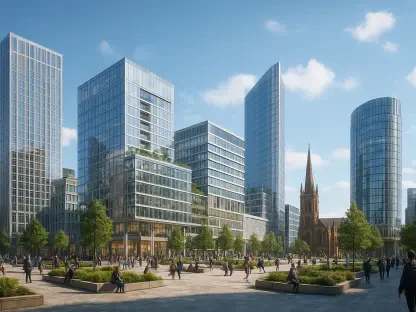
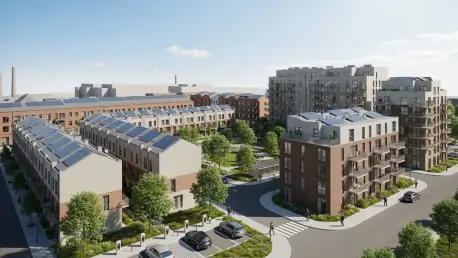
Designed by the architectural firm Sheppard Robson, the development is structured around four distinct buildings that converge on a central raised podium, creating a sense of privacy and community within an urban setting. This layout was intentional, providing a physical anchor that separates the bustle of the street from the tranquility of the residential corridors. The complex offers a diverse mix of housing options, ranging from efficient one-bedroom apartments to expansive four-bedroom townhouses, specifically curated to accommodate a multi-generational demographic. By blending high-density apartments with traditional townhouse structures, the project avoids the monotony of typical urban blocks and instead fosters a varied architectural landscape. This diversity is essential for creating a stable long-term community, as it allows residents to move within the same development as their life circumstances change, whether they are young professionals or growing families.
The internal amenities provided at the site reflect a deep understanding of the evolving needs of the modern workforce and urban dweller who values convenience and connectivity. Residents have access to high-end facilities including a state-of-the-art gym, a dedicated fitness studio, and versatile coworking spaces that cater to the increasing prevalence of remote and hybrid work models. Social interaction is encouraged through thoughtfully designed resident lounges and a spacious roof terrace that offers panoramic views of the surrounding area, serving as a communal focal point during the warmer months. Accessibility remains a cornerstone of the design, with the site being positioned within a short walking distance of the Old Trafford Metrolink station. This proximity to high-quality public transit, combined with the inclusion of 200 parking bays and secure cycle storage, ensures that the development is well-integrated into the wider transport network of the Greater Manchester region.
Environmental Stewardship: Redefining Sustainability in Urban Construction
A significant portion of the project’s value proposition lies in its rigorous commitment to environmental, social, and governance standards, positioning it as a leader in sustainable development. The facility is designed to achieve net-zero status in its daily operations, utilizing a sophisticated array of solar panels and electric vehicle charging stations to drastically reduce its carbon footprint. This focus on green technology is not just an added benefit but a core component of the building’s operational logic, ensuring long-term efficiency and reduced energy costs for residents. During the construction phase, Domis Construction implemented strict waste management protocols that resulted in the diversion of 100 percent of site waste from landfills, a feat that underscores the viability of sustainable building practices at scale. Such efforts demonstrate that high-density residential projects can coexist with aggressive climate goals without compromising on the quality of the finish or the speed of delivery.
The development served as a powerful economic catalyst by generating over 1,170 jobs and providing 19 vocational opportunities through specialized apprenticeship and work experience programs. Stakeholders recognized the necessity of balancing market-rate housing with public infrastructure, as evidenced by the inclusion of a primary school and significant affordable housing units within the wider master plan. To ensure future success, urban planners recommended that local authorities continue to leverage public-private partnerships to fund similar high-density clusters that prioritize transit-oriented development. Moving forward, the focus shifted toward integrating the 200,000 square feet of office space and the new 100-bed hotel to complete the precinct’s transformation. These actions established a blueprint for resilient urban design where housing, commerce, and education operated in a symbiotic relationship. By prioritizing institutional-quality management, the project secured its legacy as a cornerstone of Trafford’s long-term socioeconomic growth.