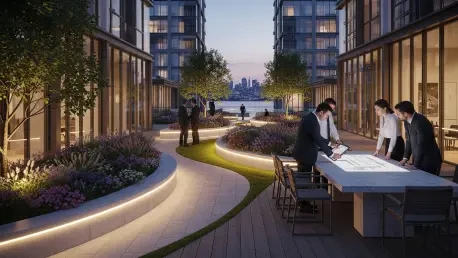

The global landscape architecture industry is currently undergoing a profound transformation as firms move away from purely decorative solutions toward integrated, research-driven systems that define modern urban life. Cohere Design Company Limited has positioned itself at the center of this shift, utilizing a tri-continental presence in Hong Kong, Toronto, and Manila to synchronize international design trends with localized environmental intelligence. Their recent accolade as the Best Luxury Landscape Architect Studio in Hong Kong serves as a testament to their ability to manage the intricate demands of high-end residential, commercial, and hospitality environments. By blending the specialized attention of a boutique studio with the robust technical capabilities of a major consultancy, the firm creates spaces that are not only visually spectacular but also strategically sound and economically viable for long-term development. This dual-natured approach allows them to address complex urban challenges while maintaining an uncompromising focus on the luxury aesthetic.
Strategic Operational and Market Integration
Bridging Construction Gaps: The Design and Build Evolution
The traditional separation between design concepts and construction reality often results in a dilution of the original vision, leading to missed opportunities and budget overruns in large-scale developments. To solve this, Cohere Design utilizes its specialized construction arm, Cohere Construct, to facilitate a seamless transition from the drawing board to the physical site. This “design and build” model functions as a single-point-of-contact system that ensures every intricate detail, from complex irrigation layouts to custom hardscape finishes, remains consistent with the initial artistic intent. By controlling the entire lifecycle of a project, the firm effectively removes the common friction points that typically arise between independent consultants and general contractors. This level of oversight allows for real-time adjustments and precise cost management, ensuring that luxury projects are delivered within strict timelines without compromising the high-quality materials or craftsmanship required for international acclaim.
The Cohere Solution: Integrating Spatial Planning and Branding
Modern landscape architecture is increasingly viewed through the lens of asset management, where outdoor spaces must contribute directly to a project’s commercial viability and brand identity. The Cohere Solution platform addresses this by embedding marketing insights and brand strategy into the earliest stages of the spatial planning process. This approach transforms a traditional park or courtyard into a powerful brand asset that communicates the developer’s values and resonates deeply with the intended demographic. By analyzing market trends and consumer behavior before a single line is drawn, the firm ensures that the physical environment supports the project’s overarching business goals. Every element of the landscape, including pedestrian circulation patterns and social gathering zones, is carefully calculated to enhance user engagement and drive property appreciation. This strategic alignment ensures that the final result is not just a beautiful garden, but a high-performance space that serves as a cornerstone for the project’s long-term market success.
Foundations of Modern Design Philosophy
Human Experience: The Analytical Approach to User Interaction
Central to the firm’s success is a human-centric design philosophy that rejects the use of standardized templates in favor of bespoke solutions tailored to the specific needs of the community. Rather than imposing a pre-existing style on a site, the design team employs an analytical methodology to observe and predict how people will interact with the environment over various timeframes. This research-driven approach involves studying local cultural habits, demographic shifts, and even the daily movement patterns of potential users. By grounding their designs in data and human psychology, the firm creates spaces that feel intuitive and welcoming, encouraging people to linger and connect with their surroundings. This focus on the human experience ensures that projects are not merely static displays of architecture, but active, living environments that evolve alongside the people who use them. With a history spanning over two decades, the firm continues to prioritize functionality and social relevance as the primary metrics for design excellence.
Environmental Synthesis: Balancing Urbanization and Ecology
In the current era of rapid urbanization, the challenge for landscape architects was to harmonize the built environment with the natural world through rigorous site analysis and sustainable practices. The firm addressed this by conducting detailed studies of local climates and native biodiversity, ensuring that projects from 2026 to 2028 prioritized ecological resilience. This transition toward smarter, more adaptive landscapes utilized real-time data to optimize irrigation systems, successfully reducing water waste in high-end developments. Looking ahead, developers should consider the integration of localized environmental data as a non-negotiable standard for all future urban planning initiatives. By merging high-tech monitoring with traditional horticultural wisdom, designers created habitats that supported a high quality of life while minimizing their ecological footprint. These past implementations demonstrated that luxury and sustainability can coexist, offering a clear blueprint for future projects that aim to balance commercial success with environmental responsibility.