
The rapid evolution of metropolitan skylines across the United States has necessitated a complete overhaul of how property managers conceptualize the safety and integrity of their commercial assets. For decades, security was viewed as a reactive necessity, primarily serving as a means to provide forensic evidence after an incident had already occurred through grainy, localized video recordings. However, the paradigm is shifting in 2026 as property owners recognize that legacy systems, many of which were installed in buildings constructed before the turn of the millennium, are no longer sufficient to meet modern threats. This industrial movement is not merely about upgrading hardware but about “rewiring” the very soul of commercial real estate to treat security as the primary gateway for digital adoption. By leveraging advanced sensors and integrated networks, facilities are moving away from siloed operations toward a unified intelligence layer that informs every aspect of building management. Artificial Intelligence and machine learning now stand at the core of this proactive shift, effectively replacing the biological limitations of human monitors with sophisticated behavioral analytics. By establishing a robust baseline of normal daily activity, these AI-driven systems can instantly flag deviations, such as unauthorized loitering or restricted-zone entries, in real-time. This technology frees security personnel from the monotonous task of watching screens, allowing them to focus on high-value strategic safety coordination and immediate incident response.
The Strategic Integration: Security and Intelligent Systems
Digital Transformation: Leveraging Advanced Surveillance as Data Sensors
Modern security frameworks have evolved into highly coordinated ecosystems where high-resolution network cameras function as sophisticated data sensors rather than simple recording devices. These units are strategically positioned in high-traffic zones like loading docks, parking garages, and elevator lobbies, feeding a continuous stream of live data into central analytics platforms. Unlike the analog setups of the past, these digital eyes can distinguish between a harmless delivery person and a potential security breach based on gait, clothing, and authorization levels. This level of precision ensures that security teams are only alerted when a genuine anomaly is detected, drastically reducing the fatigue associated with false alarms. The data captured is not just stored for review but is actively used to map out occupancy patterns, identifying bottlenecks in building flow and pinpointing areas where security presence may need to be bolstered during peak hours. This shift toward sensor-based surveillance represents a fundamental change in how physical space is monitored.
Seamless Protection: Unifying Access Control and Life Safety Systems
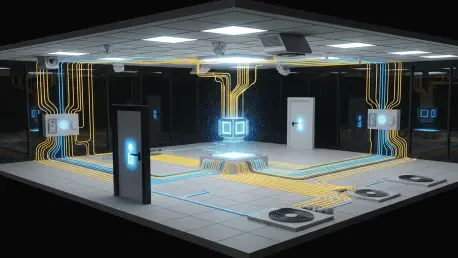
Beyond visual surveillance, the digital transformation of commercial security involves the replacement of traditional key cards with advanced biometric authentication methods. Systems utilizing facial recognition and fingerprint scanning ensure that identity verification is both seamless for employees and highly secure against intruders who might steal or duplicate physical badges. This integrated architecture extends significantly to fire and life safety systems, which are now digitally linked to the central security console to create a holistic emergency response plan. In the event of an emergency, such as a smoke detector being triggered in a specific wing, the system can automatically unlock designated exit doors and provide first responders with live video feeds of the affected zone. Digital visitor management also streamlines building operations by automating identity checks against global watchlists and issuing time-sensitive digital passes to guests. This replaces manual paper logs with automated, traceable workflows that provide a permanent digital record.
Economic Advantages: Driving Value Through Connectivity and Data
Sustainable Operations: Optimizing Efficiency and Energy Use
Smart security systems now contribute directly to a commercial building’s bottom line by optimizing energy consumption through highly intelligent infrastructure solutions. Security sensors that are primarily designed to detect unauthorized occupancy can simultaneously communicate with Building Management Systems to adjust lighting and HVAC settings automatically when specific rooms are empty. For example, if a conference room is cleared and the security system confirms no occupants remain, the climate control is throttled back and the lights are extinguished without human intervention. This transition ensures that security is no longer viewed strictly as a cost center but rather as a vital tool for operational sustainability and automated resource management. The financial impact of these efficiencies is substantial, particularly in large-scale office complexes where utility costs represent a significant portion of monthly overhead. By repurposing security data for environmental control, organizations can achieve their carbon reduction goals while maintaining a comfortable and safe workspace.
Technical Infrastructure: Harnessing Cloud Computing and Predictive Maintenance
The technological backbone supporting this transition consists of Cloud computing and 5G connectivity, providing a “single pane of glass” view for facility managers across multiple geographic locations. These high-speed technologies allow for the continuous collection of massive data sets that provide immediate situational awareness alongside long-term historical records to refine security protocols. This centralized approach enables a command center to oversee dozens of properties from a single interface, ensuring consistency in security posture regardless of the building’s physical address. Furthermore, this data-driven approach enables a move toward predictive maintenance, allowing technical teams to identify and repair hardware issues before they lead to actual system downtime. For instance, if a networked camera begins to show signs of signal degradation or a smart lock reports a low battery, the system automatically generates a work order for the maintenance crew. This proactive stance prevents the critical vulnerabilities that arise when security components fail unexpectedly.
Future-Proofing Assets: Managing Risks and Privacy Needs
Modernizing Infrastructure: Retrofitting With Privacy in Mind
Modernizing older commercial buildings is increasingly practical due to the emergence of wireless and battery-powered security components that eliminate the need for invasive and costly structural changes. Previously, installing a comprehensive sensor network required drilling through concrete and running miles of cabling, but current technologies allow for non-disruptive retrofitting that preserves the architectural integrity of historic properties. While constant surveillance and biometric data collection naturally raise privacy concerns among tenants and staff, modern integrated platforms address these risks by building compliance features directly into the software architecture. Automated audit trails, strict data retention controls, and robust cybersecurity protocols ensure that sensitive personal information is encrypted and protected from unauthorized access. These systems are designed to remain compliant with evolving local regulations regarding data privacy, providing a transparent framework for how information is collected and used to ensure total digital safety.
Long-Term Resilience: Implementing Modular Software and Next Steps
The hardware utilized in these intelligent systems typically required a refresh every seven to ten years, but the modular nature of contemporary software allowed for continuous updates via the cloud. This ensured that the infrastructure remained adaptable to emerging threats and technological breakthroughs without requiring a total overhaul of the physical components. As machine learning and high-speed connectivity matured throughout the current cycle, these systems became increasingly autonomous, serving as the essential central nervous system for modern commercial operations. Property owners who invested in these unified platforms successfully mitigated the risks associated with aging infrastructure while enhancing real estate value. The solution resided in selecting open-architecture platforms that supported third-party integrations, ensuring that the security layer could grow alongside other functions. This strategic shift moved the conversation toward the total value of the data ecosystem. By focusing on interoperability, the industry addressed the risk of vendor lock-in and prepared for the next wave of property management tools.