
Northern Nigeria’s vast agricultural heartland is currently undergoing a radical and dangerous environmental shift as encroaching sands from the Sahara consume thousands of hectares of arable land every year. This ecological crisis does not merely threaten the local vegetation; it jeopardizes the livelihood of over eighty million people who depend on the stability of the soil for their survival and economic well-being. Historically, the response to this encroachment focused on sporadic tree planting or reactive disaster management, but these methods often lacked the cohesive vision required to halt a continental-scale phenomenon. The emergence of professional landscape architecture in the region represents a critical turning point in this struggle. By treating the land as a complex, interconnected system rather than a series of isolated plots, these specialists are attempting to re-engineer the very foundations of the environment. Their work aims to reconcile the needs of a growing population with the harsh realities of a changing climate, using design as a primary tool for survival.
Technical Frameworks: Implementing Design-Driven Restoration
The Design Strategy: Moving Beyond Basic Reforestation
Landscape architects are currently redefining what it means to reclaim the desert by introducing multi-layered ecological designs that go far beyond the simplistic green wall concepts of the past. Instead of merely lining up saplings and hoping for rain, these professionals analyze the micro-climates and soil compositions of specific states like Sokoto and Jigawa to determine which native species will provide the most resilient windbreaks. This methodology prioritizes biodiversity, ensuring that if one species fails due to a localized pest or a particularly harsh dry season, the entire defensive line does not collapse. By integrating drought-resistant shrubs with taller canopy trees, they create a tiered barrier that effectively slows wind speeds and reduces surface evaporation. This design-led approach acknowledges that the environment is a living machine, one that requires precise calibration to function in extreme conditions. Consequently, the focus has shifted from short-term visual success to the creation of self-sustaining ecosystems.
Building upon this foundation, the implementation of sophisticated water management systems has become a hallmark of modern landscape architecture in the northern states. The architects utilize advanced topographical modeling to identify natural drainage patterns, which allows them to design intricate networks of retention ponds and bio-swales that capture precious rainwater during the intense but brief monsoon periods. This captured moisture is then slowly released back into the earth, replenishing local aquifers and maintaining soil hydration throughout the scorching heat of the Harmattan season. Such interventions prevent the devastating flash floods that often follow long periods of drought, turning a destructive force into a life-giving resource. By sculpting the land to hold water more effectively, these designers are creating sponges within the terrain that support both natural flora and local agriculture. This strategic manipulation of the physical environment demonstrates how aesthetic design principles can be harnessed to solve some of the most pressing engineering and survival challenges in the region today.
Precision Engineering: Mapping Regional Topography
The precision of these landscape interventions is largely driven by the utilization of high-resolution satellite imagery and Geographic Information Systems to map the shifting sands in real-time. Landscape architects are now collaborating with data scientists to create digital twins of the northern landscape, allowing them to simulate the impact of various design interventions before a single shovel touches the ground. This predictive capability is essential for identifying the most vulnerable corridors where desertification is moving fastest, enabling a targeted application of resources that maximizes ecological impact. By understanding the underlying geological structures and ancient watercourses hidden beneath the surface, architects can position their projects in areas where they will have the greatest long-term effect on soil stability. This data-centric approach removes the guesswork from land reclamation, providing a scientific basis for the deployment of green infrastructure across the Sahel. The resulting maps serve as a blueprint for development.
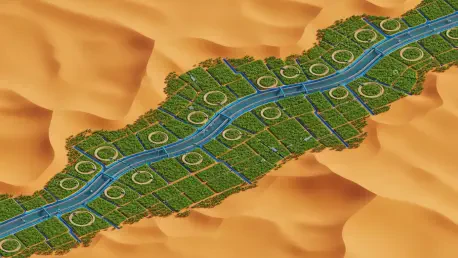
This comprehensive mapping naturally leads to the development of regional master plans that harmonize the conflicting demands of urban expansion, livestock grazing, and crop cultivation. In states such as Kano and Katsina, landscape architects are designing green corridors that serve as multi-functional zones for both ecological protection and controlled agricultural use. These corridors act as buffers between expanding desert areas and human settlements, providing a space where controlled grazing can occur without destroying the stabilizing ground cover. By zoning the land according to its ecological capacity, these plans reduce the pressure on over-taxed resources and minimize the risk of land-use conflicts between different community groups. The integration of public spaces into these green belts also provides recreational and aesthetic value to local residents, fostering a sense of pride and ownership in the restored landscape. This large-scale vision ensures that individual projects are not isolated islands but connected components of a network.
Socio-Economic Integration: Ensuring Long-Term Viability
Community Stewardship: Designing for Local Sustainability
Successful landscape architecture in Northern Nigeria depends heavily on the active participation of local communities who must maintain these installations for many decades to come. Architects are moving away from top-down mandates, choosing instead to involve village elders and local farming cooperatives in the design process to ensure that the chosen interventions align with traditional land management practices. This collaborative model ensures that the newly designed landscapes are not only ecologically sound but also socially and culturally relevant to the people who inhabit them. For instance, by including edible fruit-bearing trees and medicinal plants within the reforestation zones, architects provide an immediate economic incentive for the community to protect and nurture the growing forests. This approach transforms the local population from passive observers into active stewards of their environment, creating a sustainable cycle of care and benefits. When a community sees a correlation between the health of the land and their own prosperity.
Furthermore, the synthesis of traditional knowledge with modern landscape techniques has resulted in innovative solutions that are uniquely suited to the Nigerian context. Landscape architects are studying ancient Zai planting pits—a traditional technique for concentrating water and nutrients—and scaling them up using modern mechanical tools and soil science. This hybrid approach respects the wisdom of generations of farmers while providing the efficiency and scale needed to combat the rapid pace of modern desertification. By elevating these traditional practices through professional design, architects help to preserve local heritage while simultaneously modernizing the agricultural infrastructure of the region. This cultural integration also helps to demystify professional architecture, making it an accessible and respected tool for rural development rather than an abstract concept from the city. The result is a landscape that feels familiar to its residents yet performs with the high-level efficiency required to withstand environmental pressures.
Institutional Evolution: Securing the Environmental Legacy
Looking toward the horizon of 2027 and beyond, the economic dividends of professional land reclamation are becoming increasingly evident as once-barren territories return to productivity. The restoration of soil health through landscape architecture is directly linked to an increase in crop yields and a reduction in the costs associated with artificial fertilizers and irrigation. As the land becomes more resilient, the risk of crop failure decreases, providing a more stable environment for domestic and international investment in the Nigerian agribusiness sector. This economic stabilization is a critical component of national security, as it reduces the migration of climate refugees from the north to the already overcrowded southern cities. Professional landscape interventions are thus not merely environmental projects; they are foundational investments in the economic and social stability of the entire federation. By creating a landscape that can support a diversified economy, architects are helping to build a future for the region.
The continued evolution of this field will likely see the integration of smart sensors and automated irrigation systems into the restored landscapes, further enhancing the efficiency of resource use. As the digital infrastructure of Nigeria continues to expand, landscape architects will have the opportunity to monitor soil moisture levels and plant health remotely, allowing for precise interventions that save both water and labor. This technological leap will ensure that the green infrastructure established in the current year remains viable even as weather patterns become more unpredictable. The lessons learned from the projects in Northern Nigeria are already being shared with neighboring countries in the Lake Chad Basin, positioning Nigeria as a leader in arid-land restoration. By refining these techniques, landscape architects are providing a scalable model for the entire African continent, demonstrating that even the most degraded environments can be brought back to life through thoughtful and scientific design.
Sustainable Governance: Establishing a Permanent Framework
The challenge of land degradation in Northern Nigeria demanded a response that was as vast and sophisticated as the problem itself, leading to a significant shift in environmental strategy. It was through the rigorous application of landscape architecture that the regional authorities finally managed to synchronize ecological restoration with human development. The past years proved that isolated efforts were insufficient and that only a coordinated, design-driven approach could stabilize the fragile soils of the north. To ensure the permanence of these gains, the focus turned toward the institutionalization of landscape planning within all levels of government. This necessitated the creation of dedicated environmental design departments that managed the long-term maintenance of green corridors and water management systems. Additionally, the integration of these practices into the national educational curriculum prepared the next generation of professionals to continue the work. By treating the landscape as a vital national asset, the country secured a more resilient path.