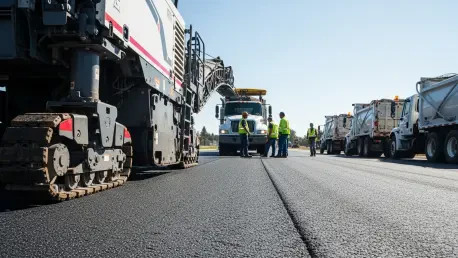

The delicate balance between municipal efficiency and the integrity of state-mandated competitive bidding laws has moved into the judicial spotlight following a high-stakes confrontation in West Fargo. At the center of the dispute lies a substantial street mill and overlay initiative known as Project No. 2290, which has sparked a legal battle reaching the North Dakota Supreme Court. While cities often seek to streamline operations by utilizing internal crews for infrastructure upkeep, local industry groups, including the Associated General Contractors of North Dakota, argue that such actions bypass critical oversight. This conflict raises fundamental questions about whether a city can legally redefine major construction tasks as routine maintenance to avoid the rigorous public bidding process required by state statutes. The outcome of this case stands to redefine the boundaries of local governance and the rights of private contractors within the public works sector across the entire state. By examining the nuances of this project, the court must decide if local ordinances can supersede the transparency requirements that usually govern million-dollar public investments.
Statutory Limits on Municipal Construction Projects
North Dakota state law mandates that any public construction project exceeding a $200,000 threshold must be opened to competitive bidding to ensure transparency and fiscal responsibility. The unions representing the private construction industry contend that West Fargo’s decision to assign a massive mill and overlay project to its own municipal crews constitutes a direct violation of these statutes. By breaking down the scope of work or reclassifying it under local ordinances, the city effectively shielded a million-dollar contract from the competitive market. Nicholas Surma, the legal counsel for the contractors, emphasizes that these laws exist to prevent the monopolization of work by government entities and to guarantee that taxpayers receive the highest quality of work at the most competitive price. Without strict adherence to these financial caps, the distinction between small-scale repairs and large-scale infrastructure development becomes dangerously blurred, potentially allowing municipalities to operate without any real external fiscal accountability.
Beyond the immediate financial implications, the legal challenge focuses on the potential for a slippery slope that could transform how infrastructure is managed in the coming years from 2026 through 2028. If the court permits municipalities to self-perform projects that vastly exceed the $200,000 limit, the private construction industry faces a significant contraction in available public contracts. Industry leaders argue that the bidding process is not merely a bureaucratic hurdle but a safeguard against favoritism and inefficient resource allocation. This specific case highlights a growing friction where cities attempt to leverage local ordinances to override state-level mandates. The contractors’ unions are pushing for a definitive ruling that reinforces the supremacy of state bidding laws, ensuring that no city can unilaterally exempt itself from the requirements that apply to every other public entity in the region. Maintaining a level playing field is essential for the long-term health of the local economy and the stability of the specialized labor market.
Interpreting Maintenance in the Modern Infrastructure Landscape
In response to these allegations, the city of West Fargo maintains that its actions were entirely consistent with local regulations governing routine road maintenance. Defense attorney Howard Swanson argues that a mill and overlay project—essentially removing the top layer of asphalt and replacing it—does not rise to the level of reconstruction as defined by state bidding requirements. From the city’s perspective, utilizing internal staff for such tasks is a matter of administrative efficiency and cost-saving for the local taxpayer. By avoiding the lengthy and often expensive bidding process, the city claims it can address deteriorating road conditions more rapidly. This defense rests on a narrow interpretation of what constitutes maintenance, suggesting that as long as the underlying structure of the road remains unchanged, the city should retain the autonomy to perform the work without external interference. This perspective prioritizes immediate operational agility over the procedural traditions that have long governed the public works sector.
Furthermore, the city contends that the risk of widespread adoption of this model by other municipalities is minimal due to the significant capital investment required for heavy machinery. Very few cities possess the specialized equipment, such as large-scale milling machines and paving trains, or the highly trained personnel necessary to execute a million-dollar road project internally. This scarcity of resources serves as a natural barrier, preventing a mass exodus from the competitive bidding system. However, the contractors argue that this defense is irrelevant to the legality of the ordinance itself. If the court validates the city’s approach, it could encourage larger metropolitan areas to invest in their own fleets, systematically cutting out the private sector. The debate thus hinges on whether the nature of the work or the cost of the project should be the primary factor in determining when a public bid is legally required. Establishing a clear definition for maintenance is vital for preventing future legal disputes and ensuring consistent application of the law.
Judicial Precedents and the Path Toward Resolution
The journey of this litigation to the state’s highest court followed a significant procedural setback when a district court judge dismissed the initial lawsuit. The lower court ruled that because Project No. 2290 had already been completed by city crews, the specific complaint was effectively moot. Despite the completion of the work, the Supreme Court agreed to hear oral arguments because the underlying legal question remains a matter of significant public interest. The contractors’ unions successfully argued that the issue is capable of repetition while evading review, meaning that cities could continue to complete projects before legal challenges can reach a final resolution. This procedural nuance is critical, as it allows the justices to look past the finished roadwork and focus on the validity of the West Fargo ordinance that authorized the self-performance. The ruling will likely serve as a cornerstone for municipal law, determining how much latitude local governments have when managing their own infrastructure assets.
The Supreme Court’s deliberation signaled a pivotal moment for municipal law, as the justices scrutinized whether state-level legislative mandates truly left room for local exceptions. Stakeholders from both the public and private sectors recognized that a clear directive was necessary to establish a predictable environment for infrastructure planning through 2029. Moving forward, municipal leaders needed to audit their internal policies to ensure they aligned with the strictly enforced $200,000 threshold to avoid costly litigation and project delays. Legislative bodies also considered refining the definitions of maintenance and construction to remove the ambiguities that led to this conflict. By seeking a balance between internal efficiency and fair market access, the legal system aimed to protect both taxpayer interests and the viability of the private construction industry. These actions ensured that future infrastructure projects remained transparent, competitive, and legally sound while respecting the boundaries of municipal authority.