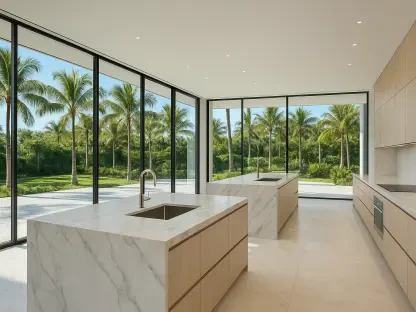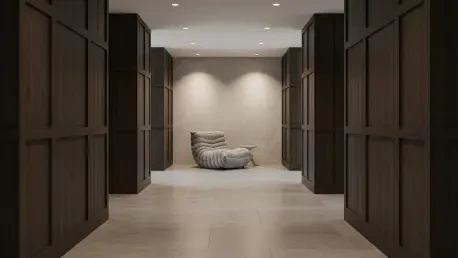

The subtle distinction between a house that is merely expensive and a home that possesses a soul often resides in the intentional rejection of flawless, catalog-driven aesthetics. In the contemporary landscape of high-end interior design, there is a growing realization that perfection frequently acts as a barrier to comfort, creating spaces that feel more like showrooms than sanctuaries. Jake Arnold has emerged as a leading voice in this movement, championing a philosophy where the emotional resonance of a room outweighs its symmetrical precision. By blending the historical weight of European traditions with the relaxed, light-filled modernism of the American West, he constructs environments that feel both cinematic and deeply intimate. This approach is not merely about selecting the right furniture, but about understanding how a space influences the psychological well-being of its inhabitants. It challenges the standard industry practice of delivering a finished, static product, suggesting instead that the most successful interiors are those that appear to have evolved organically over decades. This narrative of soulful design seeks to uncover the character of a home by embracing its imperfections and prioritizing the lived experience of the individual over the rigid expectations of professional photography.
British Origins and the Architecture of Memory
Developing a deep sensitivity to one’s surroundings often begins in childhood, where the domestic environment serves as the first canvas for creative experimentation and self-expression. For Arnold, growing up in the United Kingdom provided a rich tapestry of architectural history that informed his early understanding of scale and atmosphere. He spent his youth in the presence of grand Tudor and Georgian structures, which instilled a permanent appreciation for the enduring quality of historical design. This was not a passive observation; he felt a compulsive need to interact with his own space, frequently rearranging the furniture in his bedroom several times a day to discover how different layouts affected the mood of the room. This early restlessness was a precursor to a professional career defined by a refusal to accept static environments, as he learned that the arrangement of physical objects could fundamentally alter the emotional energy of a home. His exposure to his mother’s work in murals and interior design further solidified this connection, placing him in a consulting role for her contractors before he had even reached his teenage years.
Despite a clear and precocious talent for spatial organization, the path to a creative career was not immediately clear or socially supported during his formative years. In the cultural context of his upbringing, design was often viewed through a lens of gendered stereotypes, leading Arnold to suppress his natural inclinations in favor of a more traditional academic route. He pursued studies in business and economics, viewing property development as a compromise that utilized his interest in buildings while maintaining the facade of a conventional corporate career. This period of academic diversion served as a critical test of his professional identity, eventually revealing that the pursuit of security could not replace the necessity of creative fulfillment. By the age of 21, the realization that he was misaligned with his true calling became unavoidable, prompting a decisive shift toward the arts. This transition was not merely a change in subject matter but a fundamental reclamation of his identity, allowing him to integrate his business acumen with a refined aesthetic sensibility that prioritized the “soul” of a project over its financial metrics.
Transatlantic Perspectives: Finding Soul in the New World
Relocating to Los Angeles marked a significant departure from the historical density of Europe, offering a new landscape where the contrast between old and new could be explored more freely. During an early internship with designer Jaime Rummerfield, Arnold observed a different cultural relationship with antiquity; while vintage pieces were often seen as heavy or stifling in England, they were viewed as essential anchors in the relatively modern architecture of Southern California. This realization transformed his approach to sourcing, as he began to see storied objects as a means of injecting permanence and depth into spaces that might otherwise feel hollow. The sun-drenched, airy interiors of California provided the perfect backdrop for his European-influenced aesthetic, allowing him to create a unique hybrid style that avoided the clichés of both regions. By utilizing patinated woods, weathered stones, and antique textiles within contemporary structures, he demonstrated that a home does not need a hundred-year-old foundation to feel like it has a history, provided the elements within it are selected for their character and narrative value.
Building on this foundation, the methodology of managing large-scale design projects shifted from a linear, rigid sequence to a more fluid and adaptive process that prioritized real-time discovery. Experience taught Arnold that the most successful homes are those that are allowed to evolve during the construction phase, rather than being strictly dictated by a set of initial blueprints. He moved away from the practice of finalizing every detail on paper before a hammer was ever swung, recognizing that the true essence of a room is often found by observing how light moves through the space or how a client naturally navigates a floor plan. This flexibility allowed for mid-project adjustments that could capture unexpected moments of inspiration, ensuring that the final result felt curated and authentic rather than manufactured. By treating a design project as a living entity that requires constant dialogue between the architect, the designer, and the inhabitant, he established a standard of luxury that is defined by its responsiveness to human needs and environmental conditions rather than by the sheer accumulation of expensive materials.
The Psychological Blueprint: Designing for Personal Identity
Designing a home that reflects the true identity of its owner requires a level of investigation that goes far beyond the surface-level selection of colors and textures from a showroom catalog. Arnold developed what he calls a “Clue” methodology, acting as a creative detective who pieces together a client’s aesthetic personality by examining their lifestyle choices, travel history, and personal belongings. He often looks to a client’s wardrobe to understand their preferred tactile experiences, noting whether they gravitate toward the structure of heavy wools or the softness of lived-in linens. Furthermore, he analyzes their favorite hotels and even their musical playlists to identify the underlying atmosphere they find most restorative. This deep psychological dive ensures that the resulting interior is not just a beautiful arrangement of objects, but a functional and emotional extension of the person who lives there. His own personal residence in Los Angeles served as a primary testing ground for these ideas, where he experimented with a concept he refers to as “Divorce chic”—a blend of sophisticated textures and eclectic forms that prioritizes connection and social gathering over the display of status.
The final stage of this design philosophy culminated in the understanding that the most vibrant homes are those that intentionally leave room for growth and the inevitable imperfections of life. Achieving a truly soulful interior involved the adoption of a layered approach, where items were added over time and arranged with an eye for comfort rather than cold, geometric perfection. It was realized that a room finalized in a single moment often felt static and lacked the warmth necessary for long-term habitation. Instead, the focus shifted toward the atmosphere of the space, prioritizing volume and natural light to create environments that encouraged social interaction and personal reflection. Homeowners were encouraged to view their dwellings as evolving canvases, where a scratched table or a faded rug contributed to the narrative of a life well-lived. This strategy successfully dismantled the pressure of maintaining a flawless facade, offering instead a framework for domestic life that was as much about the psychology of the inhabitant as it was about the visual appeal of the architecture. By merging English heritage with California ease, a new standard for modern living was established that prioritized emotional honesty above all else.